
25°C
Ayodhya
Shri Ram Janmabhoomi Temple
 Ayodhya, Uttar Pradesh, India
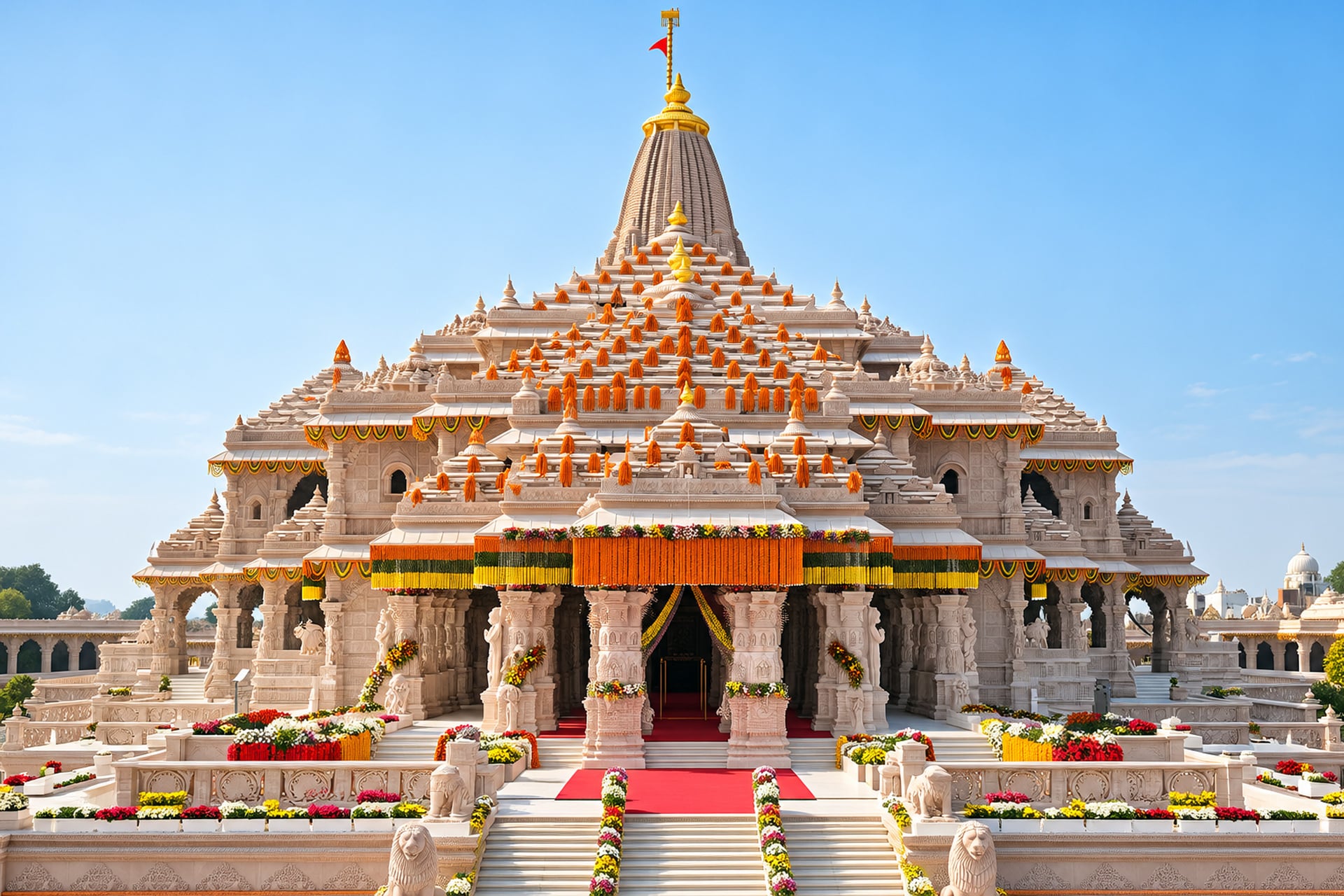
Shri Ram Janmabhoomi Temple in Ayodhya, Uttar Pradesh, is a sacred Hindu shrine dedicated to Shri Ram Lalla, revered as Lord Rama in his childhood form and celebrated for its spiritual significance.
- ReligionHindu
- DeityLord Rama (Ram Lalla,
the child form of Shri Ram) - TimingsMorning: 06:00 AM - 12:00 PM, Evening: 12:00 PM - 09:30 PM
About the temple
About the temple
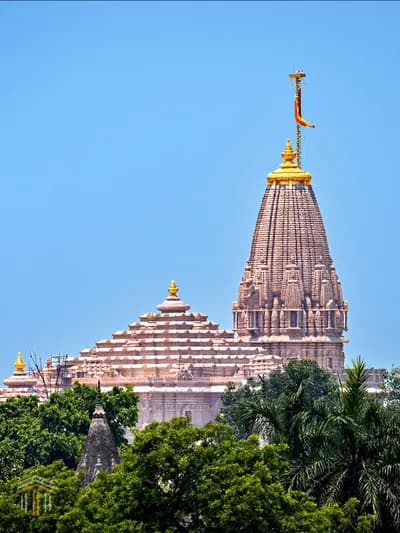
Shri Ram Janmabhoomi Temple is a major Hindu pilgrimage site in Ayodhya, Uttar Pradesh, traditionally revered by devotees as the birthplace of Lord Rama. The newly built temple is dedicated to Ram Lalla and was consecrated on 22 January 2024. It is constructed in the traditional Nagara style and is administered by Shri Ram Janmabhoomi Teerth Kshetra Trust.
Shri Ram Janmabhoomi Temple
Shri Ram Janmabhoomi Temple
Temple in Numbers
Key dimensions and features of the Shri Ram Janmabhoomi Mandir.
- Approximate east-west length
- 380 ft |
- Approximate width
- 250 ft |
- Approximate height
- 161 ft |
- Pillars
- 392 |
- Doors
- 44 |
- Principal mandapas
- 5 |
- Steps to Singh Dwar
- 32 |
Approximate east-west length
Approximate width
Approximate height
Pillars
Doors
Principal mandapas
Steps to Singh Dwar
Historical Background
Ayodhya has a long and layered religious history and is sacred in several traditions. The specific Ram Janmabhoomi site became the subject of a modern legal and historical dispute concerning religious structures and claims to the land. On 9 November 2019, the Supreme Court of India delivered its judgment in the title dispute, directing that the disputed land be used for a temple and that an alternative five-acre plot be allotted for a mosque. The Shri Ram Janmabhoomi Teerth Kshetra Trust was established in 2020 to oversee the temple. Bhoomi Pujan was held on 5 August 2020; Ram Lalla's Pran Pratishtha took place on 22 January 2024.
Sacred tradition
Sacred tradition
Ayodhya is revered in Hindu texts as the birthplace and kingdom of Lord Rama; traditional chronology is religious, not a verified archaeological date.9 November 2019
9 November 2019
Supreme Court of India delivered its judgment in the Ayodhya title dispute.5 February 2020
5 February 2020
Government announced the Shri Ram Janmabhoomi Teerth Kshetra Trust.5 August 2020
5 August 2020
Bhoomi Pujan and foundation-laying ceremony.22 January 2024
22 January 2024
Pran Pratishtha of Ram Lalla in the new temple.2025
2025
Trust announced completion of the temple complex's principal construction elements


Synopsis
Located in Ayodhya, the Shri Ram Janmabhoomi Mandir is dedicated to Ram Lalla, the child form of Lord Rama. The temple's consecration took place on 22 January 2024. Its stone architecture, carved pillars, mandapas and surrounding pilgrimage sites form part of Ayodhya's religious and cultural landscape.
Shri Ram Lalla, the child form of Lord Rama.
Vaishnava Hinduism; Rama is revered as an avatar of Vishnu.
Ayodhya, Uttar Pradesh, India.
Shri Ram Janmabhoomi Teerth Kshetra Trust.
05-08-2020.
22-01-2024.
Supreme Court judgment dated 09-11-2019; see official judgment for the court's findings and directions.
Sacred significance
Birthplace of Lord Rama
Ayodhya is traditionally revered as the birthplace of Lord Rama, and the Janmabhoomi site is a central place of devotion for many Hindus.
Architecture
Interesting facts

The Pran Pratishtha of Ram Lalla, the child form of Lord Rama, took place on 22 January 2024, opening the newly built temple to devotees. The ceremony marked a landmark moment for the Shri Ram Janmabhoomi Mandir and its millions of pilgrims.
Deities & Shrines
Ram Lalla (Presiding Deity)
The presiding deity is Ram Lalla, the child form of Lord Rama, enshrined in the ground-floor sanctum of the main temple. The idol, carved in black stone by sculptor Arun Yogiraj, was consecrated on 22 January 2024.
Ram Darbar
The Ram Darbar, featuring Lord Rama with Sita, Lakshmana and Hanuman, is enshrined on the first floor of the main temple; its Pran Pratishtha was held in June 2025.
Bhagwan Shiva (Parkota Shrine)
A shrine to Lord Shiva stands at one of the four corners of the Parkota (compound wall) surrounding the main temple.
Bhagwan Ganesh
A corner shrine within the Parkota is dedicated to Lord Ganesha, honoured as the remover of obstacles.
Surya Dev
A corner shrine within the Parkota is dedicated to Surya Dev, the Sun God.
Devi Bhagwati
A corner shrine within the Parkota is dedicated to Devi Bhagwati, the Divine Mother.
Maa Annapurna
A shrine to Maa Annapurna, goddess of nourishment, is located in the northern arm of the Parkota.
Hanuman Ji
A shrine to Hanuman Ji, Lord Rama's devoted servant, is located in the southern arm of the Parkota.
Darshan & Service Offerings
| Service | Timing | Price | Notes |
|---|---|---|---|
| General Darshan | Public darshan generally scheduled in daytime and evening slots; current slots to verify. | - | Entry for devotees is managed by the temple administration and crowd-control arrangements. |
| Aarti Passes | - | - | Passes may be required for selected aartis. Confirm availability and instructions through the Trust. |
| Special worship / offerings | - | - | Current seva list, eligibility, booking and charges: Not available (to verify). |
Visitor information
Address
Shri Ram Janmabhoomi Mandir, Ram Janmabhoomi, Ayodhya, Uttar Pradesh, India. For the Trust's office address.
Main Deity
Shri Ram Lalla Virajman (Ram Lalla, the child form of Lord Rama). Wikipedia's page on the Trust notes that the Trust's former attorney general, K. Parasaran, represented Shri Ram Lalla Virajmaan in the Ayodhya case.
Temple Trust
Shri Ram Janmbhoomi Teerth Kshetra is a trust the Government of India set up in February 2020 to construct and manage the Ram Mandir in Ayodhya.
Darshan
Timings change with seasons and special occasions, so confirm on the Trust's site before travelling. The latest schedule I found is on a third-party site that cites a Trust notice effective 18 April 2026. It lists public darshan slots from 7:00 AM to 9:00 PM, with the gate closed from 12:30 to 1:00 PM and the last entry at 9:00 PM. Mangal Aarti (4:00 AM), Shringar Aarti (6:00 AM) and Shayan Aarti (10:00 PM) need a pass.
Helpdesk
The Trust's contact page lists helpdesk numbers 05278-292000 and +91-80095-22111, and a toll-free number 1860-180-1992. The Devotee Helpdesk runs from 10 AM to 6 PM every day, and the email is contact@srjbtkshetra.org. The office address is Mandir Nirman Karyashala, Ramghat Chauraha, near Manas Bhawan, Ayodhya, Uttar Pradesh – 224123.
Location
Ayodhya, Uttar Pradesh, India
Best Time to Visit
October–March
Cooler months are generally more comfortable for visiting Ayodhya. Ram Navami and major festivals are spiritually significant but may involve very large crowds and altered arrangements. Check weather and official advisories before travel.
Nearby places
Hanuman Garhi
About 1 km
- Prominent Ayodhya shrine dedicated to Hanuman, reached by a flight of 76 steps. Devotees traditionally visit it before the Ram Temple, making it a major stop for pilgrims.
Kanak Bhawan
About 700 m
- Temple associated with Rama and Sita, known as the "Golden Palace" and believed to have been gifted to Sita by Queen Kaikeyi. It is of great devotional importance.
Festivals & culture
Important observances include Ram Navami, marking the birth of Lord Rama; Diwali, associated in tradition with Rama's return to Ayodhya; Vijayadashami and Dussehra; and Shravan Jhula celebrations. Ayodhya also hosts Deepotsav around Diwali. Festival dates follow the Hindu lunisolar calendar and crowd arrangements may change annually.
Ram Navami
March–April (varies by lunar calendar; falls on the ninth day of the bright fortnight of Chaitra)
The birth anniversary of Lord Rama and the biggest festival at Shri Ram Janmabhoomi Mandir. The day begins with abhishek of Ram Lalla, and at noon a beam of sunlight falls on the deity's forehead for about four minutes in the Surya Tilak, after which 56 offerings are made. Devotees also bathe in the Sarayu and at Ram Ki Paidi before darshan. Very large crowds are expected, and the Trust has extended darshan hours and suspended VIP darshan on the occasion. Check the Trust's advisories before travelling.
Additional information
Shri Ram Janmbhoomi Teerth Kshetra Trust
The Government of India set up the Trust in February 2020, following the Supreme Court's direction to form a trust for the temple. It oversees construction and management of the Shri Ram Janmabhoomi Mandir.
Current Visitor Notices
Consult official Trust notices for darshan slots, aarti passes, security restrictions, special-day arrangements and construction/complex updates.
Ayodhya Title Dispute
On 9 November 2019, a five-judge Constitution Bench of the Supreme Court of India unanimously delivered its judgment in M. Siddiq v. Mahant Suresh Das. It set aside the 2010 Allahabad High Court ruling, directed that the disputed land go to a trust formed by the Government of India for the temple, and allotted 5 acres elsewhere in Ayodhya to the Sunni Central Waqf Board for a mosque. For accurate legal history, refer to the judgment itself rather than summaries.
Temple facilities
Entry Screening
Security screening and managed entry procedures are in operation. Mobile phones and other electronic devices are not allowed inside, and free lockers are available near the entrance. Follow on-site directions.
Crowd Management
Queues and access routes may be adjusted according to visitor volume. Allow extra time on weekends and festival days, and expect changes to darshan arrangements.
Visitor Help
A Pilgrim Facility Centre near the main entrance offers lockers and facility counters, and wheelchairs are available for elderly and differently-abled visitors within the temple premises. Medical assistance is available in the complex. Ask the helpdesk for current locations and arrangements.
Emergency services
Punjab National Bank ATM (Kanak Bhawan, Tulsi Nagar)
About 0.8 km
Contact
PNB helpline 1800 1800
- Open 24 hours, and the closest ATM I found to the Ram Janmabhoomi area.
Punjab National Bank ATM (Khajurahat Chauraha, Sai Nagar)
About 0.7 km
Contact
PNB helpline 1800 1800
- Open 24 hours.
HDFC Bank ATM (Amaniganj, near LIC Building)
About 0.7 km
Contact
HDFC helpline 1800 1601
- Listed as open 8:00 AM to 8:00 PM.
Central Bank of India ATM (Hanuman Gudi Chauraha)
About 0.9 km
Contact
Central Bank helpline 1800 3030
- Opening hours not listed, so confirm before relying on it.
Top picks
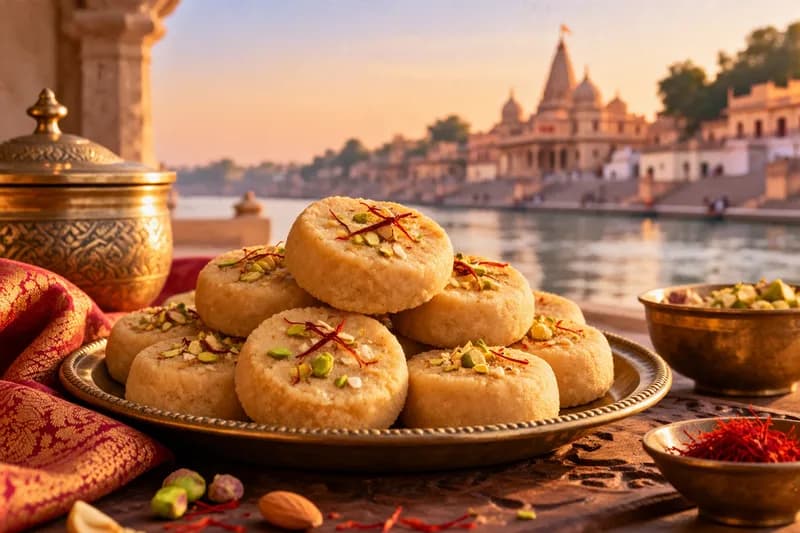
Ayodhya Peda
A soft, milk-based sweet made from khoya (reduced milk) and sugar, often flavoured with cardamom. It is the signature sweet of Ayodhya and the most popular prasad to carry home from the temples.
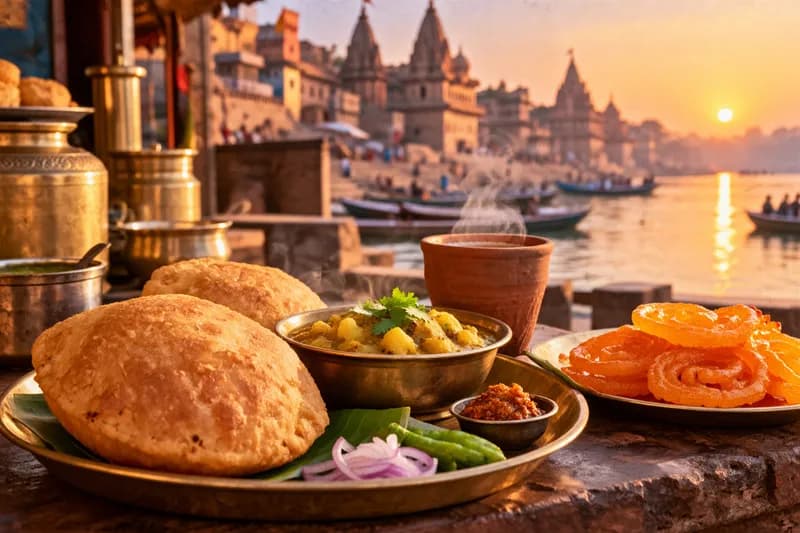
Kachori-Sabzi with Jalebi
A classic Awadhi breakfast of crisp, spiced kachoris served with a tangy potato curry, often paired with hot jalebi. It is sold at street stalls near the ghats and in the old-town lanes.
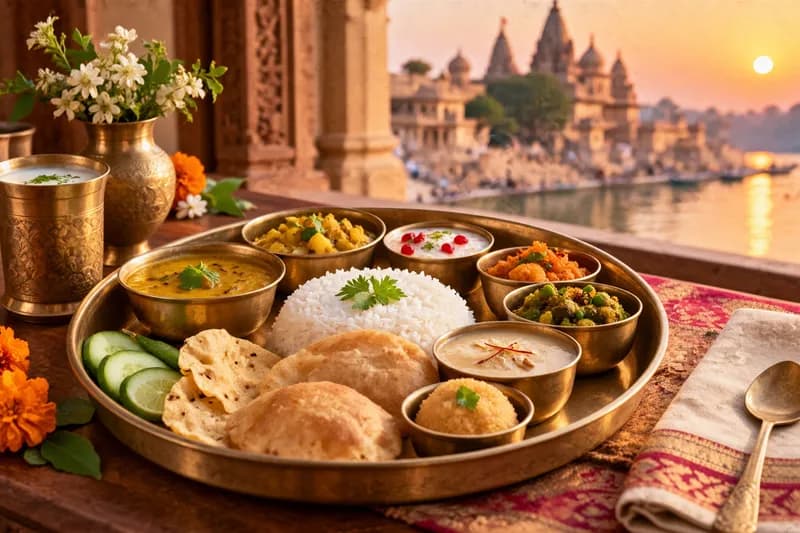
Satvik Awadhi Thali
A pure vegetarian meal cooked without onion or garlic, usually with rice, dal, puri and sabzi. It is served at dharamshalas, temple bhandaras and local bhojanalayas.
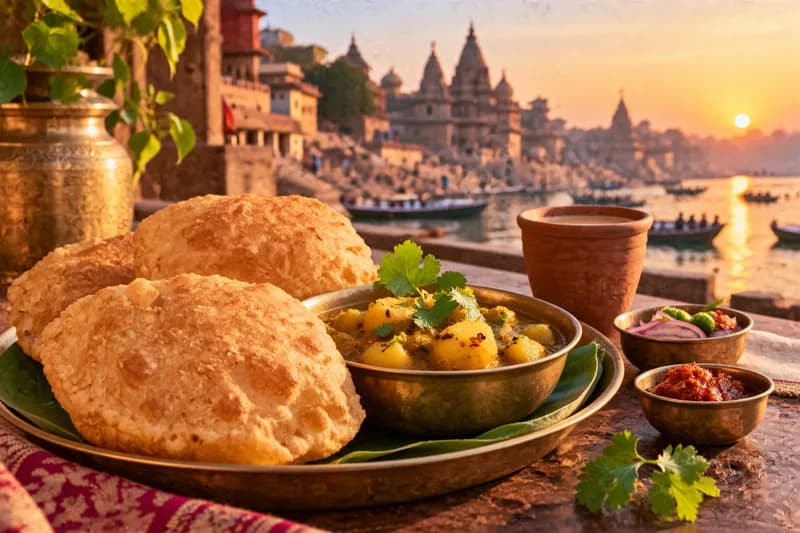
Puri-Sabzi
Fluffy fried bread with a mildly spiced potato curry. It is a filling, budget-friendly meal that is easy to find around the temple area.
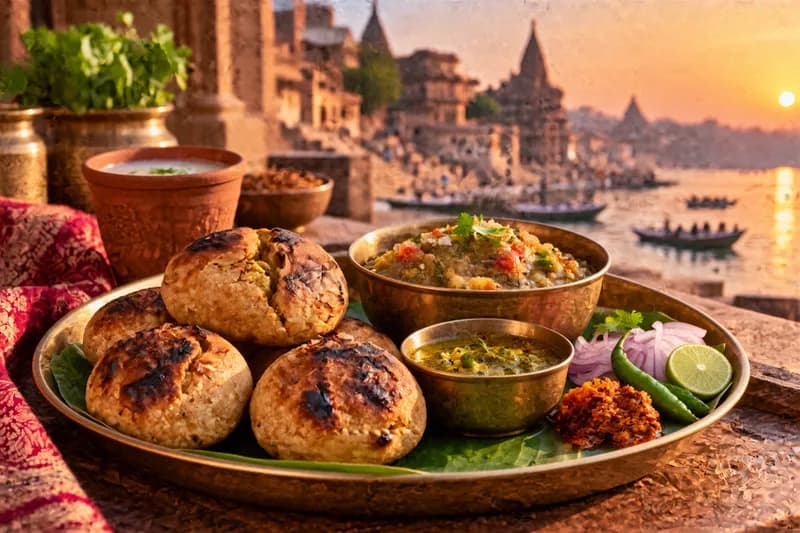
Litti Chokha
Roasted wheat balls stuffed with spiced sattu, served with mashed brinjal and potato (chokha). It is a rustic eastern Uttar Pradesh dish, widely available in the town.
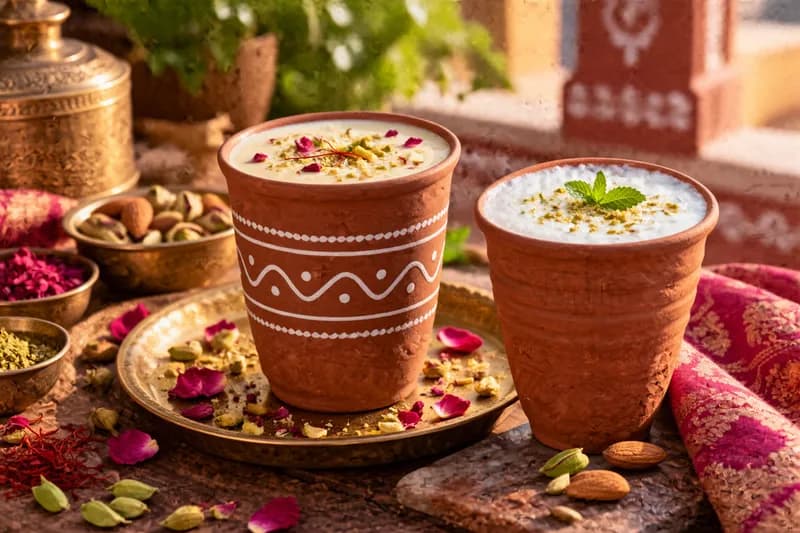
Thandai / Lassi
Chilled milk-based drinks. Thandai is flavoured with nuts, fennel and spices. Both are cooling and popular with pilgrims in the warmer months.
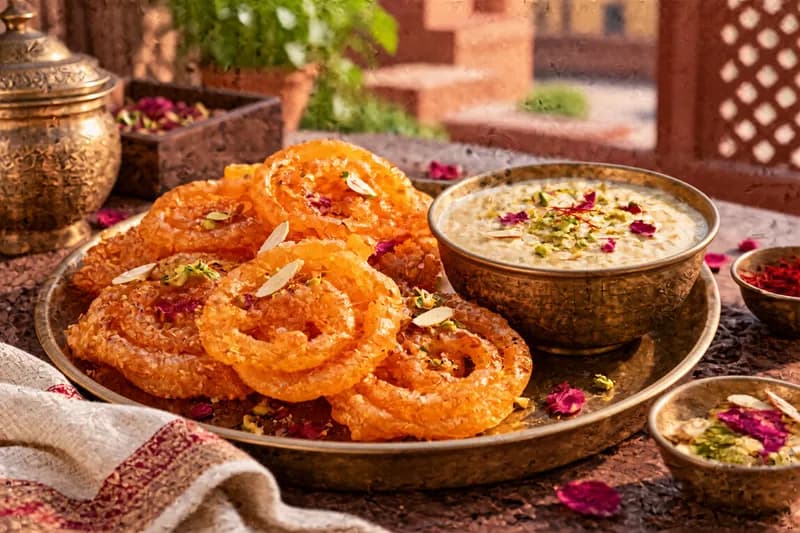
Jalebi and Rabri
Hot, syrupy jalebis paired with thick, sweetened reduced milk. This is a common evening treat near the markets.
Visitor guide
Maharishi Valmiki International Airport, Ayodhya Dham
About 10–12 km (roughly 25–40 minutes by road)
- Airport serving Ayodhya, reached via the NH-27/NH-330 road. Confirm current flight operations and ground transport before travelling.
Gallery
Videos
Third-party videos may include ads or external commentary.
Frequently Asked Questions
In the Ramkot area of Ayodhya, Uttar Pradesh, India.
Shri Ram Lalla, the childhood form of Lord Rama.
22 January 2024.
Shri Ram Janmabhoomi Teerth Kshetra Trust.
Traditional Nagara style.
Approximately 380 ft long, 250 ft wide and 161 ft high.
Passes may be required for selected aartis; confirm current arrangements with the Trust.
Timings can change, especially on festivals and special occasions; check official notices.
Ayodhya Dham Junction is a major station serving the city; Ayodhya Cantt also serves the area.
Use designated parking and follow current traffic/security directions; exact arrangements may change.