
29°C
Mathura
Shri Banke Bihari Mandir
 Mathura, Uttar Pradesh, India
Shri Banke Bihari Mandir in Vrindavan enshrines Banke Bihari Ji, the united form of Radha and Krishna who appeared to the saint-musician Swami Haridas at Nidhivan, and is famous for its curtain darshan.
- ReligionHindu
- DeityBanke Bihari (Radha and Krishna)
- TimingsMorning: 07:45 AM - 12:00 PM, Evening: 05:30 PM - 09:30 PM
About the temple
About the temple
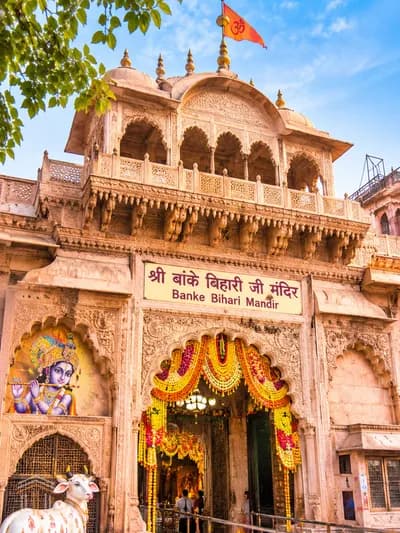
Shri Banke Bihari Mandir stands in the old town of Vrindavan, in Mathura district of Uttar Pradesh, a short walk from the sacred grove of Nidhivan and about 12 km from Mathura. It is one of the most visited temples of Vrindavan. The deity, Banke Bihari Ji, is Krishna standing in the graceful tribhanga posture, bent at three places, and is believed to be the united form of Radha and Krishna, who appeared to the 16th-century saint-musician Swami Haridas in Nidhivan in answer to his songs of devotion. Swami Haridas first worshipped the Lord as Kunj Bihari, the one who enjoys in the groves. In the 19th century, around 1862-1864, the Goswamis, the descendants of Swami Haridas’s family who serve the deity, built the present temple in Rajasthani style. Banke Bihari Ji is served as a child, and the temple’s customs follow that idea: there is no early-morning aarti or ringing of bells, the curtain before the deity is drawn every few minutes so that no devotee gazes too long, and Mangala Aarti is held only once a year, on Janmashtami. The Lord’s feet are seen only on Akshaya Tritiya, and he holds the flute only on Sharad Purnima. The temple draws lakhs of devotees on festivals, especially Holi, Janmashtami and the summer Phool Bangla season. Since 2025 its management has been overseen by a high-powered committee appointed by the Supreme Court. Darshan is free.
Shri Banke Bihari Mandir
Shri Banke Bihari Mandir
The Sacred Legacy of Banke Bihari Mandir in Numbers
Discover the history, worship and scale of one of the most visited Krishna temples of Vrindavan.
- Appearance of Bihari Ji to Swami Haridas
- 16th century
- Construction of the Present Temple
- About1862-1864
- Mangala Aarti a Year, on Janmashtami
- 1
- Day a Year for Charan Darshan (Akshaya Tritiya)
- 1
- Darshan Sessions Every Day
- 2
- Area of the Temple Complex
- About870 sq m
- Distance From Mathura
- About12 km
- Night a Year Bihari Ji Holds His Flute (Sharad Purnima)
- 1
- Darshan Courtyard
- About365 sq m
- Birth of Swami Haridas
- 1478
Appearance of Bihari Ji to Swami Haridas
Construction of the Present Temple
Mangala Aarti a Year, on Janmashtami
Day a Year for Charan Darshan (Akshaya Tritiya)
Darshan Sessions Every Day
Area of the Temple Complex
Distance From Mathura
Night a Year Bihari Ji Holds His Flute (Sharad Purnima)
Darshan Courtyard
Birth of Swami Haridas
Historical Background
The worship of Banke Bihari Ji began in the 16th century with Swami Haridas, the saint-musician of Vrindavan and guru of Tansen, who lived in the grove of Nidhivan. In tradition, Radha and Krishna appeared to him there in a single form, which he worshipped as Kunj Bihari. Haridas founded a distinct devotional tradition, known as the Haridasi sampradaya, focused on the eternal play of Radha and Krishna in the groves of Vrindavan, and his compositions are sung to this day. After him, the deity was served by Goswamis descended from his family, and the seva remained centred on Nidhivan for centuries. In the 19th century, following differences among Haridas’s followers, the Goswamis built the present temple near Nidhivan, completed around 1862-1864, and the deity was moved there. Built in Rajasthani style with arches, carved stonework and a large courtyard, the temple became one of the most visited shrines in Vrindavan. Its customs, the drawn curtain, the absence of bells and the yearly Mangala Aarti, became famous across India. Rising crowds in the narrow lanes led to concerns about safety, and in August 2022 two devotees died in the crush at the Janmashtami Mangala Aarti. The Uttar Pradesh government proposed a temple corridor to improve access, and in 2025 the Supreme Court appointed a high-powered committee, chaired by a retired judge of the Allahabad High Court, to oversee the temple’s management, while the Goswami families continue the seva. In September 2025 the committee extended the darshan hours and introduced a new queue system, a change that has been debated in the courts. Today Banke Bihari Mandir remains the heart of Vrindavan’s devotion, drawing lakhs of pilgrims on festivals.
16th century
16th century
Swami Haridas, saint-musician and guru of Tansen, lives in Nidhivan, Vrindavan, and sings to Radha and Krishna.Margashirsha Shukla Panchami (traditional)
Margashirsha Shukla Panchami (traditional)
Radha and Krishna appear to Swami Haridas in Nidhivan in a single form, worshipped as Kunj Bihari; the day is celebrated as Bihar Panchami.Following centuries
Following centuries
The deity is served in Nidhivan by the Goswamis, descendants of Haridas’s family.About 1862-1864
About 1862-1864
The Goswamis build the present temple near Nidhivan in Rajasthani style, and Banke Bihari Ji is installed there.August 2022
August 2022
Two devotees die in a crowd crush at the Janmashtami Mangala Aarti, leading to new crowd-safety measures.2023 onwards
2023 onwards
The Uttar Pradesh government plans a Banke Bihari temple corridor to improve access and safety.2025
2025
The Supreme Court appoints a high-powered committee to oversee the temple’s management.September 2025
September 2025
The committee extends darshan hours and introduces a new gate and queue system.About 25 October 2026
About 25 October 2026
Sharad Purnima, the one night of the year when Bihari Ji holds his flute.December 2026
December 2026
Bihar Panchami, the appearance day of Banke Bihari Ji, is celebrated.


Synopsis
Shri Banke Bihari Mandir is in Vrindavan. Its deity, Banke Bihari Ji, is the united form of Radha and Krishna, believed to have appeared to Swami Haridas, the 16th-century saint and singer, in Nidhivan. Served first as Kunj Bihari in the groves, the deity was moved to the present Rajasthani-style temple built by the Goswamis around 1862-1864. The Lord is cared for as a child: there are no bells, the curtain is drawn every few minutes, and Mangala Aarti is held only on Janmashtami. Rare darshans of his feet on Akshaya Tritiya and his flute on Sharad Purnima draw huge crowds, as do Holi, Jhulan and Phool Bangla. Darshan is free, and the temple is open in two sessions every day.
Shri Banke Bihari Mandir stands in the old town of Vrindavan, Mathura district, Uttar Pradesh, near Nidhivan and about 12 km from Mathura. It is dedicated to Banke Bihari Ji, the united form of Radha and Krishna.
The deity is linked to Swami Haridas, the 16th-century saint-musician, and was first worshipped at Nidhivan as Kunj Bihari. The present temple was built by the Goswamis around 1862-1864.
The Goswami families, descendants of Swami Haridas’s family, who have served the deity for generations.
One of the most visited temples of Vrindavan and a centre of the Haridasi devotional tradition, where Krishna is served as a child with unique customs: the drawn curtain, no bells, and Mangala Aarti only on Janmashtami.
The temple’s management has been overseen since 2025 by a high-powered committee appointed by the Supreme Court, while the Goswami families continue the seva. A corridor project is planned to improve access.
Sacred significance
Radha and Krishna in One Form
Banke Bihari Ji is believed to be Radha and Krishna united in a single image, so devotees receive the blessing of both in one darshan.
The Tribhanga Krishna
The Lord stands bent at three places, neck, waist and knee, the graceful pose of Krishna playing the flute, from which the name 'Banke' comes.
The Lord of Swami Haridas
The deity appeared in answer to the music and devotion of Swami Haridas, and the temple keeps alive his path of loving devotion through song.
Curtain Darshan
The curtain before the Lord is drawn every few minutes, giving devotees brief, precious glimpses and reminding them that the Lord is seen by grace.
The Child Who Is Not Disturbed
Bihari Ji is served as a child, so no bells are rung and he is not woken early. Devotees call out to him with love rather than with bells.
The Nightly Rasa
Devotees believe Bihari Ji goes to Nidhivan every night to perform Rasa with Radha and the gopis. This is why he rests late and is not woken early.
Mangala Aarti Once a Year
Mangala Aarti is held only on Janmashtami night.
Janmashtami Maha Abhishek
At midnight on Janmashtami, Bihari Ji is bathed in a private Maha Abhishek, and the panchamrit prasad is shared with devotees during the special night darshan.
Charan Darshan on Akshaya Tritiya
The Lord's feet, hidden all year, are shown only on Akshaya Tritiya, when he is also adorned with sandalwood paste.
The Flute on Sharad Purnima
On Sharad Purnima, the night of the Rasa dance, Bihari Ji holds his flute and wears a special crown. In 2026 it falls around 25 October.
Bihar Panchami
The appearance day of Bihari Ji, celebrated with a grand procession from Nidhivan in the month of Margashirsha (November–December).
Phool Bangla
In summer, palaces of flowers are built around the Lord to keep him cool, an offering of beauty and love.
Jhulan Yatra
In the monsoon month of Shravan, on Hariyali Teej, Bihari Ji is seated on a golden and silver swing, the Hindola, for special darshan.
Bihari Ji Leaves the Sanctum
On Hariyali Teej and during the Holi days, Bihari Ji comes out of the sanctum to the courtyard platform, giving devotees a rare, closer darshan.
Architecture
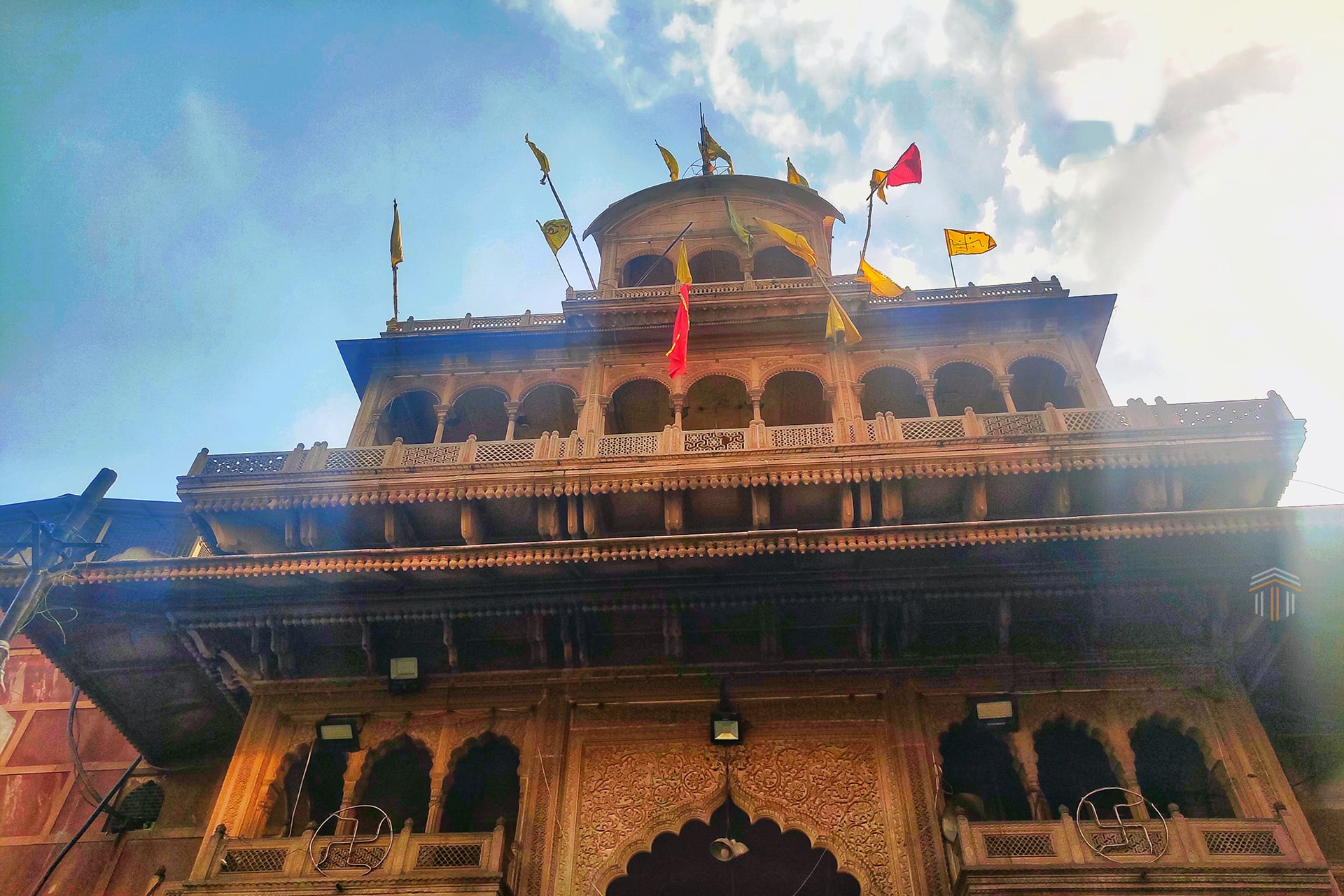
Shri Banke Bihari Mandir is built in the Rajasthani style, with arches, pillars and an open courtyard where devotees gather for darshan. Completed around 1862-1864, the temple's focus is the sanctum, where Banke Bihari Ji stands. The deity, a small dark image in the tribhanga pose, is dressed in fine clothes, jewels and a crown that change every day, and his feet remain covered except on Akshaya Tritiya. In front of the sanctum hangs the famous curtain, drawn every few minutes. The temple is surrounded by the narrow lanes of the old town, and the Goswami families' homes lie behind it. In recent years steel railings, entry and exit gates and queue barriers have been installed to manage the crowds, with entry through Gates 2 and 3 and exit through Gates 1 and 4. The temple complex is compact, about 870 square metres, which makes crowd management a constant challenge.
Style
Rajasthani Architecture
Arches and pillars in the Rajasthani style give the temple its character.
Sanctum
The Sanctum of Bihari Ji
The small dark image of Bihari Ji stands in the sanctum. He is dressed and adorned afresh every day.
Curtain
The Famous Curtain
A curtain hangs before the sanctum and is drawn every few minutes. It is the temple's best-known feature.
Courtyard
The Darshan Courtyard
An open courtyard where devotees stand for darshan. It fills to capacity on weekends and festivals.
Upper Floor
Flowers from Above
On the Holi of flowers, priests shower flowers on devotees from the temple's first floor.
Gates
Entry and Exit Gates
Entry is through Gates 2 and 3 and exit through Gates 1 and 4, with railings forming separate queues.
Phool Bangla
Flower Palaces
In summer, temporary palaces of flowers are built in the jagmohan, in front of the sanctum, around the deity. Each is a new work of art.
Interesting facts

Unlike most temples, no bells are rung at Banke Bihari, so as not to disturb the child-Lord. Devotees call to him instead.
Deities & Shrines
Shri Banke Bihari Ji
The presiding deity, Krishna in the tribhanga pose, believed to be Radha and Krishna in one form. He is served as a child by the Goswamis. Devotees call him lovingly 'Bihari Ji' and 'Thakur Ji'.
Shri Radha Rani
Radha is honoured as present within Bihari Ji's united form. Devotees greet each other with 'Radhe Radhe' in her honour.
Swami Haridas Ji
The saint-musician to whom Bihari Ji appeared, revered as an incarnation of Lalita Sakhi. His appearance day is celebrated by the temple.
Lalita Sakhi
Radha's dearest companion, of whom Swami Haridas is believed to be an incarnation. The Haridasi tradition worships in her mood of loving service.
Bihari Ji's Place of Appearance, Nidhivan
The spot in Nidhivan where Bihari Ji appeared is honoured as his Prakatya Sthal, along with the samadhi of Swami Haridas.
Giriraj Govardhan
The sacred hill near Vrindavan, worshipped on Annakut. Many pilgrims combine Bihari Ji's darshan with the Govardhan parikrama.
Darshan & Service Offerings
| Service | Timing | Price | Notes |
|---|---|---|---|
| General Darshan (Free Darshan) | Morning and evening sessions. | Free | Darshan of Bihari Ji is free for everyone. The temple is most crowded on weekends, holidays and festivals. |
| Shringar Aarti | 7:00 AM (summer) / 8:00 AM (winter). | Free | See the Lord freshly adorned at the start of the day. Arrive early to enter the courtyard. |
| Rajbhog Aarti | Before the morning closing. | Free | Attend the aarti after the Lord's midday meal. |
| Shayan Aarti | 9:30 PM (summer) / 9:00 PM (winter). | Free | The night aarti, as the Lord is put to rest. |
| Janmashtami Mangala Aarti | Janmashtami night, about 2:00 AM. | Free | The only Mangala Aarti of the year, with enormous crowds. Entry inside may be limited to pass-holders, with a live stream for others. Follow police instructions carefully. |
| Charan Darshan | Akshaya Tritiya. | Free | The once-a-year darshan of Bihari Ji's feet, adorned with sandalwood. |
| Bansi and Mukut Darshan | Sharad Purnima. | Free | The Lord holds his flute and wears a special crown on the night of the Rasa dance. |
| Jhulan Darshan | Hariyali Teej, in Shravan month (July-August). | Free | Bihari Ji sits on a magnificent golden swing during the monsoon festival. |
| Phool Bangla Darshan | Summer evenings. | Free | See the Lord in palaces of flowers sponsored by devotees in the summer season. |
| Phool Bangla Seva | Booked in advance with the temple. | ₹1.51 lakh per flower decoration (2026) | Sponsor a flower palace for the Lord. |
| Flower and Garland Offering | During darshan. | Cost of offerings | Offer flowers and garlands bought from shops outside. |
| Prasad | During darshan hours. | Cost of sweets | Pedas and other sweets offered to the Lord are received as prasad. |
| Donations | During darshan hours. | Donation-based | Donations support the temple's seva and upkeep. Donate only through the official donation boxes or the temple's online treasury. Donations are voluntary. |
Visitor information
Location
Shri Banke Bihari Mandir, Bihari Pura, near Nidhivan, Vrindavan, Mathura district, Uttar Pradesh - 281121, India. Expect very large crowds; arrive early. In 2026, Sharad Purnima falls around 25 October. The temple is a short walk from Nidhivan through the lanes of the old town.
Darshan Hours
Summer: 07:00 AM-12:30 PM and 04:15-09:30 PM. Winter: 08:00 AM-01:30 PM and 04:00-09:00 PM.
Entry
There is no entry fee. Darshan is free.
Entry and Exit Gates
Enter through Gates 2 and 3 and leave through Gates 1 and 4, following the railed queues. Volunteers and police guide the movement.
Crowd Levels
Weekends, holidays, Holi, Janmashtami and the summer evenings are extremely crowded.
Time Needed
On festival days, queues can stretch for about two kilometres.
Walking Access
The last stretch is on foot through narrow lanes. Vehicles cannot reach the temple. Wear comfortable footwear for the lanes.
Footwear
Leave footwear at the shoe stands outside before entering.
Photography
Photography of the deity is not allowed inside the temple. Respect the rule even in the courtyard.
Crowd Safety
Avoid the busiest days with small children and elderly family members, and do not push in the courtyard. Choose a meeting point in case your group is separated.
Accessibility
The lanes and crowds make access difficult for wheelchair users. Visit with help.
Language
Hindi and Braj Bhasha are spoken. 'Radhe Radhe' is the common greeting.
Important Visitor Notice
Follow the instructions of the police and temple staff. Beware of monkeys and pickpockets in the lanes.
Location
Mathura, Uttar Pradesh, India
Best Time to Visit
October to March
Cool, pleasant weather makes these months the best time to visit Vrindavan. December and January bring fog and cold. Carry warm clothes.
Sharad Purnima (October)
The one night Bihari Ji holds his flute, around 25 October 2026. Expect large crowds. Arrive early in the evening and follow police instructions.
Holi (February-March)
Colours and flowers at the temple. Extremely crowded; plan carefully. Wear old clothes and protect your eyes and phone.
Janmashtami (August-September)
The birth of Krishna and the year's only Mangala Aarti. Very large crowds. Avoid bringing children and elderly family members into the midnight crowd.
Akshaya Tritiya (April-May)
The once-a-year darshan of Bihari Ji's feet. The Lord is adorned with sandalwood to keep him cool.
Summer (April-June)
Hot, but the Phool Bangla flower decorations make summer evenings special. Visit early and carry water.
Monsoon (July-August)
The Jhulan swing festival and Hariyali Teej bring special darshans. Lanes can be muddy; wear suitable footwear.
New Year Week
Crowds peak from late December to early January. In 2025 the temple asked devotees to avoid visiting between 29 December and 5 January.
Nearby places
Nidhivan
About 900 m
- The grove where Bihari Ji appeared to Swami Haridas, with the saint's samadhi. Tradition says Radha and Krishna perform the Rasa here at night, so it is closed after dark. Visit in the daytime only.
Seva Kunj
About 500 m
- A sacred grove where Krishna is believed to come every night. It is closed in the evening.
Festivals & culture
Banke Bihari Mandir celebrates the festivals of Braj with great joy. Its festivals include Holi, Janmashtami, Radhashtami, Sharad Purnima, Akshaya Tritiya, Jhulan Yatra, Hariyali Teej and Bihar Panchami. On festival days the Lord's dress, flowers and darshan change, and lakhs of devotees visit. The police make special crowd arrangements. Festival dates follow the Hindu calendar and change every year.
Holi
February-March
Vrindavan's Holi season fills the temple with gulal, colours and flower petals showered on devotees. Rangbhari Ekadashi and Phoolon wali Holi are the highlights.
Janmashtami
August-September
The birth of Krishna, with the year's only Mangala Aarti in the early hours after midnight. Extremely crowded.
Sharad Purnima
October (about 25 October 2026)
Bihari Ji holds his flute and wears a special crown on the night of the Rasa dance.
Akshaya Tritiya
April-May
The once-a-year darshan of Bihari Ji's feet, with sandalwood adornment.
Bihar Panchami
November-December (14 December 2026)
The appearance day of Bihari Ji, celebrated with a procession from Nidhivan to the temple.
Additional information
Shri Banke Bihari Mandir
Also known as Bankey Bihari Temple and Bihariji Temple. 'Banke' means bent and 'Bihari' means the one who enjoys.
Location
Bihari Pura, near Nidhivan, Vrindavan, Mathura, Uttar Pradesh - 281121.
Darshan Hours
Summer: 07:00 AM-12:30 PM and 04:15-09:30 PM. Winter: 08:00 AM-01:30 PM and 04:00-09:00 PM.
Management
Overseen since 2025 by a high-powered committee appointed by the Supreme Court; the Goswami families carry on the seva. Decisions on timings and queues are announced by the committee.
Entry Fee
Entry and darshan are free.
Curtain Darshan
The curtain is drawn every few minutes during darshan. Wait patiently; it reopens shortly.
Rare Darshans
Mangala Aarti on Janmashtami, feet on Akshaya Tritiya and flute on Sharad Purnima. These days draw very large crowds.
Photography
Photography of the deity is not allowed.
Crowd Advisory
Expect very large crowds on weekends and festivals.
Temple facilities
Queue Railings and Gates
Steel railings form separate queues, with entry through Gates 2 and 3 and exit through Gates 1 and 4. Volunteers and police guide devotees through the lines.
Shoe Stands
Shoe stands and shops outside the temple keep footwear during darshan.
Drinking Water
Drinking water is available near the temple and in the lanes. Carry your own bottle on hot days.
Police and CCTV
Police and CCTV monitor the crowds, especially on weekends and festivals. Report lost persons and items to the nearest police booth.
First Aid
First-aid arrangements are made on festival days. Hospitals are nearby. Ask the police to direct you to the nearest medical post.
Public Announcements
Announcements guide devotees on queues, timings and lost persons. Agree on a meeting point with your group in case you are separated.
Prasad and Flower Shops
Shops in the lanes sell prasad, flowers and garlands for offering. Check the freshness of sweets before buying.
E-Rickshaw Access
E-rickshaws bring pilgrims close to the temple; the last stretch is on foot. Agree on the fare before the ride.
Emergency services
India Emergency Response
Not location-specific
Contact
112
- Call 112 for urgent police, medical or fire assistance through India's integrated emergency response system.
Top picks
Shri Brijwasi Peda Wala
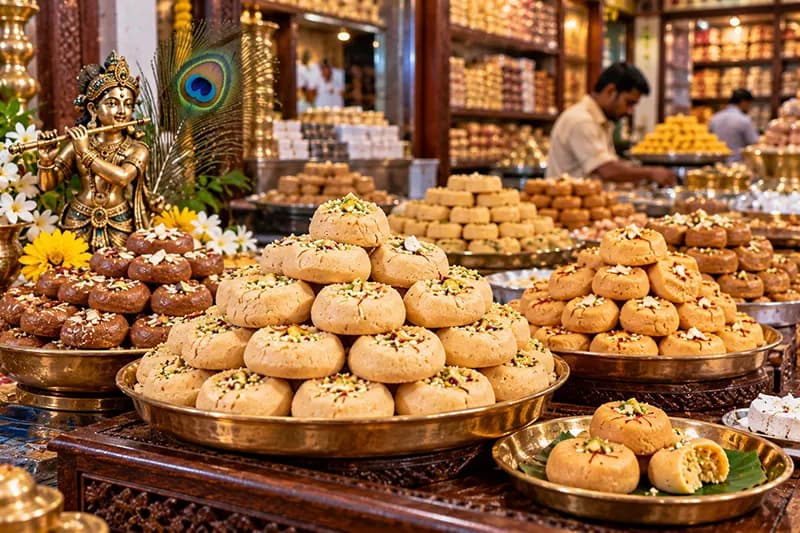
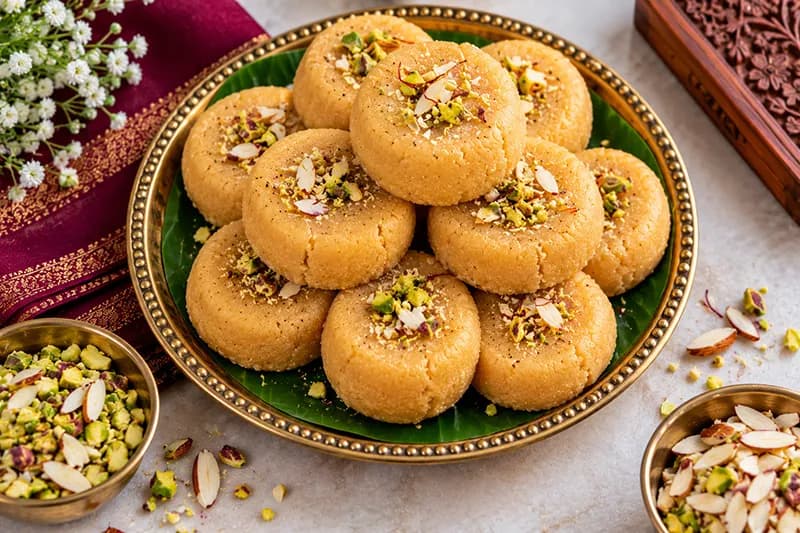
A well-known sweet shop in front of the temple for pure-ghee Mathura pedas, plus samosa and jalebi. Open 10:00 AM-09:00 PM.
Radha Bihari Misthan Bhandar
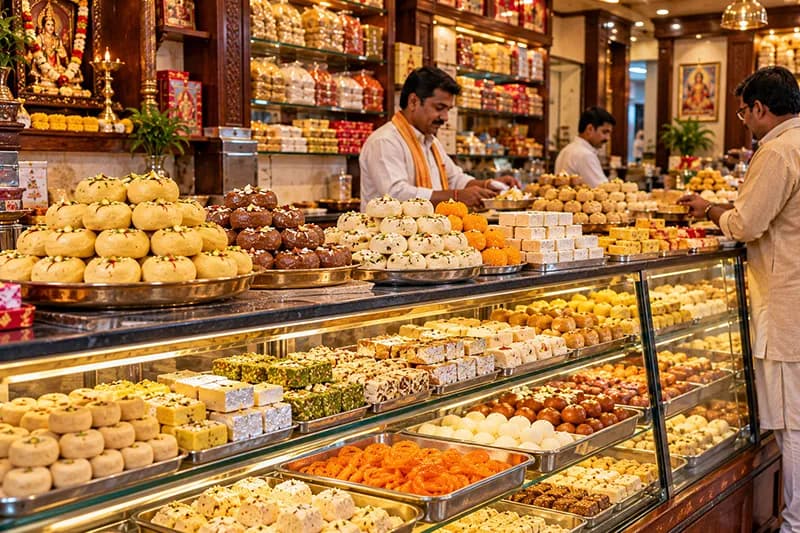
Desi-ghee pedas and Braj sweets, popular for offering to Bihari Ji and taking home. Open 07:00 AM-01:30 PM and 03:30-10:15 PM.
Krishna Brijwasi Pede Wale
A sweet shop in Banke Bihari Gali for pedas and offering sweets. Open from 06:15 AM.
Visitor guide
Mathura Junction
About 12-14 km
- The main railway station for Vrindavan, on the Delhi-Agra and Delhi-Mumbai lines. Autos and taxis are available outside.
Gallery
Videos
Third-party videos may include ads or external commentary.
Frequently Asked Questions
Krishna in the tribhanga pose, believed to be Radha and Krishna in one form.
In the old town of Vrindavan, near Nidhivan, about 12 km from Mathura.
Swami Haridas, the 16th-century saint-musician and guru of Tansen.
Around 1862-1864, by the Goswamis.
Summer 7:00 AM-12:30 PM and 4:15-9:30 PM; winter 8:00 AM-1:30 PM and 4:00-9:00 PM.
So that no devotee gazes too long at the Lord; it is drawn every few minutes.
The Lord is served as a child, and bells would disturb him.
No, only on Janmashtami.
Only on Akshaya Tritiya.
Only on Sharad Purnima.
No. Entry and darshan are free for everyone. Devotees do not need a ticket for regular darshan.
Entry through Gates 2 and 3, exit through Gates 1 and 4.
No, park outside and walk or take an e-rickshaw.
Mathura Junction, about 12-14 km away.