
28°C
Thoothukudi
Arulmigu Subramaniya Swamy Temple
 Thoothukudi, Tamil Nadu, India
Tiruchendur is the second of Lord Murugan's six sacred abodes (Arupadai Veedu) and the only one on the seashore, where Murugan is revered as Senthil Andavar after his victory over the asura Surapadman.
- ReligionHindu
- DeityLord Murugan
- Timings04:00 AM - 09:00 PM
About the temple
About the temple
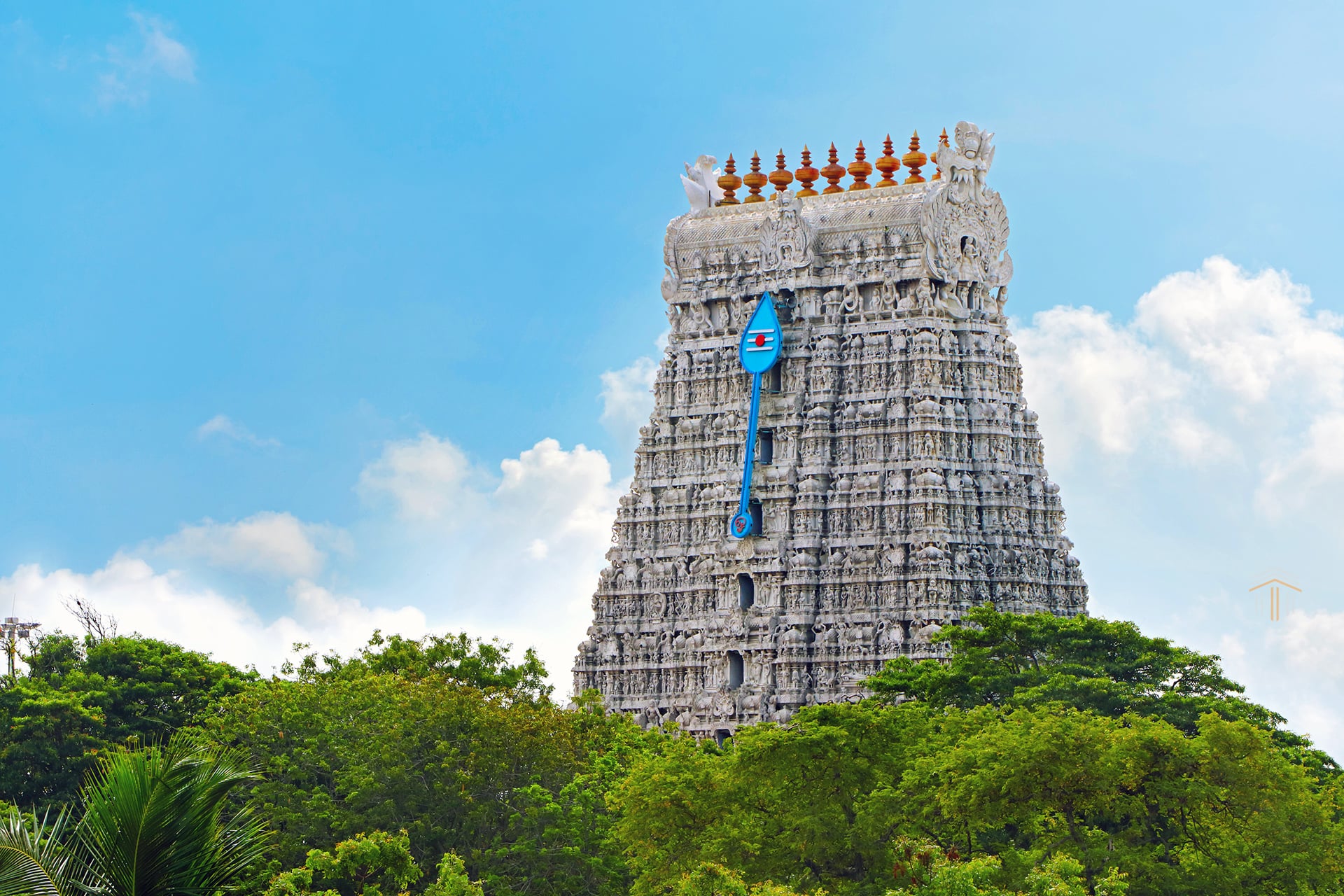
Arulmigu Subramaniya Swamy Temple at Tiruchendur is one of the most revered Murugan temples in India and the second of the six Arupadai Veedu, the sacred abodes of Lord Murugan. Standing directly on the seashore of the Gulf of Mannar in Thoothukudi district, Tamil Nadu, it is the only one of the six abodes that is not on a hill. Tradition holds that Murugan defeated the asura Surapadman here, and the victory is re-enacted every year as Soorasamharam on the beach during Kanda Sashti. The present granite complex, crowned by a nine-tier western Rajagopuram about 157 ft high, took shape over centuries of royal, monastic and devotee patronage, and the temple's most recent Maha Kumbabhishekam was held on 7 July 2025 after a major redevelopment.
Arulmigu Subramaniya Swamy Temple
Arulmigu Subramaniya Swamy Temple
The Sacred Legacy of Tiruchendur Murugan Temple in Numbers
Discover the sacred history and living traditions of Arulmigu Subramaniya Swamy Temple, Tiruchendur, the second of Lord Murugan's six abodes and the only one on the seashore. These numbers capture its place in Tamil devotion, its architecture and the scale of its pilgrimage.
- Second of the Six Sacred Abodes (Arupadai Veedu) of Lord Murugan
- 2 of 6
- Tiers of the Western Rajagopuram, Rising About 157 ft (48 m)
- 9 Tiers
- Approximate Year the Rajagopuram Was Built by Desikamoorthy Swamigal of Thiruvavaduthurai Adheenam
- c.1650
- Daily Pooja Kalams Performed in the Temple's Traditional Schedule
- 9
- Processional (Utsava) Deities - Shanmugar, Jayanthinathar, Kumara Vidangar and Alaivai Perumal
- 4
- Duration of the Kanda Sashti, Masi and Avani Festivals
- 12 Days
- Value of the Master Plan of Pilgrim Facilities Inaugurated in 2022
- Rs300 Crore
- Date of the Most Recent Maha Kumbabhishekam, Attended by About 5 Lakh Devotees
- 7 July 2025
Second of the Six Sacred Abodes (Arupadai Veedu) of Lord Murugan
Tiers of the Western Rajagopuram, Rising About 157 ft (48 m)
Approximate Year the Rajagopuram Was Built by Desikamoorthy Swamigal of Thiruvavaduthurai Adheenam
Daily Pooja Kalams Performed in the Temple's Traditional Schedule
Processional (Utsava) Deities - Shanmugar, Jayanthinathar, Kumara Vidangar and Alaivai Perumal
Duration of the Kanda Sashti, Masi and Avani Festivals
Value of the Master Plan of Pilgrim Facilities Inaugurated in 2022
Date of the Most Recent Maha Kumbabhishekam, Attended by About 5 Lakh Devotees
Historical Background
Arulmigu Subramaniya Swamy Temple at Tiruchendur has an ancient history. It is celebrated in the Sangam-era Tirumurugatrupadai of Nakkeerar as Thirucheeralaivai, the second of Murugan’s six abodes, and is named among the Vaippu Sthalams in the hymns of the Shaivite saint Appar. Pandya-period inscriptions record endowments to the shrine, and the temple was supported over the centuries by Pandya, Chera and Nayak rulers, Shaiva mutts and local devotees. In 1646-1648 the Dutch occupied the temple during their conflict with the Portuguese and carried away processional idols, which were recovered in 1653 through the efforts of Vadamalaiyappa Pillai. The nine-tier western Rajagopuram was raised around the mid-17th century by Desikamoorthy Swamigal of the Thiruvavaduthurai Adheenam. Because sea air had worn the earlier stonework, three ascetics, Mauna Swami, Kasi Swami and Arumuga Swami, led a long renovation that rebuilt much of the complex in granite, followed by a kumbhabhishekam in 1941. The temple is administered by the Tamil Nadu HR&CE Department, received ISO certification, and was transformed by a Rs 300 crore master plan before its Maha Kumbabhishekam on 7 July 2025.
Sangam era (early centuries CE)
Sangam era (early centuries CE)
Nakkeerar’s Tirumurugatrupadai names Thirucheeralaivai (Tiruchendur) as the second of Lord Murugan’s six sacred abodes.7th century CE
7th century CE
The Shaivite saint Appar refers to the shrine in his Tevaram hymns, and it is counted among the Vaippu Sthalams.Pandya period (c. 9th century CE onwards)
Pandya period (c. 9th century CE onwards)
Inscriptions associated with Pandya rulers record gifts and endowments to the temple.15th century CE
15th century CE
The poet-saint Arunagirinathar sang the glory of Tiruchendur’s Murugan in his Thiruppugazh hymns.1646-1648 CE
1646-1648 CE
The Dutch occupied the temple during their conflict with the Portuguese, and the Madurai Nayak ruler Thirumalai Nayak ordered their removal.1653 CE
1653 CE
Processional idols of Murugan taken by the Dutch were recovered and reinstated through the efforts of Vadamalaiyappa Pillai.c. 1650 CE
c. 1650 CE
The nine-tier western Rajagopuram was built by Desikamoorthy Swamigal of the Thiruvavaduthurai Adheenam.17th century CE
17th century CE
The poet-saint Kumaraguruparar, traditionally said to have been mute until he was blessed at Tiruchendur, composed the Kandar Kalivenba here.Late 19th-early 20th century
Late 19th-early 20th century
Mauna Swami, Kasi Swami and Arumuga Swami led a renovation that rebuilt much of the temple in granite.1941 CE
1941 CE
A kumbhabhishekam was performed after the completion of the major renovation.26 December 2004
26 December 2004
The Indian Ocean tsunami struck the Tamil Nadu coast; the temple was widely reported to have escaped damage.2009 CE
2009 CE
A Maha Kumbabhishekam was performed at the temple.2021-2022 CE
2021-2022 CE
Full-day annadhanam began on 16 September 2021, and a Rs 300 crore master plan of pilgrim facilities, about Rs 200 crore of it donated by HCL founder Shiv Nadar, was inaugurated on 28 September 2022.7 July 2025
7 July 2025
The Maha Kumbabhishekam was held after the redevelopment, presided over by the Sringeri Shankaracharya and attended by about 5 lakh devotees.


Synopsis
Arulmigu Subramaniya Swamy Temple, Tiruchendur, in Thoothukudi district, Tamil Nadu, is the second of Lord Murugan's six sacred abodes and the only one beside the sea. Murugan is worshipped here as Senthil Andavar, Subramaniya Swamy and Jayanthinathar, the Lord of Victory, in memory of his triumph over Surapadman. The temple is famous for Kanda Sashti and Soorasamharam, the Ilai Vibhuti prasadam wrapped in panneer leaves, and the sacred Nazhi Kinaru spring. It is administered by the Tamil Nadu Hindu Religious and Charitable Endowments Department, and its Maha Kumbabhishekam was held on 7 July 2025.
Arulmigu Subramaniya Swamy Temple, dedicated to Lord Murugan as Subramaniya Swamy and Senthil Andavar, is the second of the six Arupadai Veedu and stands on the seashore at Tiruchendur in Thoothukudi district. It is mentioned in the Sangam-era Tirumurugatrupadai, which makes it one of the oldest recorded Murugan shrines in Tamil Nadu. The sanctum is carved into a low rock outcrop on the shore, and the larger complex grew around it over many centuries.
Pandya-period inscriptions record endowments to the temple. The best-documented episode in its later history is the Dutch occupation of 1646-1648, when the temple was used as a fortified position during the Dutch-Portuguese conflict and processional idols were carried away. Thirumalai Nayak of Madurai ordered the Dutch to leave, and the idols were recovered in 1653 through Vadamalaiyappa Pillai, an episode that remains part of the temple’s living tradition.
Pandya, Chera and Nayak rulers supported the temple over the centuries. Desikamoorthy Swamigal of the Thiruvavaduthurai Adheenam built the nine-tier western Rajagopuram around the mid-17th century. Three ascetics, Mauna Swami, Kasi Swami and Arumuga Swami, led a renovation that rebuilt much of the complex in granite. In the 2020s, HCL founder Shiv Nadar donated about Rs 200 crore towards the temple’s Rs 300 crore master plan.
As one of the Arupadai Veedu and the site of Murugan’s victory over Surapadman, Tiruchendur is among the most important Murugan pilgrimage centres in the world. It is also honoured as a Guru Sthalam, and its Kanda Sashti festival draws lakhs of devotees for the Soorasamharam on the shore.
The temple is administered by the Tamil Nadu Hindu Religious and Charitable Endowments Department. It received ISO certification, and the master plan works, including accommodation, an annadhanam hall and sea-erosion protection walls, culminated in the Maha Kumbabhishekam of 7 July 2025.
Sacred significance
The Second of Murugan's Six Abodes
Tiruchendur is revered as the second of the Arupadai Veedu, the six sacred abodes of Lord Murugan celebrated in Nakkeerar's Tirumurugatrupadai. Pilgrims who undertake the six-abode pilgrimage regard a visit here as essential.
The Seashore Shrine of Victory
Tiruchendur is the only one of the six abodes on the seashore. Tradition holds that Murugan fought and defeated Surapadman here, and he is worshipped as Jayanthinathar, the Lord of Victory. Devotees come here to pray for victory over enemies, obstacles and inner weaknesses.
Guru Sthalam
Because Guru Bhagavan (Brihaspati) is believed to have counselled Murugan here before the battle, Tiruchendur is honoured as a Guru Sthalam. Devotees visit for special prayers during Guru Peyarchi (the transit of Jupiter) and to seek wisdom, learning and relief from planetary afflictions.
Kanda Sashti and Soorasamharam
The temple's greatest festival is Kanda Sashti in the Tamil month of Aippasi, when devotees fast for six days and Murugan's victory is re-enacted as Soorasamharam on the beach. The divine wedding (Thirukalyanam) with Deivanai follows on the seventh day.
Ilai Vibhuti - The Healing Prasadam
The sacred ash of Tiruchendur, given wrapped in a panneer leaf, is treasured by devotees as a healing prasadam. Its association with Adi Shankara's recovery and the composition of the Subramanya Bhujangam gives it a special place in the temple's tradition.
Architecture
Arulmigu Subramaniya Swamy Temple is built in the Dravidian style of South Indian temple architecture, with towering gopurams, pillared mandapams and enclosed prakarams. Unusually, it stands on the seashore, and the sanctum is carved into a low sandstone outcrop on the beach, giving it a cave-like character. The complex measures about 91 m north to south and 65 m east to west, and its most striking feature is the nine-tier western Rajagopuram, about 157 ft high, built in the mid-17th century. Much of the present granite fabric dates from a long renovation.
Layout
Layout and Entrances
The temple has its principal entrance on the south and is organised around concentric prakarams, with the outermost corridor running close to the shoreline. Pillared halls lead from the entrance towards the sanctum, and the sea lies just beyond the eastern wall.
Gopuram
The Nine-Tier Rajagopuram
The western Rajagopuram (Mela Gopuram) rises in nine tiers to about 157 ft and is crowned with nine kalasams. It was built around 1650 by Desikamoorthy Swamigal of the Thiruvavaduthurai Adheenam. Its lower entrance is kept closed according to temple tradition, and devotees enter from the south.
Sanctum
Garbha Griha (Sanctum Sanctorum)
The sanctum is cut into the rock of the shore. The presiding deity, Subramaniya Swamy, stands facing east in the form of an ascetic with four arms, and beside his sanctum are the five lingams of the Panchalingam, one of which is believed to have been worshipped by Murugan after his victory.
Mandapam
Shanmuga Vilasa Mandapam
The first great hall on entering the temple, the Shanmuga Vilasa Mandapam is a broad pillared hall facing the sea. It is used for festival rituals and the processions of the utsava deities.
Shrines
Shrines of the Prakarams
The second prakaram contains separate shrines for Valli and Deivanai. The corridors also house shrines of Viswanathar and Visalakshi, a Vishnu shrine with Venkatachalapathi and the reclining Ranganatha, and the separate shrines of the four utsava deities, Shanmugar, Jayanthinathar, Kumara Vidangar and Alaivai Perumal.
Well
Nazhi Kinaru
About 100 m south of the temple, this sacred spring is enclosed in an outer well about 14 ft square, within which a small inner well about 1 ft square holds fresh water, even though the sea is only a few steps away.
Cave
Valli Cave (Valli Kugai)
To the north of the temple, near the shore, is a small cave shrine dedicated to Goddess Valli, Murugan's consort, which devotees visit after darshan at the main shrine. It is a popular stop on the circuit of the temple.
Redevelopment
Master Plan and Coastal Protection
A Rs 300 crore master plan largely completed before the 2025 Maha Kumbabhishekam added an annadhanam hall, accommodation and retaining walls to protect the complex from sea erosion, while conserving the historic structure.
Interesting facts

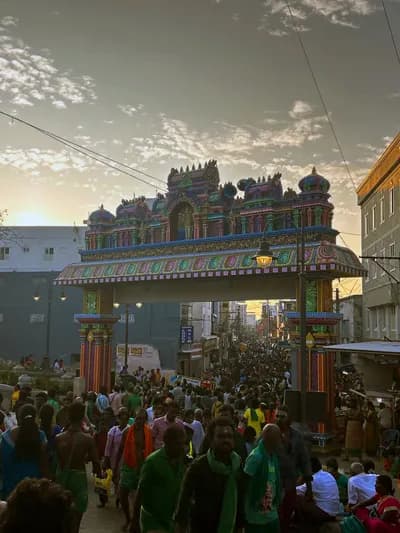
Five of Murugan's six sacred abodes stand on hills, but Tiruchendur stands on the seashore, so close that waves lap at its eastern wall. Pilgrims traditionally bathe in the sea before darshan, a practice found at none of the other five abodes.
Deities & Shrines
Shanmugar (Arumugam)
The six-faced, twelve-armed form of Murugan is the temple's principal processional deity and has its own shrine. Shanmugar leads the great festival processions, and on the seventh and eighth days of the Masi and Avani Brahmotsavams he appears in red (Shiva), white (Brahma) and green (Vishnu) forms.
Jayanthinathar
Jayanthinathar, the Lord of Victory, is the processional form of Murugan who leads the Soorasamharam on the seashore during Kanda Sashti. The town's name, Tiruchendur, is traditionally derived from his name.
Kumara Vidangar and Alaivai Perumal
These two further processional forms of Murugan each have separate shrines. Kumara Vidangar, popularly called Mappillai Swamy (the bridegroom), appears in wedding festivities, while Alaivai Perumal, Lord of the Waves, reflects the temple's seashore setting.
Goddess Valli
Valli, Murugan's consort from a hunter community, has a separate shrine in the second prakaram.
Goddess Deivanai
Deivanai, the daughter of Indra and Murugan's consort, has her own shrine in the second prakaram. Her celestial wedding to Murugan (Thirukalyanam) is celebrated the day after Soorasamharam during Kanda Sashti.
Panchalingam
Beside the presiding deity's sanctum, five lingams are worshipped. Tradition holds that Murugan worshipped Shiva here after his victory, and lamps offered to Murugan are shown to the lingam he is believed to have worshipped.
Viswanathar and Visalakshi
Shrines of Lord Shiva as Viswanathar and Goddess Parvati as Visalakshi stand on the western side of the complex, honouring Murugan's divine parents.
Venkatachalapathi and the Vishnu Shrine
In the northern corridor, a Vishnu shrine houses Venkatachalapathi (Venkatesa Perumal) standing, Ranganatha in his reclining form, and Gajalakshmi, reflecting the harmony of Shaiva and Vaishnava worship at the temple.
Lord Ganesha (Vinayaka)
Shrines of Lord Ganesha, Murugan's elder brother, are worshipped. Devotees seek his blessings for the removal of obstacles.
Dakshinamurthy
Lord Shiva as Dakshinamurthy, the supreme teacher, is worshipped in the temple. His presence is especially meaningful at Tiruchendur, a Guru Sthalam, and devotees pray to him for knowledge and learning.
Darshan & Service Offerings
| Service | Timing | Price | Notes |
|---|---|---|---|
| General Darshan (Free Darshan) | During temple opening hours; entry to the general queue closes at about 7:00 PM. | Free | General darshan allows devotees to worship Lord Subramaniya Swamy without an entry fee. It is the standard darshan option, and waiting times depend on crowds, weekends, festivals and ritual schedules. |
| Special Darshan (Viraivu Darshan) | During temple opening hours; entry to the paid queue closes at about 6:30 PM. | Rs 100 per person | A paid darshan with a separate, faster queue. A dedicated waiting hall for about 2,000 devotees is being built for this queue, with seating, drinking water and restrooms. |
| Senior Citizens and Differently-Abled Queue | During temple opening hours, subject to crowd arrangements. | Free | A separate queue is provided for senior citizens and persons with disabilities, so they can complete darshan without waiting in the main lines. |
| Viswaroopa Darshan (Early-Morning Darshan) | About 05:30 AM, after the Suprabhatham. | As per temple arrangements | The first darshan of the day. |
| Abhishekam (Sacred Bathing Ritual) | At scheduled abhishekam times during the day. | Paid; confirm the current rate. | Devotees can sponsor an abhishekam of the Lord with milk, panchamirtham, sandal paste and other sacred substances and witness the ritual. |
| Shanmugar Archanai | As scheduled by the temple. | Paid; confirm the current rate. | A special archanai to Shanmugar, the six-faced form of Murugan, chanting his names in worship. |
| Udaya Marthanda Abishegam (Sunrise Abhishekam Darshan) | About 06:15 AM; Deeparadhanai at about 07:00 AM. | Free with general darshan; paid queue optional. | Devotees in the queue can witness the first abhishekam of the day and the sunrise deeparadhanai. |
| Uchikkala Abishegam (Midday Abhishekam Darshan) | 10:30 AM - 12:00 PM. | Free with general darshan; paid queue optional. | The midday abhishekam, followed by the Uchikkala Deeparadhanai. |
| Sayaratchai Pooja (Evening Darshan) | About 05:00 PM. | Free with general darshan; paid queue optional. | The evening worship at dusk. |
| Arthasama Abishegam (Night Abhishekam) | About 07:15 PM; Arthasama Pooja at about 08:15 PM. | Free with general darshan. | The night abhishekam, followed by the Arthasama Pooja. Devotees should join the queue before the cut-off times to complete darshan before closing. |
| Online Booking | Through the official portal. | As listed on the portal | The temple's official HR&CE portal provides information on services, online donations and selected bookings. |
Visitor information
Location
Arulmigu Subramaniya Swamy Temple is located on the seashore at Tiruchendur, Thoothukudi District, Tamil Nadu - 628215, India. It is about 40 km south of Thoothukudi and about 60 km south-east of Tirunelveli.
Temple Opening Hours
The temple is generally open from 05:00 AM to 09:00 PM daily. On major festival days it may open as early as 01:00 AM, and in the month of Margazhi at about 03:00 AM.
Darshan Queue Timings
To ensure everyone in the queue completes darshan before closing, entry to the Rs 100 paid queue closes at about 06:30 PM and entry to the free general queue at about 07:00 PM. These times may be revised on festival days.
Entry and Ticket Information
General darshan is free. Special Viraivu Darshan costs Rs 100 per person, and a separate queue is provided for senior citizens and persons with disabilities. Abhishekam, archanai and golden chariot sevas are paid services.
Sea Bath and Nazhi Kinaru
Pilgrims traditionally bathe in the sea and then at Nazhi Kinaru before darshan. Bathe only in the designated area, follow the instructions of lifeguards and police, and avoid the water when the sea is rough.
Dress and Attire
Devotees are advised to wear traditional, modest clothing, such as a veshti or dhoti for men and a saree, half-saree or salwar kameez for women. Men are customarily asked to remove shirts in certain inner areas; follow the instructions of temple staff.
Mobile Phones and Security
Following a Madras High Court order, mobile phones are not allowed inside the temple. Devotees pass through security checks and metal detectors at every queue entrance.
Mobile Phone Deposit Counters
Mobile phones can be deposited at four counters along the Giri Prakaram for Rs 5 per phone, with a token for collection after darshan.
Temple Office
The temple office can be contacted at 04639-242221 for information on darshan, sevas, accommodation and festivals.
Official Portal
Devotees can visit the official portal, <a href="https://tiruchendurmurugan.hrce.tn.gov.in" target="_blank">Official Website</a>, for services, donations and announcements.
Accessibility and Assisted Darshan
A separate queue is provided for senior citizens and persons with disabilities. Visitors who need assistance should approach temple staff at the entrance.
Getting There
Tiruchendur railway station and bus stand are each a short ride from the temple. Thoothukudi Airport, about 40 km away, is the nearest airport, and Tirunelveli Junction, about 60 km away, is the nearest major railway junction.
Important Visitor Notice
Darshan timings, queue arrangements and access to the beach may change during Kanda Sashti, the Masi and Avani festivals, Vaikasi Visakam, Thai Poosam and rough-sea warnings. Visitors should check the official portal for the latest information before travelling.
Location
Thoothukudi, Tamil Nadu, India
Best Time to Visit
Ideal Time to Visit (November-February)
The months from November to February generally bring cooler and more comfortable weather on the Tiruchendur coast. This period includes the Kanda Sashti festival, so expect crowds on festival days and weekends.
Kanda Sashti and Soorasamharam (October-November)
Kanda Sashti is the temple's greatest festival, when the Lord's victory over Surapadman is re-enacted on the beach. In 2026 Soorasamharam is expected on 15 November. Expect very large crowds, changed timings and stricter traffic arrangements.
Thai Poosam (January-February)
Thai Poosam brings thousands of devotees carrying kavadi and walking to Tiruchendur. The temple opens as early as 1:00 AM, and crowds are very heavy.
Masi and Avani Brahmotsavams (February-March and August-September)
These 12-day festivals feature the Shanmugar processions in red, white and green forms, the chariot festival and the float festival. They are a rich time to experience the temple's traditions.
Vaikasi Visakam (May-June)
The birth star of Lord Murugan is celebrated with special worship from about 1:00 AM and large gatherings of devotees.
Summer Visit (April-June)
Summer on the coast is hot and humid. Early-morning visits, after a sea bath at sunrise, are the most comfortable. Carry water and protect yourself from the sun on the beach.
Northeast Monsoon (October-December)
Tiruchendur receives most of its rain from the northeast monsoon. Heavy rain and rough seas can affect sea bathing and travel, so check weather warnings and plan flexibly.
Off-Peak Visit and Darshan Planning
For a quieter visit, choose a weekday outside festivals and school holidays and arrive for the early-morning worship between 5:00 AM and 7:00 AM. Weekends, Sashti days and holidays are usually much busier.
Nearby places
Nazhi Kinaru
About 100 m south of the temple
- A sacred freshwater spring within a larger well, a few steps from the sea. Tradition says Murugan created it with his Vel, and pilgrims bathe here after the sea bath.
Festivals & culture
Arulmigu Subramaniya Swamy Temple, Tiruchendur, follows a rich calendar of Murugan festivals. Kanda Sashti with its Soorasamharam on the seashore is the greatest celebration, and the 12-day Masi and Avani Brahmotsavams, Vaikasi Visakam, Thai Poosam, Panguni Uthiram and the monthly Sashti days also draw large crowds. Festival dates follow the Tamil calendar and change every year.
Kanda Sashti and Soorasamharam
October-November (Aippasi; 2026 Soorasamharam expected on 15 November)
The temple's greatest festival, observed over 12 days. Devotees fast for the first six days, and on the sixth day Jayanthinathar's victory over Surapadman is re-enacted as Soorasamharam on the beach before lakhs of devotees. The divine wedding (Thirukalyanam) with Deivanai follows on the seventh day, and the remaining days feature swing (oonjal) festivities.
Additional information
Tamil Nadu HR&CE Department
The temple is administered by the Tamil Nadu Hindu Religious and Charitable Endowments Department through a Joint Commissioner and Executive Officer, with a board of trustees.
Arulmigu Subramaniya Swamy Temple Address
Arulmigu Subramaniya Swamy Temple, Tiruchendur, Thoothukudi District, Tamil Nadu - 628215, India.
Temple Office
Phone: 04639-242221 - For enquiries about darshan, sevas, accommodation and festivals. Temple cottages: 04639-242271.
Official Temple Portal
The official portal, tiruchendurmurugan.hrce.tn.gov.in, provides temple information and selected seva bookings.
Special Viraivu Darshan
A paid darshan with a separate queue at Rs 100 per person. Entry to the paid queue closes at about 6:30 PM so that devotees can complete darshan before the temple closes.
Mobile Phone Restriction
Mobile phones are not allowed inside the temple. Deposit counters along the Giri Prakaram accept phones for Rs 5 each, with a token for collection.
Devasthanam Cottages
The temple maintains cottages and rooms for pilgrims. Bookings are made through the temple office.
Full-Day Annadhanam
Free meals are served to devotees from about 08:00 AM to 10:00 PM at the temple's annadhanam hall.
Sea Bathing Safety
Bathe only in the designated area near the shore and follow lifeguard and police instructions. Avoid the water during rough-sea warnings.
Important Visitor Advisory
Verify timings, queue cut-offs, seva charges, accommodation availability and festival arrangements immediately before travel.
Temple facilities
Temple Office and Enquiry
The temple office assists devotees with darshan tickets, seva bookings, accommodation, festival schedules and general enquiries. Contact 04639-242221, 04639-242270 or 04639-242271.
Mobile Phone Counters and Cloak Room
Four mobile phone deposit counters along the Giri Prakaram accept phones for Rs 5 each, with a token for collection after darshan. Cloak-room facilities are available for bags and belongings.
Queue Complex and Waiting Halls
Covered queue lines and waiting halls with seating, drinking water and restrooms have been built under the temple's master plan, including a waiting hall for about 2,000 devotees in the Rs 100 special darshan queue.
Separate Queue for Elders and Differently-Abled Devotees
A separate queue is provided for senior citizens and persons with disabilities. Visitors who need help should approach temple staff at the entrance.
Annadhanam Hall
A dining hall built under the master plan serves free meals to devotees throughout the day, from about 8:00 AM to 10:00 PM, under the full-day annadhanam scheme.
Medical and First-Aid Centre
A medical centre built under the master plan provides first aid and basic care to devotees, with additional medical teams deployed during Kanda Sashti and other major festivals.
Bathing, Changing and Tonsure Facilities
Changing rooms, bathrooms and a tonsure hall are available for pilgrims who take the sea bath and fulfil tonsure vows before darshan.
Prasadam Counters
Counters sell Ilai Vibhuti, panchamirtham and other prasadam. Panchamirtham is prepared in a dedicated facility built under the master plan.
Devasthanam Cottages and Wedding Halls
The temple maintains cottages and rooms for pilgrims, including Arumuga Vilas, Jeyanthi Nathar Viduthi, Velavan Viduthi and Senthil Andavan Viduthi, as well as kalyana mandapams for weddings. Availability, booking procedures and charges should be checked with the temple office or on the official portal.
Emergency services
TMB ATM (Tamilnad Mercantile Bank)
Approx. 0.1 km (Sannathi Street, near the Temple PRO Office)
Contact
1800 425 0426
- The closest ATM to the temple, on Sannathi Street near the Temple PRO Office. Listed as open 24 hours.
SBI ATM
Approx. 1 km (Tiruchendur Road)
Contact
1800 1234
- State Bank of India ATM with cash withdrawal and cash deposit machines, according to visitors. Listed as open 24 hours.
Top picks
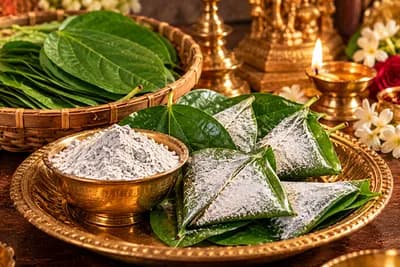
Ilai Vibhuti (Panneer Leaf Sacred Ash)
Tiruchendur's signature prasadam, sacred ash wrapped in a panneer leaf, available inside the temple. Devotees take packets home as a blessing and treasure it as a healing prasadam.
Visitor guide
Thoothukudi Airport (TCR)
Approximately 40 km
- The nearest airport, at Vagaikulam, with domestic flights mainly to Chennai and Bengaluru. Taxis are available for the journey of about an hour to Tiruchendur.
Madurai Airport (IXM)
Approximately 175 km
- A larger airport with more domestic and some international connections. Road transfer to Tiruchendur takes about 3.5-4 hours.
Thiruvananthapuram International Airport (TRV)
Approximately 165 km
- An international airport in Kerala, useful for visitors flying in from the Gulf and Southeast Asia. Road transfer takes about 4 hours.
Gallery
Videos
Third-party videos may include ads or external commentary.
Frequently Asked Questions
It is on the seashore at Tiruchendur in Thoothukudi district, Tamil Nadu, India - about 40 km from Thoothukudi and 55 km from Tirunelveli.
Lord Murugan is worshipped as Subramaniya Swamy, Senthil Andavar and Jayanthinathar, with his consorts Valli and Deivanai.
It is the second of the six sacred abodes of Lord Murugan and the only one on the seashore.
The temple is generally open from 4:00 AM to 9:00 PM. Entry to the paid queue closes at about 6:30 PM and to the general queue at about 7:00 PM. Timings change on festival days.
General darshan is free. Special Viraivu Darshan costs Rs 100 per person, and a separate queue is provided for senior citizens and persons with disabilities.
No. Mobile phones are not allowed inside the temple. They can be deposited at counters along the Giri Prakaram for Rs 5 each.
Traditional and modest clothing is advised. Men may be asked to remove shirts in certain inner areas.
It is the re-enactment of Lord Murugan's victory over the asura Surapadman, held on the beach on the sixth day of Kanda Sashti. In 2026 it is expected on 14 November.
Ilai Vibhuti, sacred ash wrapped in a panneer leaf, is the temple's best-known prasadam. Panchamirtham is also available.
It is a sacred freshwater spring about 100 m south of the temple, which tradition says Murugan created with his Vel. Pilgrims bathe there after the sea bath.
Yes. The full-day annadhanam serves free meals to devotees from about 8:00 AM to 10:00 PM.
Yes. The Devasthanam runs cottages such as Arumuga Vilas, Jeyanthi Nathar Viduthi, Velavan Viduthi and Senthil Andavan Viduthi, bookable through the temple office or portal.
Tiruchendur has its own railway station with trains from Chennai and Tirunelveli. Thoothukudi Airport is about 40 km away, and buses run from all major towns in Tamil Nadu.
Check the official portal, tiruchendurmurugan.hrce.tn.gov.in, or call the temple office at 04639-242221 before travelling, especially during festivals.