
31°C
Tiruchirappalli
Sri Ranganathaswamy Temple
 Tiruchirappalli, Tamil Nadu, India
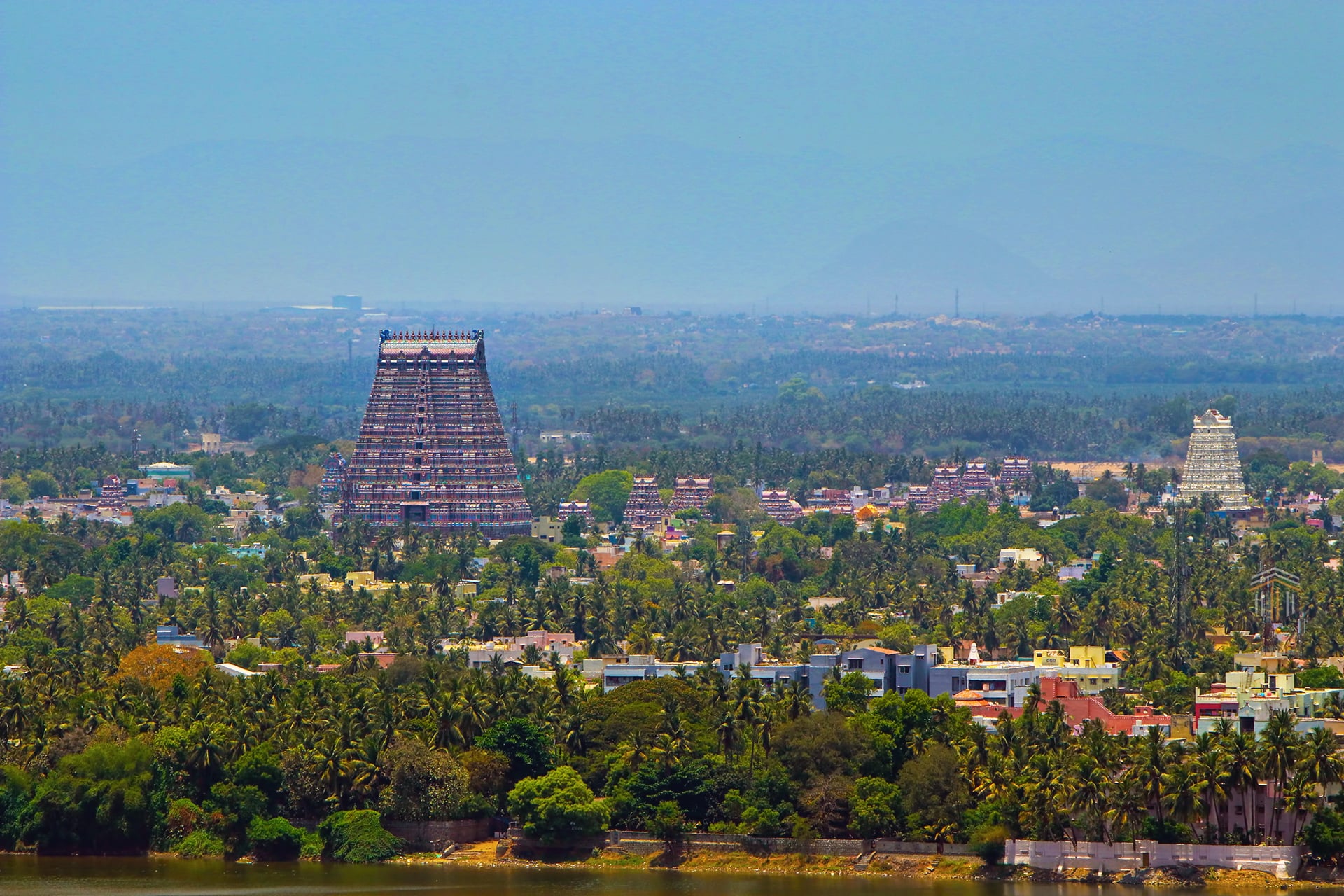
Sri Ranganathaswamy Temple is the foremost of Lord Vishnu's 108 Divya Desams, where Vishnu reclines as Sri Ranganatha on the sacred island of Srirangam between the Cauvery and Kollidam rivers.
- ReligionHindu
- DeityRanganathar Perumal,
Ranganayaki - TimingsMorning: 06:00 AM - 07:15 AM, 09:00 AM - 12:00 PM, Afternoon: 01:15 PM - 06:00 PM Evening: 06:45 PM - 09:00 PM
About the temple
About the temple
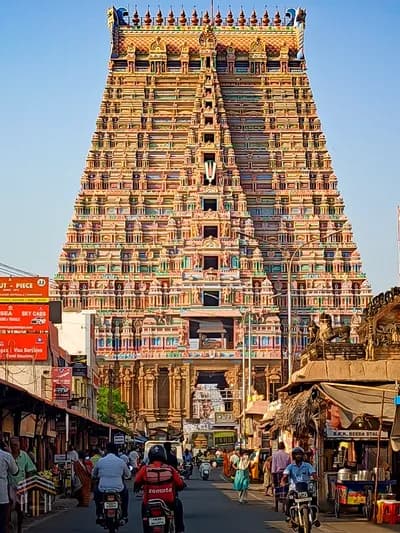
Sri Ranganathaswamy Temple at Srirangam is one of the most revered Vishnu temples in the world and the first and foremost of the 108 Divya Desams praised by the Alvar saints. Standing on an island formed by the Cauvery and Kollidam rivers in Tiruchirappalli, Tamil Nadu, the temple is dedicated to Sri Ranganatha, Vishnu reclining on the serpent Adisesha, with Sri Ranganayaki Thayar as his consort. Spread over about 156 acres, it is one of the largest functioning Hindu temple complexes in the world, with seven concentric enclosures, 21 gopurams and a Rajagopuram about 72 m (236 ft) high. Sri Vaishnavas revere it simply as Koil, "the Temple", and as Bhooloka Vaikuntham, Vishnu's heaven on earth.
Sri Ranganathaswamy Temple
Sri Ranganathaswamy Temple
The Sacred Legacy of Sri Ranganathaswamy Temple in Numbers
Discover the sacred history and enduring spiritual significance of Sri Ranganathaswamy Temple, the foremost of Lord Vishnu's 108 Divya Desams. Located on Srirangam island in Tiruchirappalli, the temple is the heart of Sri Vaishnavism and one of the largest functioning temple complexes in the world. More than 600 inscriptions record a thousand years of its history, the processional deity returned from exile in 1371, and its Vaikunta Ekadasi festival lasts 21 days.
- First and Foremost of Lord Vishnu's 108 Divya Desams
- 1 of 108
- First of the Eight Swayam Vyakta Kshetras, Where Vishnu Manifested Himself
- 1 of 8
- Approximate Area of the Temple Complex, One of the Largest Functioning Hindu Temples in the World
- 156 Acres
- Concentric Enclosures (Prakarams) Surrounding the Sanctum
- 7
- Total Length of the Seven Enclosure Walls, Over Six Miles
- 32592 ft
- Gopurams (Gateway Towers) in the Temple Complex
- 21
- Height of the 13-Tier Rajagopuram, Completed in 1987
- 72 m (236 ft)
- Sub-Shrines Within the Temple Complex
- 50
- Sacred Pools in the Temple Complex
- 9
- Pillars in the Thousand-Pillared Hall
- 953
- Hymns of the Alvars Dedicated to Sri Ranganatha in the Nalayira Divya Prabandham
- 247
- Alvar Saints Who Sang of Sri Ranganatha, All Except Madhurakavi Alvar
- 11 of 12
First and Foremost of Lord Vishnu's 108 Divya Desams
First of the Eight Swayam Vyakta Kshetras, Where Vishnu Manifested Himself
Approximate Area of the Temple Complex, One of the Largest Functioning Hindu Temples in the World
Concentric Enclosures (Prakarams) Surrounding the Sanctum
Total Length of the Seven Enclosure Walls, Over Six Miles
Gopurams (Gateway Towers) in the Temple Complex
Height of the 13-Tier Rajagopuram, Completed in 1987
Sub-Shrines Within the Temple Complex
Sacred Pools in the Temple Complex
Pillars in the Thousand-Pillared Hall
Hymns of the Alvars Dedicated to Sri Ranganatha in the Nalayira Divya Prabandham
Alvar Saints Who Sang of Sri Ranganatha, All Except Madhurakavi Alvar
Historical Background
Sri Ranganathaswamy Temple at Srirangam is mentioned in Sangam-era Tamil literature, including the Silappadikaram, and the Alvar saints later sang 247 hymns on Ranganatha, making it the most sung of the Divya Desams. Chola kings such as Parantaka I and Raja Raja I made rich gifts, and in the 11th-12th centuries Ramanuja reorganised its administration and worship, making it the centre of Sri Vaishnavism. The Pandya king Jatavarman Sundara Pandya covered the Ranga Vimana with gold in the 13th century. During the invasions of 1311 and 1323, devotees led by Pillai Lokacharya carried the processional deity, Namperumal, to safety, and it was reinstalled in 1371 after the Vijayanagara conquest. Vijayanagara rulers added the thousand-pillared hall and began the Rajagopuram, Nayak rulers added mandapams and painted ceilings, and the 13-tier Rajagopuram was finally completed in 1987. A 2014-2017 restoration earned the temple the UNESCO Asia-Pacific Award of Merit in 2017, the first for a temple in Tamil Nadu.
Sangam era (early centuries CE)
Sangam era (early centuries CE)
Srirangam is mentioned in early Tamil literature, including the Silappadikaram, among the earliest literary references to the shrine.6th-10th centuries CE
6th-10th centuries CE
The Alvar saints composed 247 hymns on Ranganatha, later collected in the Nalayira Divya Prabandham, making Srirangam the most sung of the Divya Desams. In the 10th century, Chola kings, including Parantaka I and Raja Raja I, made rich gifts; Nathamuni, the first Sri Vaishnava acharya, organised the recitation of the Divya Prabandham.11th-12th centuries CE
11th-12th centuries CE
Ramanuja lived and taught at Srirangam, reorganising the temple's administration and worship; the temple became the centre of Sri Vaishnavism.1251-1268 CE
1251-1268 CE
The Pandya king Jatavarman Sundara Pandya covered the Ranga Vimana with gold and made major endowments.1311-1323 CE
1311-1323 CE
Forces led by Malik Kafur, general of Alauddin Khalji, raided Srirangam; in 1323 a second invasion by Ulugh Khan's forces led devotees under Pillai Lokacharya to carry the processional deity, Namperumal, away to safety; it remained away for decades.1371 CE
1371 CE
After the Vijayanagara conquest, the deity was reinstalled at Srirangam under the general Gopanarya, as recorded in an inscription composed by Vedanta Desika.14th-18th centuries CE
14th-18th centuries CE
Vijayanagara rulers rebuilt and expanded the temple, including the thousand-pillared hall; work on the southern Rajagopuram began under Achyuta Deva Raya (1529-1542) but was left unfinished. From the 16th to 18th centuries, Nayak rulers added mandapams and painted ceilings.25 March 1987
25 March 1987
The 13-tier Rajagopuram, about 72 m (236 ft) high, was completed and consecrated by the 44th Jeeyar of the Sri Ahobila Mutt.2014-2017 CE
2014-2017 CE
A major restoration using traditional methods, costing about Rs 25 crore, removed some 60,000 tonnes of debris and restored mandapams and drainage; the temple was also placed on UNESCO's World Heritage Tentative List in 2014. In 2017 the temple received the UNESCO Asia-Pacific Award of Merit for Cultural Heritage Conservation, the first in Tamil Nadu.


Synopsis
Sri Ranganathaswamy Temple in Srirangam, Tiruchirappalli district, Tamil Nadu, is the foremost of the 108 Divya Desams and the spiritual heart of Sri Vaishnavism. Lord Vishnu is worshipped here as Sri Ranganatha, reclining on Adisesha and facing south towards Lanka. The temple grew over more than a thousand years under the Cholas, Pandyas, Hoysalas, Vijayanagara rulers and Nayaks, and its 13-tier Rajagopuram was completed in 1987. It is famous for the 21-day Vaikunta Ekadasi festival, the preserved body of the saint Ramanuja, and a 2014-2015 restoration that won a UNESCO Asia-Pacific Award of Merit in 2017.
Sri Ranganathaswamy Temple, dedicated to Lord Vishnu as Sri Ranganatha, is the foremost of the 108 Divya Desams and one of the eight Swayam Vyakta Kshetras. It stands on Srirangam island between the Cauvery and Kollidam rivers. The shrine is mentioned in Sangam-era literature, and by the time of the Alvars (6th-9th centuries) it was already the most celebrated Vishnu temple of the Tamil country.
The temple holds more than 600 inscriptions, including over 250 from the Vijayanagara period, which record gifts, festivals and administration. The best-recorded crisis in its history is the invasions of 1311 and 1323, after which the processional deity was carried away by devotees under Pillai Lokacharya and reinstalled only in 1371, an event commemorated in an inscription composed by Vedanta Desika.
Chola kings from Parantaka I and Raja Raja I onwards, the Pandya king Jatavarman Sundara Pandya, Hoysala rulers, the Vijayanagara emperors and the Nayaks of Madurai and Thanjavur all endowed and enlarged the temple. In the 20th century, the 44th Jeeyar of the Sri Ahobila Mutt raised funds to complete the Rajagopuram, consecrated in 1987.
As the first Divya Desam and the seat of Ramanuja and later acharyas such as Manavala Mamunigal, Srirangam is the spiritual heart of Sri Vaishnavism. Its Vaikunta Ekadasi festival and daily recitation of the Divya Prabandham draw devotees from around the world.
The temple is administered by the Tamil Nadu Hindu Religious and Charitable Endowments Department. It was placed on UNESCO's World Heritage Tentative List in 2014, restored in 2014-2015 using traditional methods, and received the UNESCO Asia-Pacific Award of Merit for Cultural Heritage Conservation in 2017.
Sacred significance
The First Divya Desam and Bhooloka Vaikuntham
Srirangam is revered as the first and foremost of the 108 Divya Desams, the sacred abodes of Vishnu praised by the Alvars. It received 247 of the hymns in the Nalayira Divya Prabandham, more than any other shrine, and was sung by eleven of the twelve Alvars. Sri Vaishnavas regard Srirangam as Vishnu's heaven on earth and call it simply Koil, "the Temple". A visit here is considered the summit of a Vaishnava pilgrimage.
The Self-Manifested Lord and the Gate of Heaven
Srirangam is the first of the eight Swayam Vyakta Kshetras, where Vishnu is believed to have manifested himself rather than being installed by human hands, and the Ranga Vimana is believed to have risen from the Ocean of Milk. The temple's greatest festival is the 21-day Adhyayana Utsavam, centred on Vaikunta Ekadasi, when the Paramapada Vasal (Gate of Heaven) is opened before dawn. Lakhs of devotees pass through it, believing it leads towards liberation.
Ramanuja and the Lord Who Faces Lanka
The great teacher Ramanuja (traditionally 1017-1137) lived, taught and administered the temple at Srirangam, and his body is preserved in a seated posture in his shrine within the complex, where devotees still worship him. Ranganatha reclines facing south, towards Lanka, fulfilling his promise to watch over Vibhishana. The temple thus links the Ramayana with Vaishnava devotion in the Tamil land.
Pancharanga Kshetram and Sri Ranganayaki
Srirangam is the most important of the Pancharanga Kshetrams, the five sacred Ranganatha shrines along the Cauvery, where it is known as Antya Rangam. Sri Ranganayaki Thayar is worshipped in her own shrine and, by tradition, never leaves the temple; the Lord comes to her. Their joint darshan (Serthi Sevai) on Panguni Uthiram is one of the most cherished events of the year.
Architecture
Sri Ranganathaswamy Temple is built in the Dravidian style of South Indian temple architecture and is one of the largest temple complexes in the world, covering about 156 acres. It is arranged as seven concentric rectangular enclosures (prakarams), with walls totalling about 32,592 ft (over six miles), 21 gopurams and about 50 sub-shrines. The sanctum is crowned by the gold-covered, oval Pranavakara Vimana, and the southern Rajagopuram, rising 13 tiers to about 72 m (236 ft), is among the tallest temple towers in Asia. The complex grew over more than a thousand years under the Cholas, Pandyas, Hoysalas, Vijayanagara rulers and Nayaks.
Layout
Seven Prakarams
The seven enclosures symbolise the seven worlds, with the sanctum at the centre. The outer two enclosures contain streets, houses and shops, while the inner five hold the main shrines, halls and mandapams. Pilgrims enter from the south through a succession of gopurams.
Gopuram
The Rajagopuram and the Vellai Gopuram
The southern Rajagopuram was begun under the Vijayanagara emperor Achyuta Deva Raya (1529-1542) but left unfinished for centuries. It was completed in 1987 under the 44th Jeeyar of the Sri Ahobila Mutt, rising 13 tiers to about 72 m (236 ft). One of the temple's gopurams is painted white in memory, by tradition, of Vellayi, a temple dancer who sacrificed her life to protect the temple during the 14th-century invasion.
Vimana
The Golden Ranga Vimana
The sanctum is crowned by the gold-plated Pranavakara Vimana, shaped like the sacred syllable Om, with an image of Para Vasudeva on its face. It was covered in gold by the Pandya king Jatavarman Sundara Pandya and regilded by later rulers.
Sanctum
Garbha Griha (Sanctum Sanctorum)
The sanctum houses Sri Ranganatha reclining on Adisesha and facing south. The processional deity, Namperumal, is worshipped in the sanctum and leads the temple's festivals.
Mandapam
Thousand-Pillared Hall
Built in the Vijayanagara period, the thousand-pillared hall actually has 953 granite pillars. It is used during the Vaikunta Ekadasi festival, when the processional deity is seated here to receive devotees.
Sculpture
Sesharaya and Garuda Mandapams
The Nayak-period Sesharaya Mandapam is famous for its pillars carved as rearing horses with riders, one of the finest examples of South Indian sculpture. A hall in the third enclosure houses a large seated figure of Garuda, Vishnu's eagle mount, facing the sanctum, within a hall of finely carved pillars.
Tank
Chandra Pushkarini and Sacred Pools
The temple has nine sacred pools, the most important being Chandra Pushkarini near the sanctum. The 2014-2015 restoration revived the temple's historic drainage and rainwater harvesting systems.
Interesting facts

Covering about 156 acres within seven concentric walls over six miles long, Srirangam is one of the largest functioning Hindu temple complexes in the world, with a whole town living inside its outer enclosures.
Deities & Shrines
Sri Ranganayaki Thayar
The consort of Ranganatha, worshipped as Periya Piratti, has her own large shrine in the temple. By tradition she never leaves her shrine, and the Lord comes to her; their joint darshan on Panguni Uthiram is a highlight of the temple year. Devotees pray to her for prosperity and family welfare.
Namperumal (Processional Deity)
The processional form of Ranganatha, Namperumal ("our Lord"), leads all the temple's festivals. He is the deity who was carried into exile during the 1323 invasion and returned in 1371.
Chakrathalvar (Sudarshana)
A major shrine is dedicated to Sudarshana, Vishnu's divine discus, with Narasimha on the reverse of the image. Devotees pray here for protection from fear, illness and negative forces.
Sri Ramanuja (Udayavar)
The shrine of Ramanuja, known here as Udayavar, contains the saint's preserved body in a seated posture. It is one of the most sacred places in the temple for Sri Vaishnavas.
Periya Thiruvadi (Garuda)
A large seated image of Garuda, Vishnu's eagle mount, faces the sanctum in the Garuda Mandapam. Devotees worship him for strength and protection from poison and danger.
Thulukka Nachiyar
A shrine honours the Muslim princess who, by tradition, gave her life out of devotion to the processional deity. She is offered North Indian food such as chapatis.
Dhanvantari, Rama and Other Avatars
Shrines of Rama, Krishna as Venugopala, Narasimha and other forms of Vishnu are spread through the enclosures, reflecting the Lord's many incarnations. A shrine of Dhanvantari, the divine physician and an incarnation of Vishnu, is worshipped by devotees praying for health and recovery from illness.
Andal, Alvars and Acharyas
The temple has shrines of the Alvar saints, including Nammalvar, Tiruppanalvar and Tondaradippodi Alvar, and of acharyas such as Nathamuni, Vedanta Desika and Manavala Mamunigal, who shaped Sri Vaishnava tradition. Andal, the poet-saint of Srivilliputhur who is believed to have merged with Ranganatha at Srirangam, has a shrine within the temple. Her Thiruppavai is recited daily in the Margazhi month.
Darshan & Service Offerings
| Service | Timing | Price | Notes |
|---|---|---|---|
| General Darshan (Free Darshan) | 09:00 AM - 12:00 PM, 01:15 PM - 06:00 PM and 06:45 PM - 09:00 PM. | Free | General darshan allows devotees to worship Sri Ranganatha without an entry fee. Waiting times depend on crowds, weekends and festivals. |
| Viswaroopa Seva (Early-Morning Darshan) | 06:00 AM - 07:15 AM. | Rs 100 per person | The first darshan of the day, when the Lord is awakened with hymns. It is popular with devotees who want to begin the day at the temple. |
| Quick Darshan (Special Darshan) | During darshan sessions. | Rs 200 per person | A paid darshan with a separate, faster queue to the sanctum, sold at the temple counters. |
| Sri Ranganayaki Thayar Darshan | About 06:30 AM - 09:00 PM, with pooja closures. | Free | Darshan at the shrine of the Goddess. |
| Chakrathalvar Sannidhi Darshan | During temple hours; confirm locally. | Free | Darshan at the shrine of Sudarshana. |
| Udayavar (Ramanuja) Sannidhi | During temple hours. | Free | Darshan of the shrine where the preserved body of Ramanuja is enshrined, an essential stop for Sri Vaishnava pilgrims. |
| Archana | During darshan sessions. | Paid; confirm the current rate. | An archana in the devotee's name at the sanctum or at the shrine of Ranganayaki Thayar. |
| Thirumanjanam (Abhishekam) | As scheduled by the temple. | Paid; confirm the current rate. | Sacred bathing of the processional deities with milk, curd, honey and other substances, sponsored by devotees. |
| Paramapada Vasal Darshan (Vaikunta Ekadasi) | Before dawn on Vaikunta Ekadasi and during the following days, as announced. | Free; paid queues as announced | Devotees pass through the Paramapada Vasal (Gate of Heaven) after the Lord, who emerges through it before dawn on Vaikunta Ekadasi. |
| Muthangi Seva | During the Ira Pathu part of the Adhyayana Utsavam. | As announced by the temple | Darshan of the main deity adorned with the Muthangi, a full covering of pearls, during the festival period. |
| Ratnangi Seva | On Vaikunta Ekadasi and other special days. | As announced by the temple | Darshan of the processional deity adorned with the Ratnangi, a jewelled armour. |
| Thulabharam | As arranged by the temple. | Paid; depends on the offering. | A devotee is weighed against an offering such as jaggery, sugar, coins or fruit, which is given to the temple in thanksgiving. |
| Online Information and Donations | Through the temple portal. | As listed on the portal | The HR&CE portal provides temple information, darshan schedules, online donations and the Annadhana Thittam donation facility. |
| Annadhanam Donation | At the temple counter or online. | Donation-based | Devotees can sponsor free meals for pilgrims through the temple's full-day annadhanam scheme. |
Visitor information
Location
Sri Ranganathaswamy Temple is located in Srirangam, Tiruchirappalli, Tamil Nadu - 620006, India, on an island formed by the Cauvery and Kollidam rivers about 8 km north of central Tiruchirappalli.
Temple Opening Hours
The temple is generally open from 6:00 AM to 9:00 PM, with darshan at the main sanctum interrupted by pooja periods. Timings vary during festivals.
Darshan Timings
Darshan at the main sanctum is held from 06:00-07:15 AM (Viswaroopa Seva), 09:00 AM-12:00 PM, 01:15-06:00 PM and 06:45-09:00 PM. Arrive at least an hour before a session closes.
Entry and Ticket Information
General darshan is free. Viswaroopa Seva costs Rs 100 per person and quick darshan Rs 200 per person. Archana, thirumanjanam and other sevas are paid services sold at the temple counters.
Entering the Temple
Pilgrims enter from the south through the Rajagopuram and pass through successive gopurams and enclosures to reach the sanctum. Allow time to walk, as the complex covers about 156 acres.
Dress and Attire
Traditional, modest clothing is expected, such as a dhoti or veshti, or trousers with a shirt, for men, and a saree, half-saree or salwar kameez for women. Avoid shorts and sleeveless tops.
Phones, Cameras and Security
Mobile phones may be carried inside the temple but must remain switched off. Photography, video recording and selfies are not allowed within the temple premises. Devotees pass through security checks at the entrances.
Phone Deposit and Footwear Counters
Phone deposit counters are available near the entrances free of charge for devotees who prefer to leave their phones outside, and footwear must be left at the counters before entering the inner enclosures.
Temple Office
The temple office can be contacted at 0431-2432246 for information on darshan, sevas and festivals.
Email and Portal
Devotees can write to srirangam@tnhrce.org or visit the temple portal, srirangam.org, for services, donations and announcements.
Accessibility and Assisted Darshan
The complex involves long walks across stone floors. Senior citizens and devotees with disabilities should approach temple staff at the entrance for assistance.
Getting There
Srirangam railway station is about 1.5 km from the temple, Tiruchirappalli Junction about 10 km, and Tiruchirappalli International Airport about 15 km. Frequent buses run from Chathiram Bus Stand (about 5 km) and Central Bus Stand (about 12 km).
Important Visitor Notice
Darshan timings, queues and access change during Vaikunta Ekadasi, the Margazhi month, Brahmotsavams and eclipses. Check the temple portal for the latest information before travelling.
Location
Tiruchirappalli, Tamil Nadu, India
Best Time to Visit
Ideal Time to Visit (November-February)
The months from November to February generally bring more comfortable weather in Tiruchirappalli. This period includes Vaikunta Ekadasi and the Margazhi month, so expect large crowds on festival days and weekends.
Vaikunta Ekadasi (December-January)
The 21-day Adhyayana Utsavam and the opening of the Paramapada Vasal on Vaikunta Ekadasi are the temple's greatest celebrations, drawing lakhs of devotees. Expect very heavy crowds and changed timings.
Margazhi Month (December-January)
The whole of Margazhi is sacred, with early-morning worship, the recitation of Andal's Thiruppavai and the Srirangam streets decorated with kolams.
Panguni Uthiram (March-April)
The joint darshan of Ranganatha and Ranganayaki Thayar (Serthi Sevai) is one of the most cherished events of the year.
Chithirai and Thai Brahmotsavams
The temple's Brahmotsavams feature grand processions and the chariot festival, a vibrant time to experience the temple's traditions.
Summer Visit (April-June)
Summer in Tiruchirappalli is very hot. Early-morning and evening visits are more comfortable, as the stone floors of the open courtyards heat up during the day.
Northeast Monsoon (October-December)
The region receives much of its rain from the northeast monsoon. Showers can make outer courtyards slippery, so plan flexibly.
Off-Peak Visit and Darshan Planning
For a quieter visit, choose a weekday outside festivals and school holidays.
Nearby places
Amma Mandapam
About 1 km
- The main bathing ghat on the Cauvery at Srirangam, where pilgrims bathe and perform rituals for ancestors. It is especially crowded on Adi Perukku.
Festivals & culture
Sri Ranganathaswamy Temple celebrates festivals almost throughout the year, with the Lord taken out in procession on most of them. The 21-day Vaikunta Ekadasi festival is the greatest, followed by the Brahmotsavams, Panguni Uthiram and the Margazhi month. Festival dates follow the Tamil calendar and vary each year.
Vaikunta Ekadasi (Adhyayana Utsavam)
December-January (Margazhi; varies)
A 21-day festival of the Divya Prabandham, divided into Pagal Pathu (ten days of morning recitation) and Ira Pathu (ten days of night recitation). On Vaikunta Ekadasi, the Lord emerges through the Paramapada Vasal (Gate of Heaven) before dawn, adorned with the Ratnangi, and lakhs of devotees follow. The Mohini Alankaram is held the day before, and the main deity wears the pearl Muthangi during Ira Pathu.
Panguni Uthiram
March-April (Panguni; varies)
The Pranaya Kalaham, a playful re-enactment of a lovers' quarrel between Ranganatha and Ranganayaki, is followed by their joint darshan (Serthi Sevai), the only day the two are seen together.
Additional information
Tamil Nadu HR&CE Department
The temple is administered by the Tamil Nadu Hindu Religious and Charitable Endowments Department through a Joint Commissioner and Executive Officer.
Sri Ranganathaswamy Temple Address
Sri Ranganathaswamy Temple, Srirangam, Tiruchirappalli, Tamil Nadu - 620006, India.
Temple Office
Phone: 0431-2432246 - For enquiries about darshan, sevas and festivals.
srirangam@tnhrce.org - For written enquiries and correspondence with the temple administration.
Temple Portal
The temple portal, srirangam.org, provides temple information, darshan schedules, donations and the Annadhana Thittam facility.
Viswaroopa Seva
Held from 6:00 AM to 7:15 AM daily, with tickets listed at Rs 100 per person.
Quick Darshan
A paid, faster queue to the sanctum, listed at Rs 200 per person.
Mobile Phone and Photography Rules
Mobile phones may be carried inside the temple but must remain switched off. Photography, video recording and selfies are not allowed. Phone deposit counters are available near the entrances free of charge for devotees who prefer to leave their phones outside.
Full-Day Annadhanam
Free meals are served to devotees from about 8:00 AM to 10:00 PM at the temple's annadhanam hall.
UNESCO Recognition
The temple is on UNESCO's World Heritage Tentative List (2014) and received the UNESCO Asia-Pacific Award of Merit for Cultural Heritage Conservation in 2017.
Important Visitor Advisory
Verify timings, seva charges, accommodation availability and festival arrangements immediately before travel.
Temple facilities
Temple Office, Portal and Donations
The temple office assists devotees with darshan and seva tickets, festival schedules and general enquiries. Contact 0431-2432246. The temple portal provides temple information, darshan schedules, online donations and the Annadhana Thittam facility.
Phone Deposit and Footwear Counters
Counters near the entrances accept phones free of charge for devotees who prefer to leave them outside, and footwear before devotees enter the inner enclosures.
Ticket Counters
Counters at the temple sell Viswaroopa Seva, quick darshan, archana and other seva tickets on the day of the visit.
Assistance for Elderly and Differently-Abled Devotees
Elderly and differently-abled devotees should approach temple staff at the entrance for assistance, as the complex involves long walks across stone floors.
Annadhanam Hall
Free meals are served to devotees throughout the day, from about 8:00 AM to 10:00 PM, under the full-day annadhanam scheme.
Prasadam Counters
Counters sell traditional prasadam prepared in the temple kitchen, such as puliyodharai.
Drinking Water and Restrooms
Drinking water points and restrooms are available within the complex, with additional facilities set up during major festivals.
Pilgrim Accommodation
The temple maintains accommodation for pilgrims, and many hotels and guest houses are available in Srirangam and Tiruchirappalli. Availability, booking procedures and charges should be checked with the temple office or the provider.
Emergency services
India Emergency Response
Not location-specific
Contact
112
- Call 112 for urgent police, medical or fire assistance through India's integrated emergency response system.
Top picks
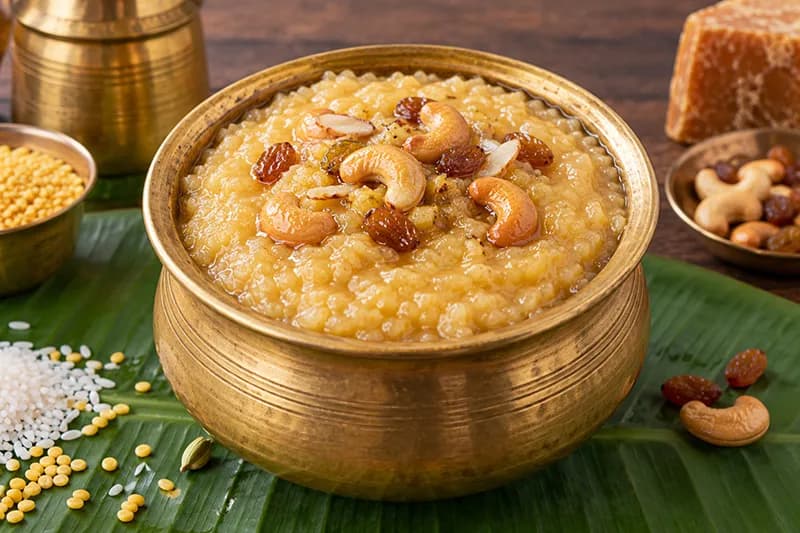
Akkaravadisal
A traditional Srirangam sweet of rice, jaggery and milk, served as prasadam in the temple on Panguni Uthiram day. A temple inscription records the method of preparing it.
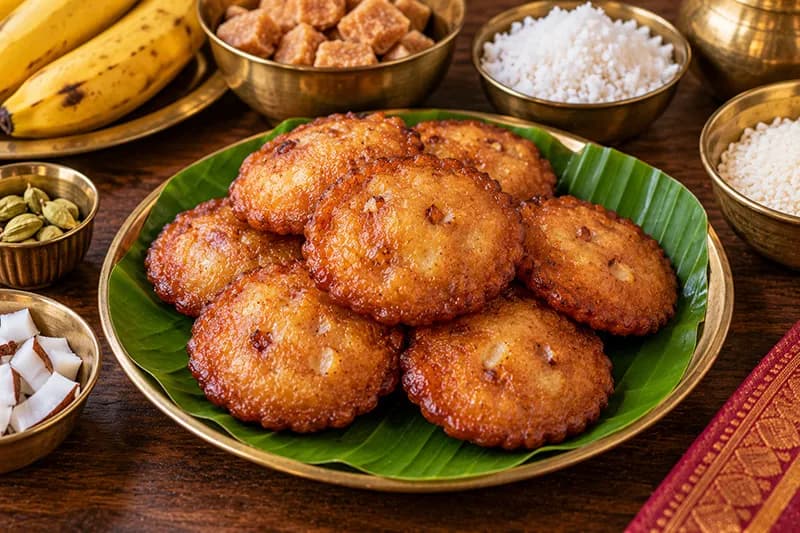
Selvar Appam
A sweet rice fritter prepared at the temple, reserved for festive days.
Visitor guide
Tiruchirappalli International Airport (TRZ)
Approximately 15 km
- The nearest airport, with domestic flights and international connections to Singapore, Kuala Lumpur, Colombo, Dubai and other cities. Taxis and app-based cabs connect it to Srirangam in about 30-40 minutes.
Gallery
Videos
Third-party videos may include ads or external commentary.
Frequently Asked Questions
It is on Srirangam island between the Cauvery and Kollidam rivers in Tiruchirappalli, Tamil Nadu, India - 620006.
Lord Vishnu is worshipped as Sri Ranganatha, reclining on the serpent Adisesha, with Sri Ranganayaki Thayar as his consort.
It is the first and foremost of the 108 Divya Desams, sung by eleven of the twelve Alvars, and the spiritual heart of Sri Vaishnavism.
It covers about 156 acres, with seven concentric enclosures, 21 gopurams and a 13-tier Rajagopuram about 73 m (236 ft) high.
The temple is open from 6:00 AM to 9:00 PM. Darshan at the main sanctum is held at 6:00-7:15 AM (Viswaroopa), 9:00 AM-12:00 PM, 1:15-6:00 PM and 6:45-9:00 PM.
General darshan is free. Viswaroopa Seva is listed at Rs 100 and quick darshan at Rs 250 per person.
Camera phones and cameras are not allowed inside the temple. Basic phones without cameras may be carried, and deposit counters are available near the entrances.
Traditional and modest clothing is expected. Avoid shorts and sleeveless tops.
It is the high point of the 21-day Adhyayana Utsavam in December-January, when the Lord emerges through the Paramapada Vasal (Gate of Heaven) before dawn and lakhs of devotees follow.
Yes. The body of the saint Ramanuja is preserved in a seated posture in his shrine, Udayavar Sannidhi, within the temple.
Yes. The full-day annadhanam serves free meals to devotees from about 8:00 AM to 10:00 PM.
Vaikunta Ekadasi, Panguni Uthiram, the Chithirai and Thai Brahmotsavams, Jyeshtabhishekam and Adi Perukku are among the most important.
Srirangam railway station is about 1.5 km from the temple and Tiruchirappalli Airport about 15 km. City buses run frequently from Tiruchirappalli.
Check the temple portal, srirangam.org, or call the temple office at 0431-2432246 before travelling, especially during festivals.