
26°C
Madurai
Sri Meenakshi Amman Temple
 Madurai, Tamil Nadu, India
Madurai Meenakshi Amman Temple is a historic Hindu temple dedicated to Goddess Meenakshi and Lord Sundareswarar. Located in the heart of Madurai, it is renowned for its spiritual significance, vibrant festivals, and stunning Tamil architecture.
- ReligionHindu
- DeityGoddess Meenakshi,
Lord Sundareswarar - TimingsMorning: 05:00 AM - 12:30 PM, Evening: 04:00 PM - 09:30 PM

About the temple
About the temple
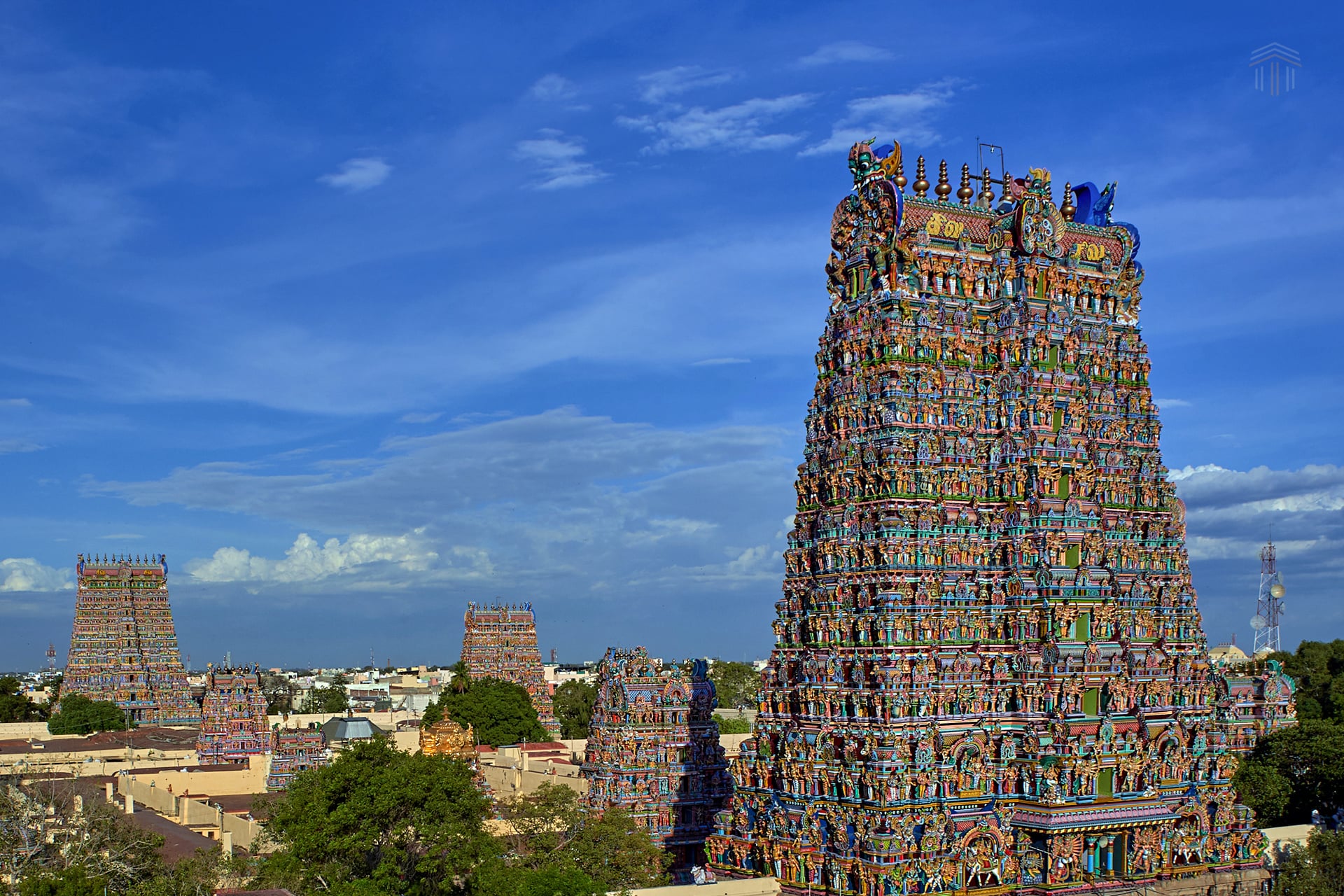
Madurai Meenakshi Temple, also known as Meenakshi Amman Temple, is one of the most significant and ancient temples in India. Located on the southern bank of the Vaigai River in Madurai, Tamil Nadu, this temple complex is dedicated to Goddess Meenakshi, a form of Parvati, and her consort Sundareswarar, a form of Shiva. The temple serves not only as a religious center but also as a symbol of Tamil architectural grandeur, cultural heritage, and spiritual legacy. With its towering gopurams, thousand-pillared halls, and intricately carved sculptures, it stands as a masterpiece of Tamil architecture.
Sri Meenakshi Amman Temple
Sri Meenakshi Amman Temple
The Living Legacy Of Meenakshi Amman Temple In Numbers
Explore the divine magnificence of the Meenakshi Amman Temple a timeless symbol of devotion, architectural brilliance, and cultural heritage. Rooted in ancient Tamil tradition and revitalized by the Nayak kings, this temple remains a vibrant spiritual hub for millions of devotees.
- Historical Roots Dating Back to the Sangam Era
- 2000+ yrs
- Vast Temple Complex Area
- 15 Acres
- Towering Gopurams Adorning the Temple
- 14
- Height of the Majestic Southern Gopuram
- 170 ft
- Sculptures Decorating the Temple Structures
- 33000+
- Pillars in the Iconic Aayiram Kaal Mandapam (Hall of Thousand Pillars)
- 1000
- Annual Devotees and Tourists Visiting the Temple
- 10M+
- Duration of the Grand Chithirai Festival Celebrating Divine Marriage
- 12 Days
Historical Roots Dating Back to the Sangam Era
Vast Temple Complex Area
Towering Gopurams Adorning the Temple
Height of the Majestic Southern Gopuram
Sculptures Decorating the Temple Structures
Pillars in the Iconic Aayiram Kaal Mandapam (Hall of Thousand Pillars)
Annual Devotees and Tourists Visiting the Temple
Duration of the Grand Chithirai Festival Celebrating Divine Marriage
Historical Background
Meenakshi Amman Temple in Madurai, Tamil Nadu, is a historic temple complex dedicated to Goddess Meenakshi and Lord Sundareswarar. Rooted in ancient Tamil traditions and praised in Tevaram hymns, the temple has evolved through centuries of Pandya, Vijayanagara, and Nayak patronage. Much of its magnificent present-day architecture, including its towering gopurams and grand halls, took shape during the Nayak period. Despite periods of destruction and restoration, the temple has remained an active centre of worship and continues to represent the rich spiritual, architectural, and cultural heritage of Tamil Nadu.
Ancient origins (traditional dating)
Ancient origins (traditional dating)
Tamil tradition and Sangam-era literary references suggest Madurai and a shrine to the goddess existed as far back as antiquity - the city and temple are often described as being "as old as 2,500 years." Scholarly estimates for the earliest structure range more conservatively, with some dating the original shrine to around the 1st to 4th century CE.6th century CE
6th century CE
Early Tamil texts indicate a temple existed in Madurai by this period. It is referenced in works such as the Tiruvilaiyadal Puranam and the Sanskrit Halasya Mahatmya, and in inscriptions under names like Kadambavanam ("forest of Kadamba") and Velliambalam ("silver hall").7th-9th century CE
7th-9th century CE
The temple is glorified in the Tevaram hymns composed by the Nayanmars - Appar and Sambandar (7th century) and Sundarar (8th century). This recognition establishes it as one of the Paadal Petra Sthalams, the sacred Shaivite shrines revered in Tamil Shaiva tradition.12th-13th century CE
12th-13th century CE
Significant expansion occurs under the Pandya dynasty. King Kulasekara Pandya (reign approx. 1190-1216 CE) is widely credited with major early construction, including the oldest surviving gopuram (the Sundareswarar Shrine gopuram).Early 14th century CE
Early 14th century CE
The temple suffers major destruction during the invasion of Malik Kafur, a general of the Delhi Sultanate, who looted the temple and destroyed much of its structure and sculpture.15th-16th century CE
15th-16th century CE
Following the Sultanate's defeat, the Vijayanagara Empire oversees restoration of the temple, providing resources and patronage that enable the revival of worship and rebuilding.16th-17th century CE
16th-17th century CE
Under the Nayak dynasty, especially Thirumalai Nayak (reign 1623-1659 CE) and earlier rulers like Vishwanatha Nayakar, the temple undergoes its most extensive transformation - the grand gopurams, the Thousand Pillar Hall, and most of the present monumental structure date from this period.19th-20th century CE
19th-20th century CE
The temple continues as an active site of worship through the colonial period and into independence; restoration and conservation efforts (including major 20th-century renovation work, with the temple fully restored by 1995) help maintain its structure.21st century CE
21st century CE
The Meenakshi Amman Temple remains a major active pilgrimage and cultural site, drawing millions of devotees and tourists annually, and continues to be a defining symbol of Tamil heritage. It was also included among the top 30 nominees for the New7Wonders of the World.


Synopsis
The Madurai Meenakshi Temple, located in the ancient city of Madurai in Tamil Nadu, is one of the most iconic and sacred Hindu temples in India. Dedicated to Goddess Meenakshi, an incarnation of Parvati, and her consort Lord Sundareswarar, a form of Shiva, the temple is both a spiritual sanctuary and a cultural landmark. While legends trace its origins back over 2,500 years, verified historical evidence points to a structured temple established under Pandya patronage by the 6th-7th century CE. The temple suffered major destruction during the 1310-1311 CE invasion by Delhi Sultanate commander Malik Kafur, but was later restored by the Vijayanagara Empire and significantly expanded in the 16th-17th centuries by the Nayak rulers, particularly Vishwanatha Nayaka and Tirumala Nayaka, who gave the temple much of its present form. Architecturally, it is a masterpiece of Tamil (Dravidian) style, featuring 14 towering gopurams adorned with thousands of colorful sculptures, intricately carved mandapams, and the famed Hall of a Thousand Pillars (985 pillars). The temple remains a vibrant center of Tamil culture, art, and music. Its most celebrated event, the Chithirai Festival, commemorates the celestial wedding of Meenakshi and Sundareswarar and draws millions of devotees each year. Symbolizing the cosmic union of divine masculine and feminine energies, the Madurai Meenakshi Temple stands as a living expression of devotion, architecture, mythology, and Tamil identity.
The origins of the Meenakshi Temple trace back to the Sangam period (traditionally dated circa 3rd century BCE to 3rd century CE), when Madurai served as the cultural and political capital of the ancient Pandya dynasty. According to legend and early Tamil literature, a shrine dedicated to Meenakshi - regarded as a form of Parvati, worshipped alongside Lord Shiva as Sundareswarar - already existed in this era. Though modest in form initially, this early shrine became a nucleus of devotion, closely tied to Madurai's identity as the seat of the ancient Tamil Sangams (literary academies). Sangam-era poetry frequently references the goddess, reflecting her prominence in the religious life of the time. (Note: these early dates rest on literary and traditional sources rather than firm archaeological evidence, which is standard for temples of this antiquity.)
The temple preserves a substantial body of stone inscriptions documenting its development over centuries. A detailed epigraphic survey identified nearly 470 inscriptions on the temple walls, of which 78 remain in good, legible condition, with more than 350 existing only as fragments. These inscriptions are written in Tamil, Grantha, Devanagari, and Telugu scripts, and date from the medieval period onward under Pandya and later Nayak patronage. They record royal and private donations - land, gold, livestock, and oil for temple lamps - made to fund daily rituals, special poojas tied to royal birth stars, and the support of priests, dancers, and artisans. They also offer glimpses into contemporary administration, agriculture, and taxation. Notably, the inscriptions show that the temple's present name, "Meenakshi Sundareshwarar," appears as late as inscriptions dated to 1752, indicating the name evolved over time.
The earliest and most significant patrons. The Pandya kings, ruling from Madurai, regarded Meenakshi as their family deity, and their devotion shaped the temple's core identity as a center of Shaiva and Shakta worship. King Kulasekara Pandya (reign c. 1190-1216 CE) is credited with major donations of land, gold, and livestock, along with early structural contributions including the temple's oldest surviving gopuram.
After the temple's desecration during Malik Kafur's invasion in the early 14th century, the Vijayanagara Empire - based in present-day Karnataka - played a pivotal role in its revival. Vijayanagara rulers helped restore Hindu institutions across the south, provided resources for rebuilding, and laid the groundwork that enabled the temple's worship, festivals, and administration to resume, setting the stage for its major expansion under the later Nayak dynasty.
Sacred significance
Meenakshi as the Primary Deity
Unlike most Shaiva temples where Shiva is the principal deity, this temple uniquely places Goddess Meenakshi at the center of worship. Her sanctum faces west while Sundareswarar's parallel shrine faces east, reflecting her status as the presiding deity of Madurai and making the temple a rare confluence of Shaiva and Shakta traditions.
Cosmic Marriage Symbolism
The temple commemorates the divine wedding of Meenakshi and Sundareswarar, representing the union of feminine and masculine cosmic energies. This sacred marriage is reenacted annually during the Chithirai Thiruvizha (Meenakshi Thirukalyanam), a ten-day festival with a grand chariot procession that draws over a million devotees.
Confluence of Traditions
The temple complex also honors Vishnu through Meenakshi's brother Alagar, making it theologically significant as a meeting point of Shaivism, Shaktism, and Vaishnavism within a single sacred space.
Center of Daily Worship
The temple remains an active site of continuous ritual, including daily abhishekams and poojas, and is among the most visited pilgrimage destinations in South India, drawing tens of thousands of devotees each day.
Architecture
The Madurai Meenakshi Amman Temple showcases classic Tamil architecture, featuring towering gopurams adorned with vibrant sculptures, intricate mandapams with carved pillars, and majestic vimanas, reflecting the temple's spiritual and artistic grandeur.
Layout
Masterpiece of Tamil Architecture
The temple is a stunning example of Tamil architecture, characterized by towering gopurams, intricately carved pillars, vast courtyards, and symmetrically aligned mandapams, reflecting South India's architectural grandeur.
Gopurams
Majestic Gopurams (Gateway Towers)
The temple features 14 gopurams, with the tallest reaching over 170 feet. Adorned with thousands of colorful sculptures depicting gods, goddesses, mythical creatures, and legends, they serve as iconic symbols of Tamil temple art.
Pillar
Thousand Pillar Hall
Known as the Aayiram Kaal Mandapam, this hall contains intricately carved granite pillars, each unique in design. The precision in symmetry and sculptural detailing showcases the craftsmanship of the Nayak artisans.
Layout
Sacred Tank and Temple Layout
The temple's layout includes the Golden Lotus Tank (Potramarai Kulam), around which devotees circumambulate. The entire design follows Vaastu Shastra principles, symbolizing cosmic order and spiritual progression.
Gopurams
Vimanams and Inner Shrines
The inner sanctums are crowned with golden vimanams (temple towers over sanctums), built with meticulous detail. These structures house the deities and are considered the spiritual heart of the complex.
Interesting facts

According to legend, Goddess Meenakshi was born with three breasts, and it was foretold that the third would disappear when she met her divine consort. This occurred when she met Lord Shiva, affirming their cosmic union.
Deities & Shrines
Ganapathi
Dedicated to Lord Ganesha, worshipped first as the remover of obstacles before other deities. The Mukkuruni Vinayaka is especially revered and offered a giant modak during festivals.
Subramanya
A sacred space for Lord Murugan, son of Shiva and Parvati, symbolizing valor and wisdom. Devotees offer prayers here for strength, victory, and knowledge.
Nataraja
Features Lord Shiva in his cosmic dance form, symbolizing creation and destruction. The elegant posture represents the rhythm of the universe.
Navagraha
Houses the nine planetary deities of Hindu astrology. Devotees pray here to mitigate malefic planetary influences and bring astrological balance.
Dakshinamurthy
This south-facing form of Shiva represents the supreme teacher. Students and seekers worship him for wisdom, guidance, and enlightenment.
Chandikeswarar
A devoted follower of Shiva, believed to maintain records of devotees offerings. Worshippers clap to symbolically mark their presence at the temple.
Surya & Chandra
These shrines represent the solar and lunar forces, symbolizing time and cosmic cycles. They stand in harmony with the temple's celestial layout.
Darshan & Service Offerings
| Service | Timing | Price | Notes |
|---|---|---|---|
| Free Darshan | General temple hours | Free | Allows entry into the temple for darshan of Meenakshi Amman and Sundareswarar without any charge. Expect longer queues during weekends, holidays, and festival days. |
| Special Entrance Darshan (₹50) | General temple hours (varies slightly by season) | ₹50 per person | Suitable for focused prayers on either Goddess Meenakshi or Lord Sundareswarar individually. Offers a quicker experience than the free queue, though wait times can still vary with crowd density. |
| Special Darshan (₹100) | General temple hours (varies slightly by season) | ₹100 per person | Provides quicker access to darshan of both Goddess Meenakshi and Lord Sundareswarar. Separate queue from general darshan, with reduced waiting time. This is the most commonly booked paid option. |
| VIP Darshan (₹300+) | General temple hours, subject to availability | ₹300 per person (starting price; third-party booking platforms may charge additional service fees) | Offers priority access to the sanctum with minimal waiting for both Amman and Swami shrines. Ideal for senior citizens, officials, and those seeking a more convenient darshan experience. Advance online booking recommended, especially during festivals and weekends. |
Visitor information
Location
Madurai Meenakshi Amman Temple is located in the heart of Madurai city, Tamil Nadu, about a 10-minute walk from Madurai Junction Railway Station and roughly 20 minutes by car from Madurai Airport, making it easily accessible by road, rail, and air.
Opening hours
Morning 5.00 AM - 12.30 PM, Evening: 4.00 PM - 9.30 PM
Shoe Stand
Shoe stands are available at the temple entrances for devotees to safely keep their footwear. A nominal fee of approximately ₹5–₹10 may be charged, depending on the shoe stand.
Cloak Room
A cloakroom/locker facility is available near the East Tower Gate entrance, where visitors can securely deposit bags, wallets, and restricted items before entering. Backpacks and large bags are not allowed beyond the security check - only small wallets and tiny purses are permitted.
Dress Code
Modest, traditional attire is expected. Men should wear shirts with full trousers or dhotis (shorts and half pants are not allowed). Women should wear sarees, salwar kameez, or long skirts/churidars with a top covering the shoulders. Sleeveless tops and clothing exposing shoulders or legs above the knee are discouraged.
Restrooms
Public restrooms are located outside the main temple complex. While generally clean, visitors are advised to carry hand sanitizers and tissues for convenience.
Mobile Phones & Cameras
Mobile phones, cameras, and all electronic devices are completely banned inside the temple - this isn't just a "switch off" request. The ban has been enforced by court order (Madras High Court, Madurai Bench) since 2018 for security reasons. Visitors must deposit phones and cameras at designated locker counters near the entrances before entering, and will receive a token for collection afterward.
Temple Assistance
Helpdesks are available near major entrances for information on pooja timings and ticket bookings. The temple is wheelchair-accessible, with loaner wheelchairs available on a first-come, first-served basis. Volunteers and staff assist with navigation and queries.
Location
Madurai, Tamil Nadu, India
Best Time to Visit
Ideal Season (November to March)
Visit during the cooler months when the weather is pleasant and ideal for exploring the temple and surrounding heritage sites comfortably.
Chithirai Thiruvizha (April)
This festival spans the Tamil month of Chithirai (April-May), not just April - it typically starts in late April and runs into early May, so listing it as "(April)" alone is misleading. Also worth noting it's a 12-day festival, not a single-day event.
Float Festival (January-February)
This is more precisely a January festival (tied to the Thai month full moon / Thaipusam period) rather than spanning into February - "January-February" slightly overstates the window.
Avoid Peak Summer
though note the Chithirai Festival (a major draw) does spill into early May, so heat and crowds can overlap for that specific event.
Nearby places
Koodal Azhagar Temple
2 km
- A historic Vishnu temple near the heart of Madurai, known for its three sanctum levels depicting Lord Vishnu in sitting, standing, and reclining postures.
Thiruparankundram Murugan Temple
8 km
- One of Lord Murugan's six abodes, set in a rock-cut cave, where he is believed to have married Deivanai after defeating the demon Surapadman.
Alagar Kovil (Azhagar Koil)
21 km
- A Vishnu temple set at the foothills of the Alagar Hills, associated with Meenakshi's brother Alagar and central to the Chithirai Festival.
Pazhamudircholai Temple
25 km
- A forest-hill temple dedicated to Lord Murugan, surrounded by lush greenery and revered as one of his six sacred abodes.
Festivals & culture
The Madurai Meenakshi Amman Temple celebrates several grand festivals throughout the year. The Chithirai Thiruvizha (April) marks the divine wedding of Goddess Meenakshi and Lord Sundareshwarar with grand processions. Avani Moola Utsavam (August-September) showcases the divine plays of Lord Sundareshwarar. Navaratri (September-October) is a nine-night celebration of Goddess Meenakshi in various forms of Shakti. Theppotsavam (January-February) features the deities on a decorated float. Aadi Pooram (July-August) honors Goddess Meenakshi's birth with special poojas. Maha Shivaratri (February-March) is dedicated to Lord Shiva with night-long prayers, and Panguni Uthiram (March-April) celebrates celestial marriages of deities.
Chithirai Thiruvizha (Meenakshi Thirukalyanam)
April (Chithirai)
The most important festival, celebrating the divine wedding of Goddess Meenakshi and Lord Sundareshwarar, with grand processions, rituals, and a large number of devotees.
Avani Moola Utsavam
August-September (Avani)
A ten-day celebration featuring divine plays (Thiruvilayadal) of Lord Sundareshwarar, with performances depicting his miracles.
Theppotsavam (Float Festival)
January-February (Thai)
Deities are placed on a beautifully decorated float and taken around the Mariamman Teppakulam tank, accompanied by music, lights, and processions.
Maha Shivaratri
February-March (Maasi)
A spiritual event dedicated to Lord Shiva (Sundareshwarar), with all-night prayers, poojas, and chanting by devotees.
Additional information
Official Temple Website
Temple Office Contact
Phone: 04522344360
Temple facilities
Rest Areas
Seating areas and rest zones are provided for devotees to relax during their visit, especially during peak pilgrimage hours.
Wheelchair Accessibility
Wheelchair access is available at the temple, with facilities to assist elderly and differently-abled devotees during their visit.
Temple Donations
Devotees can make donations in cash or kind at designated counters. Online donation options are available through the temple's official website.
Emergency services
Srinivasa Hitech Multispeciality Hospital
1.5 km
Contact
+91 4524361640
- Located near the temple, providing emergency, general, and specialized medical services.
St. Antony's Multispeciality Hospital
2 km
Contact
+91 4524360369
- A well-known private hospital in Madurai offering 24/7 emergency care, advanced medical treatments, and specialist services.
Top picks

Jigarthanda
A unique Madurai cold beverage made with milk, almond gum, and sarsaparilla syrup. Known for its cooling effect, especially popular during the hot summer months.

Paruthi Paal
A traditional drink made from groundnut milk, often served with a hint of cardamom and other aromatic spices. Refreshing and nutritious, commonly enjoyed by locals.

Kari Dosa
A variation of dosa served with spicy mutton curry. The crispy dosa is soaked in curry, offering a perfect blend of textures and flavors.

Kothu Parotta
A popular Tamil Nadu street food, widely enjoyed in Madurai, consisting of shredded parotta (Indian flatbread) stir-fried with spicy meat, egg, and vegetables. A tasty and filling snack.
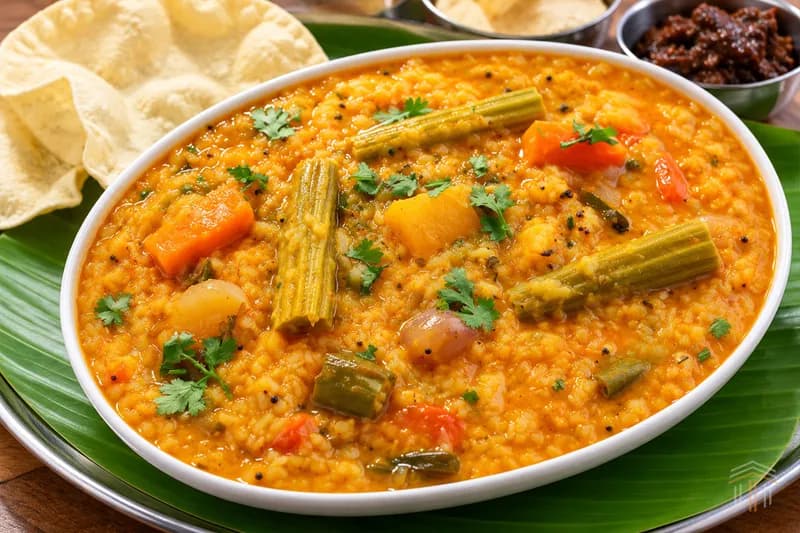
Sambar Rice
A hearty South Indian dish made with rice, sambar (lentil-based curry with vegetables), and seasoned with mustard, curry leaves, and spices. Typically served with papad.

Pongal
A comforting South Indian dish made with rice, moong dal, and ghee, served with coconut chutney and sambar. Commonly enjoyed for breakfast or lunch across Tamil Nadu, including Madurai.
Visitor guide
Periyar Bus Stand
1 km
- Major intra-city and intercity terminal with frequent buses to all parts of Madurai. Autos and shared autos easily available to the temple.
Arappalayam Bus Stand
Approximately 3 km
- A major bus terminal serving frequent local and intercity buses to several parts of Madurai and nearby towns. Autos and taxis are readily available for travel to the temple.
Mattuthavani Integrated Bus Stand
Approximately 6-7 km
- A major integrated bus terminal serving Madurai and several destinations across Tamil Nadu. City buses, autos, and taxis are available for convenient travel to the temple.
Gallery
Videos
Third-party videos may include ads or external commentary.
Frequently Asked Questions
The temple is open from 5:00 AM to 12:30 PM in the morning and 4:00 PM to 9:30 PM in the evening, daily. Timings may shift slightly during major festivals.
Yes. Free (general) darshan is available for all visitors. Paid options like Special Darshan (₹100) and VIP Darshan (₹300 onward) are also available for quicker access, bookable online or at temple counters.
No. Mobile phones, cameras, and all electronic devices are strictly prohibited inside the temple, enforced by a Madras High Court order since 2018. Visitors must deposit these at lockers near the entrance gates (₹30 per item) before entering.
Modest, traditional attire is required. Men should wear shirts with full trousers or dhotis; women should wear sarees, salwar kameez, or long skirts/churidars covering the shoulders. Shorts and sleeveless tops are not permitted.
The temple is about 1.5-2 km from Madurai Junction Railway Station (a 5-10 minute auto/taxi ride) and roughly 12 km from Madurai International Airport (a 25-35 minute drive).
November to March offers the most pleasant weather. For a festival experience, the Chithirai Thiruvizha (April-May) - the temple's grandest celebration - is especially popular, though it also draws the largest crowds.
It's a 12-day festival during the Tamil month of Chithirai (April-May) that reenacts the divine coronation and celestial wedding (Meenakshi Thirukalyanam) of Goddess Meenakshi and Lord Sundareswarar, drawing millions of devotees.
No. Footwear must be deposited at designated shoe stands near the main entrances, particularly at the East Tower, before entering.
Devotees can arrange Abhishekam (sacred bath ritual), Sahasranama Archana (chanting of 1,000 names), Vahana Pooja (worship of temple vehicles), and Kalyana Pooja (wedding rituals), among others, typically bookable at the temple office or online.
The temple office can be reached at +91 452 234 4360. The official website is https://maduraimeenakshi.hrce.tn.gov.in.