
28°C
Thanjavur
Brihadeeswarar Temple
 Thanjavur, Tamil Nadu, India
Brihadeeswarar Temple is the crowning achievement of Chola architecture, built by Rajaraja Chola I in 1010 CE, where Lord Shiva is worshipped as Peruvudaiyar, the Great Lord, beneath one of the tallest temple towers in South India.
- ReligionHindu
- DeityShiva
- TimingsMorning: 06:00 AM - 12:30 PM Evening: 04:00 PM - 08:30 PM
About the temple
About the temple
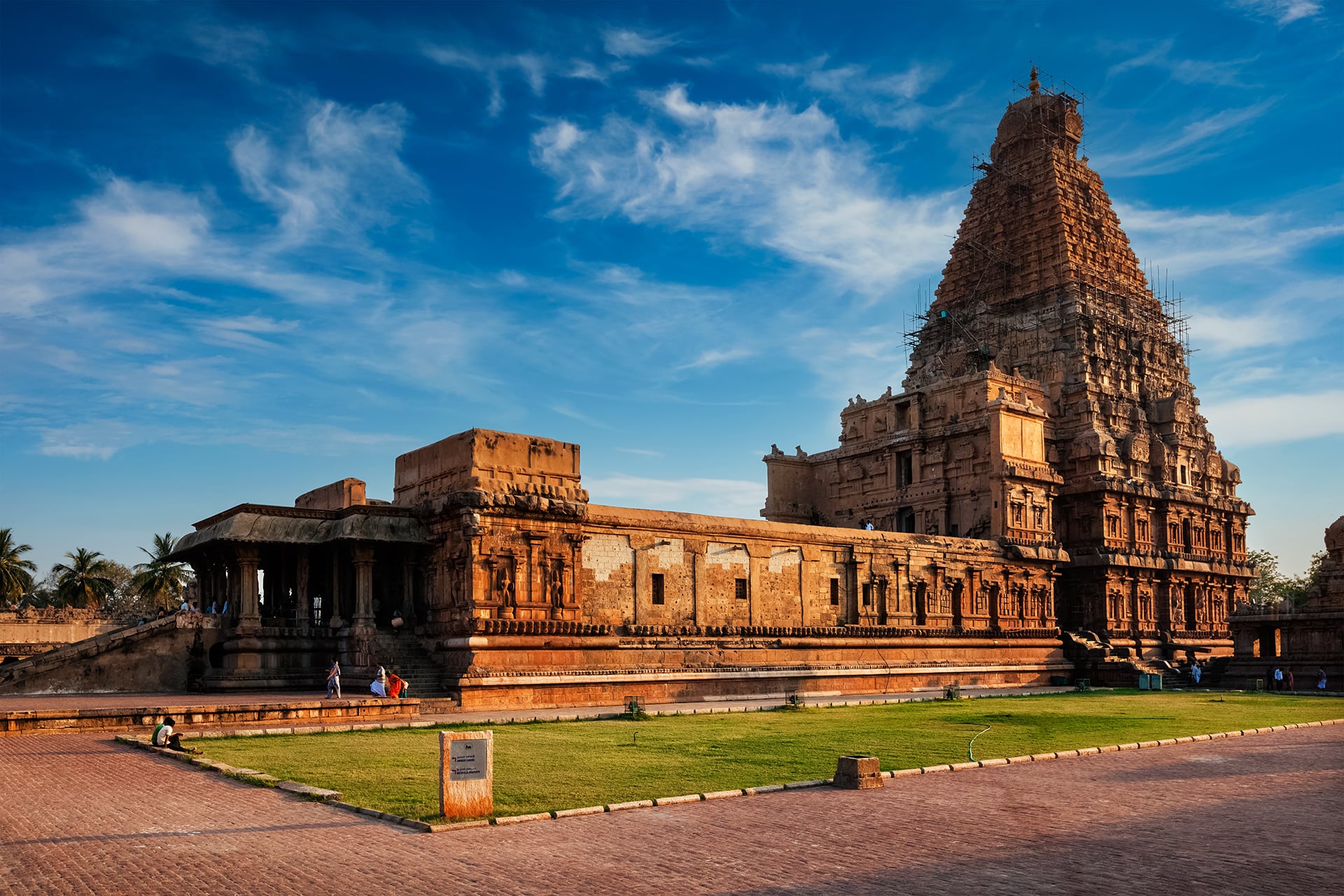
Brihadeeswarar Temple, also known as Peruvudaiyar Kovil or the Big Temple, is one of the greatest temples of India and a masterpiece of Dravidian architecture. Built by the Chola emperor Rajaraja I and consecrated in 1010 CE, it stands in the city of Thanjavur, Tamil Nadu, and is dedicated to Lord Shiva as Brihadeeswarar, the Great Lord, with Goddess Periyanayaki as his consort. Its 13-storey granite vimana, about 66 m (216 ft) high, its colossal monolithic Nandi and its Chola murals and inscriptions make it one of the world's most celebrated monuments. A living temple for over a thousand years, it is part of the UNESCO World Heritage property of the Great Living Chola Temples.
Brihadeeswarar Temple
Brihadeeswarar Temple
The Sacred Legacy of Brihadeeswarar Temple in Numbers
Discover the history and enduring spiritual significance of Brihadeeswarar Temple, the royal temple of the Chola emperor Rajaraja I. Located in Thanjavur, the temple is a masterpiece of Dravidian architecture and a living centre of Shaiva worship, connecting a thousand years of devotion, art and heritage.
- Year the Temple Was Consecrated by Rajaraja Chola I
- 1010 CE
- Time Taken to Build the Temple, from c. 1003-1004 to 1010 CE
- About7 Years
- Storeys of the Granite Vimana
- 13
- Height of the Vimana, One of the Tallest Temple Towers in South India
- About60 m (196 ft)
- Classical Dance Poses (Karanas) Carved Around the Sanctum
- 81
- Temple Dancers Named in Rajaraja's Inscriptions
- About400
- Length and Height of the Monolithic Nandi
- 5.94 m x 3.65 m
- Year the Temple Was Inscribed on the UNESCO World Heritage List
- 1987
- Year the Temple Celebrated Its 1,000th Anniversary
- 2010
- Date of the Most Recent Maha Kumbabhishekam
- 5 February 2020
Year the Temple Was Consecrated by Rajaraja Chola I
Time Taken to Build the Temple, from c. 1003-1004 to 1010 CE
Storeys of the Granite Vimana
Height of the Vimana, One of the Tallest Temple Towers in South India
Classical Dance Poses (Karanas) Carved Around the Sanctum
Temple Dancers Named in Rajaraja's Inscriptions
Length and Height of the Monolithic Nandi
Year the Temple Was Inscribed on the UNESCO World Heritage List
Year the Temple Celebrated Its 1,000th Anniversary
Date of the Most Recent Maha Kumbabhishekam
Historical Background
Brihadeeswarar Temple was built by the Chola emperor Rajaraja I (r. 985-1014 CE) as the royal temple of his capital, Thanjavur. Construction began around the 19th year of his reign (1003-1004 CE), and the temple was consecrated in his 25th year (1009-1010 CE). Rajaraja's own inscriptions on the temple walls record his gifts of gold, jewels and villages, and list hundreds of temple staff, including about 400 dancers with their names and addresses. The temple was a centre of Chola royal and religious life, and later rulers added to it: the Pandyas built the shrine of Goddess Periyanayaki, the Nayaks of the 16th-17th centuries added the great Nandi and the Murugan shrine and painted over parts of the Chola murals, and the Marathas of Thanjavur added the Ganesha shrine and maintained the complex. In 1931, the original Chola murals were rediscovered beneath the later paintings. The temple was inscribed on the UNESCO World Heritage List in 1987, celebrated its 1,000th anniversary in 2010, and held its most recent Maha Kumbabhishekam on 5 February 2020.
985 CE
985 CE
Rajaraja Chola I came to the Chola throne and began the expansion that made the Cholas the leading power of South India.c. 1003-1004 CE
c. 1003-1004 CE
Construction of the temple began in the 19th year of Rajaraja's reign.1009-1010 CE
1009-1010 CE
The temple was consecrated in the 25th year of Rajaraja's reign, and its completion was recorded in his inscriptions.11th century CE
11th century CE
Rajaraja's inscriptions recorded endowments, temple staff, about 400 dancers, musicians and the arrangements for worship.c. 1025-1035 CE
c. 1025-1035 CE
Rajaraja's son Rajendra Chola I built a new capital at Gangaikondacholapuram with a temple modelled on the Thanjavur shrine.13th century CE
13th century CE
The shrine of Goddess Periyanayaki was added during the Pandya period.16th-17th centuries CE
16th-17th centuries CE
The Thanjavur Nayaks added the present monolithic Nandi and its mandapam and the Murugan shrine, and painted over parts of the Chola murals.17th-19th centuries CE
17th-19th centuries CE
The Maratha rulers of Thanjavur added the Ganesha shrine and maintained the temple; the Thanjavur Palace Devasthanam continues to administer it.1931 CE
1931 CE
Prof. S. K. Govindaswami rediscovered Chola-period murals beneath Nayak paintings in the circumambulatory passage around the sanctum.1987 CE
1987 CE
The temple was inscribed on the UNESCO World Heritage List.2004 CE
2004 CE
The World Heritage property was extended as the Great Living Chola Temples, adding the temples at Gangaikondacholapuram and Darasuram.2010 CE
2010 CE
The temple's 1,000th anniversary was celebrated with national and state events.5 February 2020
5 February 2020
The Maha Kumbabhishekam was held, 23 years after the previous one, with rituals in both Tamil and Sanskrit following a Madras High Court order.2022 CE
2022 CE
The Tamil Nadu government declared Sathaya Vizha, Rajaraja Chola's birth-star celebration, an official state function.


Synopsis
Brihadeeswarar Temple in Thanjavur, Tamil Nadu, is the royal temple of the Chola emperor Rajaraja I, begun around 1003-1004 CE and consecrated in 1010 CE. Dedicated to Lord Shiva as Peruvudaiyar, it is renowned for its towering granite vimana, its giant lingam and monolithic Nandi, its 81 carved dance poses and its rare Chola-period murals. Inscribed by UNESCO in 1987 and part of the Great Living Chola Temples, it remains an active place of worship whose most recent Maha Kumbabhishekam was held in February 2020 in both Tamil and Sanskrit.
Brihadeeswarar Temple, dedicated to Lord Shiva as Peruvudaiyar or Brihadeeswarar ("the Great Lord"), was built by the Chola emperor Rajaraja I as the royal temple of Thanjavur and consecrated in 1010 CE. Unlike many ancient temples that grew over centuries, its core was planned and completed in about seven years, making it one of the most ambitious single building projects of the medieval world.
Rajaraja's inscriptions on the base of the temple are among the most detailed records of any medieval Indian temple. They list his gifts of gold, jewels and land, name the villages that supplied the temple, and record hundreds of staff, including about 400 dancers, musicians, accountants and guards. The Chola murals in the sanctum passage, rediscovered in 1931, preserve rare evidence of early 11th-century painting.
Rajaraja I built the temple, and his queens, officers and family made further gifts recorded in the inscriptions. Later, the Pandyas added the Amman shrine, the Thanjavur Nayaks added the great Nandi and the Murugan shrine, and the Maratha rulers of Thanjavur maintained the complex, whose Palace Devasthanam still administers it.
The temple is one of the most important Shiva temples in Tamil Nadu and a living centre of Shaiva worship. Its colossal lingam and Nandi, its Pradosham worship and its festivals continue to draw large numbers of devotees alongside visitors from around the world.
The monument is protected by the Archaeological Survey of India, while worship is administered by the Thanjavur Palace Devasthanam under the Tamil Nadu HR&CE Department. Inscribed by UNESCO in 1987 and part of the Great Living Chola Temples since 2004, the temple marked its millennium in 2010 and held its Maha Kumbabhishekam in February 2020.
Sacred significance
Peruvudaiyar, the Great Lord
Lord Shiva is worshipped here as Peruvudaiyar or Brihadeeswarar, the Great Lord, in the form of one of the largest lingams in India. The temple has been a living centre of Shaiva worship for over a thousand years.
Pradosham at the Great Nandi
The twice-monthly Pradosham worship of the colossal Nandi draws very large crowds, as devotees watch the Nandi bathed with milk, curd, sandal paste and other offerings at dusk.
Annabhishekam in Aippasi
On the full moon of the Tamil month of Aippasi, the great lingam is covered with cooked rice in the Annabhishekam ritual, after which the rice is distributed to devotees as prasadam.
Goddess Periyanayaki
The consort of Brihadeeswarar, Goddess Periyanayaki, has her own shrine in the complex.
Varahi and Ashada Navaratri
The temple's shrine of Goddess Varahi is the focus of the Ashada Navaratri festival, when the goddess is decorated with vegetables, fruits and other offerings on successive days.
Karuvur Devar's Blessing
The Siddha sage Karuvur Devar, believed to have helped Rajaraja install the lingam, is honoured with a shrine.
Mattu Pongal at the Nandi
On Mattu Pongal in January, the great Nandi is decorated with about 1,000 kg of vegetables, fruits and sweets.
Maha Shivaratri
Maha Shivaratri is celebrated with classical dance performances.
Chithirai Festival and the Temple Car
The annual Chithirai festival culminates in the temple car procession. The festival was revived in 2015 after a gap of more than a hundred years with a new chariot carrying 360 wooden sculptures.
Thiruvisaippa Hymns
Karuvur Devar composed verses of the Thiruvisaippa in praise of the temple's deity. For the millennium in 2010, 1,000 dancers performed together to 11 of these verses.
Architecture
Brihadeeswarar Temple is the greatest example of Chola-period Dravidian architecture. Built almost entirely of granite, it stands within a vast rectangular courtyard about 240 m long and 120 m wide, entered through two great gateways. The sanctum is crowned by a 13-storey pyramidal vimana rising about 60 m (196 ft), one of the tallest temple towers in South India, topped by a massive domed capstone popularly said to weigh about 80 tonnes. The temple was planned and built in about seven years and consecrated in 1010 CE, and later rulers added shrines and mandapams while preserving the Chola core.
Layout
Layout
The main shrine stands at the centre of a rectangular courtyard enclosed by a colonnaded cloister (prakara). Subsidiary shrines of Periyanayaki, Murugan, Ganesha, Varahi, Chandikesvara and Karuvur Devar stand in the courtyard, with the Nandi mandapam facing the sanctum.
Vimana
The Vimana (Dakshina Meru)
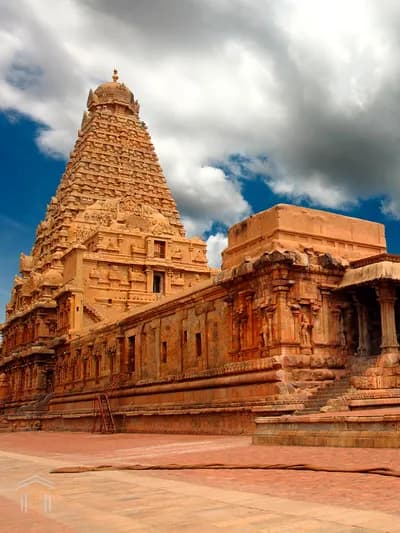
The 13-storey granite vimana rises above the sanctum like a mountain, known as Dakshina Meru, the Meru of the South. It was built of interlocking granite blocks and is crowned by a huge octagonal dome and a kalasam.
Gateway
Keralantakan and Rajarajan Gateways
Visitors enter through the Keralantakan Tiruvasal, named after Rajaraja's victory over the Cheras, and then the Rajarajan Tiruvasal, both richly carved. An outer Maratha-period entrance precedes them.
Sanctum
Garbha Griha (Sanctum Sanctorum)
The sanctum houses one of the largest Shiva lingams in India, set on a massive pedestal and surrounded by a two-storey circumambulatory passage. The passage walls carry the famous Chola murals.
Nandi
The Great Nandi
A monolithic Nandi about 5.94 m long, 2.59 m wide and 3.65 m high, added in the Nayak period, sits in its own mandapam facing the sanctum. It is one of the largest Nandi sculptures in India, and the original Chola-period Nandi is preserved in the courtyard cloister.
Sculpture
Karanas and Wall Sculptures
The walls of the vimana carry sculptures of Shiva in many forms, including Dakshinamurthy, Lingodbhava and Nataraja, and 81 of the 108 classical dance poses (karanas) of the Natya Shastra are carved on the upper storey around the sanctum.
Murals
Chola and Nayak Murals
The circumambulatory passage around the sanctum contains Chola murals of Shiva as Tripurantaka, the story of the saint Sundarar and Rajaraja with his guru, rediscovered in 1931 beneath Nayak-period paintings, which still cover parts of the walls.
Shrines
Later Shrines
The Murugan shrine, with its finely carved pillars and walls, is a gem of Nayak-period craftsmanship, while the Periyanayaki shrine dates from the Pandya period and the Ganesha shrine from the Maratha period.
Interesting facts

Construction began around 1003-1004 CE and the temple was consecrated in 1010 CE, an astonishing achievement for a granite monument of this scale, completed more than a thousand years ago.
Deities & Shrines
Goddess Periyanayaki (Brihannayaki)
The consort of Brihadeeswarar has her own shrine in the courtyard, added in the Pandya period around the 13th century.
Lord Murugan (Subrahmanya)
The Murugan shrine, added in the Nayak period, is celebrated for its exquisitely carved pillars and walls, regarded as some of the finest stonework in the complex.
Lord Ganesha
A shrine of Ganesha, added in the Maratha period, is worshipped before devotees proceed to the main sanctum, in keeping with the custom of invoking Ganesha at the start of any sacred undertaking.
Goddess Varahi
A shrine of Varahi, one of the Saptamatrikas (seven mother goddesses), stands on the southern side of the courtyard. Varahi is widely worshipped for protection and victory, and her Ashada Navaratri festival draws large crowds.
The Great Nandi
The monolithic Nandi in its own mandapam faces the sanctum and is the focus of Pradosham worship, when it is bathed with milk, curd and other offerings before large crowds.
Chandikesvara
The shrine of Chandikesvara, the devoted guardian of Shiva's possessions, stands near the sanctum, as in all major Shiva temples. Devotees traditionally pay their respects to him before leaving.
Karuvur Devar
A shrine honours the Siddha sage Karuvur Devar, Rajaraja's spiritual guide, who is believed to have helped install the great lingam.
Nataraja
Lord Shiva as Nataraja, the cosmic dancer, is honoured in the temple, reflecting Rajaraja's devotion to the dancing Shiva.
Dakshinamurthy
Shiva as Dakshinamurthy, the supreme teacher, is carved in a niche on the southern wall of the vimana and worshipped by devotees seeking knowledge and wisdom.
Ashtadikpalakas
Shrines of the eight guardian deities of the directions, the Ashtadikpalakas, stand around the courtyard, believed to protect the temple from every direction.
Darshan & Service Offerings
| Service | Timing | Price | Notes |
|---|---|---|---|
| General Darshan (Free Darshan) | 06:00 AM - 12:30 PM and 04:00 PM - 08:30 PM. | Free | General darshan allows devotees to worship Brihadeeswarar and Periyanayaki without an entry fee. There is no ticket to enter the temple complex, though the monument is protected by the Archaeological Survey of India. |
| Morning Pooja Darshan | About 08:30 AM. | Free | Devotees can witness the morning pooja with abhishekam and alankaram of the Lord. |
| Uchikala Pooja Darshan | About 12:00 PM. | Free | The midday worship, after which the temple closes for the afternoon. |
| Evening Pooja Darshan | About 06:00 PM. | Free | The evening worship at dusk. |
| Ardhajama Pooja Darshan | About 08:30 PM. | Free | The final worship of the day before the temple closes at about 8:30 PM. |
| Pradosham Darshan | Late afternoon on Pradosham days, twice a month. | Free | Devotees gather in the courtyard to witness the abhishekam of the great Nandi and the lingam. Arrive early, as crowds are very large. |
| Abhishekam | As scheduled by the temple. | Paid; confirm the current rate. | Devotees can sponsor an abhishekam of the lingam or the Goddess with milk, curd, honey, sandal paste and other substances. |
| Archana | During darshan hours. | Paid; confirm the current rate. | An archana in the devotee's name at the sanctum or at the shrine of Periyanayaki. |
| Nandi Abhishekam | On Pradosham days and by arrangement. | Paid; confirm the current rate. | Devotees can sponsor the abhishekam of the great Nandi, especially popular on Pradosham days. |
| Annabhishekam Sponsorship | Aippasi full moon (October-November). | Donation-based | Devotees contribute rice and offerings for the Annabhishekam, when the lingam is covered with cooked rice. |
| Varahi Alankaram and Homam | During Ashada Navaratri and on Panchami days. | Paid; confirm the current rate. | Devotees sponsor special decorations and worship of Goddess Varahi. |
| Sathaya Vizha Participation | Aippasi Sadhayam (October-November). | Free | Devotees and visitors can take part in the celebrations of Rajaraja Chola's birth star, including worship, processions and cultural programmes. |
| Guided Heritage Tours | During opening hours. | As agreed with licensed guides | Licensed guides at the entrance explain the temple's architecture, inscriptions and murals. Agree the fee in advance. |
| Cultural Programmes in the Courtyard | As announced. | As announced | Cultural programmes, including classical dance and music, are held in the temple courtyard during festivals such as Maha Shivaratri and Sathaya Vizha. |
| Donations | At the temple counters. | Donation-based | Devotees can donate towards worship, festivals and annadhanam through the temple office. |
| Special Darshan Ticket | On busy days such as Sundays. | About ₹5; confirm the current rate. | A low-cost special darshan ticket is reported to be available on crowded days for quicker entry. |
| Camera Permit | During opening hours. | About ₹50 for still cameras and ₹100 for video; confirm the current rate. | Photography is allowed in the courtyard with a camera permit. Video cameras and tripods need special permission. Photography is not allowed inside the sanctum. |
| Maha Shivaratri Night Darshan | Maha Shivaratri (February-March). | Free | The temple stays open through the night for Maha Shivaratri, with special abhishekams held every few hours. |
Visitor information
Location
Brihadeeswarar Temple is located on Membalam Road, Balaganapathy Nagar, Thanjavur, Tamil Nadu - 613007, India, in the heart of the city beside Sivaganga Park.
Temple Opening Hours
The temple is generally open from 06:00 AM to 12:30 PM and 04:00 PM to 08:30 PM. The outer courtyard can be visited during these hours, while the sanctum follows the pooja schedule.
Pooja Timings
Daily worship is held at about 08:30 AM, 12:00 PM, 06:00 PM and 08:30 PM, with special abhishekam on Pradosham days.
Entry and Ticket Information
Entry to the temple is free. Abhishekam, archana and other sevas are paid services arranged through the temple office.
A Living World Heritage Site
The temple is both an active place of worship and a UNESCO World Heritage monument protected by the Archaeological Survey of India. Visitors should respect both the rituals and the historic structure.
Dress and Attire
Modest clothing is expected, covering shoulders and knees. Traditional clothing such as a dhoti, saree or salwar kameez is welcome.
Phones, Cameras and Security
Photography is not allowed inside the sanctum and shrines. Photography in the open courtyard follows current notices at the entrance, and visitors pass through security checks.
Footwear Counter
Footwear must be removed before entering the temple and can be left at the counter near the entrance.
Temple Office
The temple office of the Thanjavur Palace Devasthanam within the complex can help with information on poojas, sevas and festivals.
Licensed Guides
Licensed guides are available near the entrance for tours of the temple's architecture, inscriptions and history.
Accessibility
The courtyard is large and level, but some areas have steps and uneven stone. Elderly and differently-abled visitors should approach staff for assistance.
Getting There
The Old Bus Stand is about 1 km from the temple and Thanjavur Junction railway station about 2-3 km. Tiruchirappalli International Airport, about 60 km away, is the nearest airport.
Important Visitor Notice
Timings and access may change during Maha Shivaratri, Sathaya Vizha, the Chithirai festival, Pradosham days and eclipses. The stone courtyard becomes very hot at midday, so plan visits for the morning or evening.
Location
Thanjavur, Tamil Nadu, India
Best Time to Visit
Ideal Time to Visit (October-March)
The months from October to March bring the most comfortable weather in Thanjavur for exploring the temple's open courtyard and the city's heritage sites. This is also the peak season for visitors.
Early Morning and Sunset
The granite courtyard is coolest in the early morning and late afternoon. At sunset, the vimana glows golden, making it the best time for viewing and photography in the courtyard.
Sathaya Vizha (October-November)
The birth-star celebration of Rajaraja Chola in the Tamil month of Aippasi brings worship, processions and cultural programmes, and is an official state function.
Annabhishekam (Aippasi Full Moon)
Witness the great lingam covered with cooked rice on the full moon of Aippasi, one of the temple's most distinctive rituals.
Maha Shivaratri (February-March)
All-night worship and classical dance performances make Maha Shivaratri a memorable time to visit, though crowds are heavy.
Mattu Pongal (January)
On Mattu Pongal, the great Nandi is decorated with about 1,000 kg of vegetables, fruits and sweets, a spectacular sight.
Summer Visit (April-June)
Summer in Thanjavur is very hot, and the stone courtyard can become uncomfortable at midday. Visit early in the morning or in the evening and carry water.
Off-Peak Visit
For a quieter visit, choose a weekday morning outside festivals, school holidays and Pradosham days.
Nearby places
Sivaganga Park and Tank
Adjacent to the temple
- A park and historic tank beside the temple, a pleasant place to rest, with views of the temple walls.
Thanjavur Maratha Palace
About 1 km
- The palace of the Nayak and Maratha rulers of Thanjavur, with its bell tower, armoury, Durbar Hall and royal museum.
Thanjavur Art Gallery
About 1 km (within the palace complex)
- One of India's finest collections of Chola bronzes and stone sculptures, including celebrated images of Nataraja.
Saraswathi Mahal Library
About 1 km (within the palace complex)
- One of the oldest libraries in Asia, expanded by the Maratha ruler Serfoji II, with rare palm-leaf manuscripts, books and maps.
Thiruvaiyaru
About 13 km
- The town of the composer-saint Tyagaraja on the Cauvery, home of the Tyagaraja Aradhana music festival held each January.
Festivals & culture
Brihadeeswarar Temple celebrates a rich calendar of Shaiva festivals alongside the commemoration of its royal founder. Sathaya Vizha, Maha Shivaratri, the Aippasi Annabhishekam, the Chithirai festival and Pradosham days draw large crowds, with worship, processions and cultural programmes. Festival dates follow the Tamil calendar and vary each year.
Sathaya Vizha
October-November (Aippasi Sadhayam; varies)
The celebration of Rajaraja Chola's birth star, with special worship, processions, music, dance and cultural programmes. It has been an official state function since 2022.
Maha Shivaratri
February-March (Masi; varies)
All-night worship of Shiva with special abhishekams and classical dance and music performances in the temple courtyard.
Additional information
Thanjavur Palace Devasthanam
Worship at the temple is administered by the Thanjavur Palace Devasthanam, with a hereditary trustee from the former Maratha royal family, under the Tamil Nadu Hindu Religious and Charitable Endowments Department.
Archaeological Survey of India
The temple is a protected monument, and its conservation is managed by the Archaeological Survey of India.
Brihadeeswarar Temple Address
Brihadeeswarar Temple, Membalam Road, Balaganapathy Nagar, Thanjavur, Tamil Nadu - 613007, India.
UNESCO World Heritage Site
Inscribed in 1987 and extended in 2004 as the Great Living Chola Temples, together with the temples at Gangaikondacholapuram and Darasuram.
Free Entry
There is no entry fee for the temple. Abhishekam, archana and other sevas are arranged through the temple office.
Temple Hours
The temple is generally open from 6:00 AM to 12:30 PM and 4:00 PM to 8:30 PM.
Maha Kumbabhishekam 2020
The temple's most recent Maha Kumbabhishekam was held on 5 February 2020, with rituals in both Tamil and Sanskrit.
Sathaya Vizha
Rajaraja Chola's birth-star celebration in Aippasi has been an official Tamil Nadu government function since 2022.
Photography
Photography is not allowed inside the sanctum and shrines. Follow current notices about photography in the courtyard.
Licensed Guides
Licensed guides are available at the entrance for tours of the temple's history, architecture and murals.
Important Visitor Advisory
Verify timings, seva charges and festival arrangements immediately before travel, and plan visits for the cooler parts of the day.
Temple facilities
Temple Office
The office of the Thanjavur Palace Devasthanam within the complex assists devotees with poojas, sevas, donations and festival information.
Footwear Counter
A counter near the entrance stores footwear while visitors are in the temple.
Drinking Water and Restrooms
Drinking water points and restrooms are available near the entrance and in the complex.
Assistance for Elderly and Differently-Abled Visitors
The courtyard is broad and largely level. Elderly and differently-abled visitors should approach staff for assistance with steps and uneven areas.
Licensed Guides
Licensed guides are available at the entrance to explain the temple's history, inscriptions, sculptures and murals.
Prasadam and Archana Counters
Counters in the complex provide archana tickets and prasadam such as vibhuti and kumkum.
Evening Illumination
The temple and its vimana are illuminated in the evening, creating one of the most striking views in Thanjavur.
Shaded Cloisters
The colonnaded cloister around the courtyard provides shade and seating for visitors during warmer hours.
Accommodation in Thanjavur
Thanjavur has a wide range of hotels, from budget lodges to heritage resorts, within a short distance of the temple. Availability and charges should be checked directly with each hotel.
Emergency services
India Emergency Response
Not location-specific
Contact
112
- Call 112 for urgent police, medical or fire assistance through India's integrated emergency response system.
Top picks
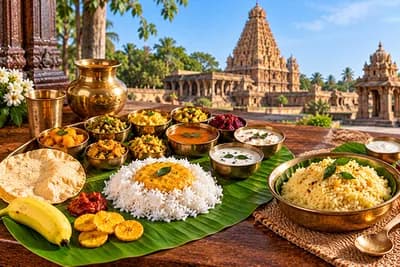
Thanjavur Meals and Arisi Paruppu Sadam
Try a traditional Thanjavur meal, including arisi paruppu sadam (rice cooked with toor dal and served with ghee and appalam), venn pongal for breakfast and the milder local Thanjavur biryani made with jeeraga samba rice.

Kumbakonam Degree Coffee
Enjoy strong, frothy filter coffee in the famous Kumbakonam degree style, served in a brass tumbler and dabarah across the region.
Visitor guide
Tiruchirappalli International Airport (TRZ)
Approximately 60 km
- The nearest airport, with domestic flights and international connections to Singapore, Kuala Lumpur, Colombo, Dubai and other cities. Taxis connect it with Thanjavur in about 1.5 hours.
Thanjavur Air Force Station
Approximately 12 km
- A military air base; it does not have regular commercial passenger flights, so visitors should fly into Tiruchirappalli.
Gallery
Videos
Third-party videos may include ads or external commentary.
Frequently Asked Questions
It is on Membalam Road in the centre of Thanjavur, Tamil Nadu, India - 613007, beside Sivaganga Park.
Lord Shiva is worshipped as Brihadeeswarar or Peruvudaiyar, the Great Lord, with Goddess Periyanayaki as his consort.
The Chola emperor Rajaraja I built the temple, beginning around 1003-1004 CE and consecrating it in 1010 CE.
The 13-storey granite vimana rises about 66 m (216 ft), making it one of the tallest temple towers in the world.
No. Entry to the temple is free. Abhishekam, archana and other sevas are arranged through the temple office.
The temple is generally open from 6:00 AM to 12:30 PM and 4:00 PM to 8:30 PM.
Yes. It was inscribed in 1987 and is part of the Great Living Chola Temples, with the temples at Gangaikondacholapuram and Darasuram.
Photography is not allowed inside the sanctum and shrines. Follow the notices at the entrance about photography in the courtyard.
The monolithic Nandi is about 5.94 m long and 3.66 m high, one of the largest in India. It was added in the Nayak period, and the original Chola Nandi is kept in the cloister.
It is the celebration of Rajaraja Chola's birth star in the Tamil month of Aippasi, held as an official state function since 2022.
The most recent Maha Kumbabhishekam was held on 5 February 2020, with rituals in both Tamil and Sanskrit.
October to March, in the early morning or late afternoon, when the stone courtyard is cooler and the vimana glows at sunset.
The temple is about 0.5 km from the Old Bus Stand and 2-3 km from Thanjavur Junction. Tiruchirappalli Airport is about 60 km away.
The Maratha Palace, Art Gallery and Saraswathi Mahal Library are about 1 km away, and the Chola temples at Darasuram and Gangaikondacholapuram make good day trips.