
29°C
Thrissur
Guruvayur Sree Krishna Temple
 Thrissur, Kerala, India
Guruvayur Sree Krishna Temple in Kerala is a revered shrine dedicated to Guruvayurappan, a form of Lord Krishna, celebrated for its ancient traditions, sacred rituals, vibrant festivals and deep spiritual significance, attracting devotees from across the world.
- ReligionHindu
- DeityLord Guruvayurappan (a form of Lord Vishnu,
popularly worshipped as Krishna) - TimingsMorning: 03:00 AM - 12:30 PM, Evening: 04:30 PM - 09:00 PM
About the temple
About the temple
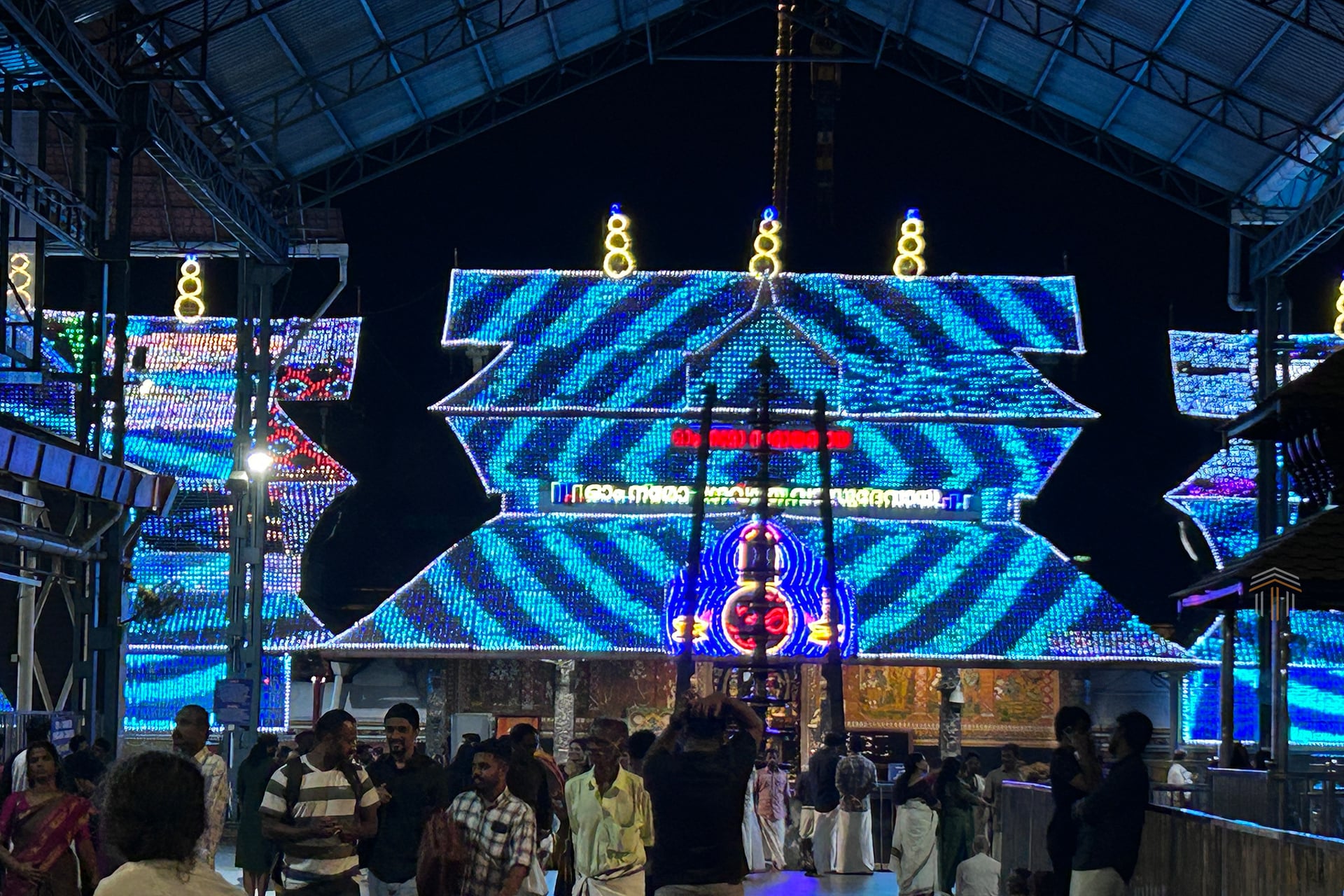
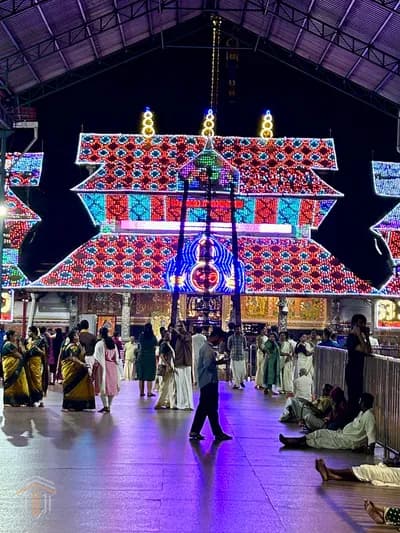
Guruvayur Sree Krishna Temple, located in the town of Guruvayur in Kerala's Thrissur district, is one of India's oldest and most revered Hindu pilgrimage sites, often called the "Dwaraka of the South." The presiding deity, Guruvayurappan, is a four-armed form of Vishnu carrying the conch, discus, mace, and lotus, worshipped here as Lord Krishna. According to legend, the sacred idol was originally worshipped by Krishna himself in Dwaraka and, after that city was submerged, was brought to Kerala and installed by Brihaspati (the gurus' teacher) and Vayu (the wind god) - which is how the temple got its name. While tradition holds the site is thousands of years old, the earliest verifiable historical references date to around the 14th century, with the current sanctum believed to have been rebuilt in the 17th century. Built in classical Kerala temple style, the complex features a gold-covered flagstaff, tall pillars of lamps, and a square-shaped sanctum housing the main idol along with shrines to Ganapathy and Ayyappan. The temple follows a strict daily ritual schedule starting before dawn and remains a major center of devotion, drawing millions of pilgrims and tourists each year.
Guruvayur Sree Krishna Temple
Guruvayur Sree Krishna Temple
The Spiritual Legacy Of Guruvayur Temple In Numbers
Discover the enduring spiritual heritage of Guruvayur Temple, traditionally revered as Bhooloka Vaikuntha - the earthly abode of Vishnu. Dedicated to Lord Guruvayurappan, the temple is one of Kerala’s most important Hindu pilgrimage centres and is known for its long-standing worship traditions, festivals, offerings, and detailed daily rituals.
- Mythological origins traced back to Dwapara Yuga
- 5000 yrs
- Devotees visit annually, making it one of India’s busiest temples
- 1M+
- Daily poojas & rituals observed with strict Vedic traditions
- 12+
Mythological origins traced back to Dwapara Yuga
Devotees visit annually, making it one of India’s busiest temples
Daily poojas & rituals observed with strict Vedic traditions
Historical Background
Guruvayur Temple, one of Kerala’s most revered Hindu pilgrimage sites, is dedicated to Lord Krishna and is deeply rooted in mythology and history. According to tradition, the idol worshipped by Lord Krishna in Dwaraka was brought to Kerala by Guru (Brihaspati) and Vayu, giving the temple its name, Guruvayur. Historical references from the 14th century and the devotional work Narayaneeyam by Melpathur Narayana Bhattathiri enhanced the temple’s spiritual significance. Despite invasions, fires, and historical challenges, Guruvayur Temple has preserved its rich traditions and continues to attract millions of devotees annually. Managed by the Guruvayur Devaswom Board, the temple remains a major centre of Krishna worship, festivals, weddings, and cultural heritage in India.
5000 BCE (Mythological Origin)
5000 BCE (Mythological Origin)
Idol worshipped by Lord Krishna in Dwaraka. After Dwaraka's submergence, the idol was brought to Kerala by Guru (Brihaspati) and Vayu. It was installed near Rudratheertha with blessings from Lord Shiva, giving rise to the name Guruvayur.14th Century CE
14th Century CE
The earliest known written reference to the temple appears in the Tamil literary work Kokasandesam, where the place is referred to as "Kuruvayur." The temple gradually gains recognition as a pilgrimage site.16th Century CE
16th Century CE
Melpathur Narayana Bhattathiri composes the Narayaneeyam, cementing the temple's devotional and literary significance. Patronage from the Zamorins of Calicut begins around this period.1716 CE
1716 CE
Dutch forces raid Guruvayur, looting temple treasures and setting fire to the Western Gopuram (tower). The main sanctum and idol are unaffected. The Gopuram is rebuilt in 1747 CE.1789 CE (Tipu Sultan's Invasion)
1789 CE (Tipu Sultan's Invasion)
During Tipu Sultan's campaign in Malabar, the main idol is hidden underground for protection while the processional idol is moved to Ambalapuzha. Tipu's forces set fire to smaller shrines, but the temple is saved by a timely rainfall.19th-20th Century
19th-20th Century
The Zamorins of Calicut, along with rulers of Cochin and Travancore, continue patronage. Temple rituals and festivals flourish, and Guruvayur is increasingly recognized as a major national pilgrimage destination.30 November 1970
30 November 1970
A major fire breaks out in the temple complex, destroying the outer structures (chuttambalam and vilakkumatam). The sanctum sanctorum and the main idol remain miraculously untouched.1971 CE
1971 CE
An initial Guruvayur Devaswom Act is passed by the Kerala Legislature to manage temple affairs, but it is later struck down as unconstitutional by the Kerala High Court.1978 CE
1978 CE
The Guruvayur Devaswom Act, 1978 (Act 14 of 1978) is enacted, establishing the current Guruvayur Devaswom Board, which continues to govern temple administration, rituals, and assets to this day.Present Day
Present Day
One of India's most visited temples, drawing millions of devotees annually. Hosts daily rituals, weddings, and festivals, and honors the legacy of the elephant Guruvayur Kesavan. Manages the Punnathur Kotta Elephant Sanctuary, home to temple elephants.


Synopsis
Guruvayur Temple, often referred to as the "Bhooloka Vaikuntha" (Heaven on Earth), is a major Hindu pilgrimage site in Kerala dedicated to Lord Guruvayurappan, a form of Lord Vishnu worshipped as the infant Krishna (Unnikrishnan). Renowned for its daily rituals, spiritual ambiance, and historical significance, the temple stands as a beacon of devotion and tradition. Pilgrims from across the world visit throughout the year to seek divine blessings and experience the sacred atmosphere.
The origins of the Guruvayur Temple date back over 5,000 years, rooted in Hindu mythology. Its recorded history, however, begins around the 14th century, with the earliest known written reference appearing in the Tamil literary work Kokasandesam. The temple rose to prominence as a major center of Krishna worship in Kerala, with devotees recognizing it as a powerful spiritual hub due to the belief that the idol was originally worshipped by Lord Krishna himself in Dwaraka. The temple structure, in its current form, has been rebuilt and renovated multiple times following fires and invasions over the centuries. The granite sanctum sanctorum (Sreekovil) and traditional Kerala temple architecture highlight its ancient cultural legacy.
The temple was significantly patronized by the Zamorin rulers of Calicut (Kozhikode), especially from the 16th century onward. They offered protection and support during times of threat. Later, the kings of Cochin and Travancore also extended patronage, providing donations, land, and support for temple festivals and maintenance. The Punnathur Raja, whose palace was located nearby (now the Elephant Sanctuary), was a devoted patron and contributed immensely to temple rituals and festivals. - Correction: The Punnathur Rajas were local rulers whose 500-year-old palace, near Guruvayur, later became the temple's elephant sanctuary (Punnathur Kotta) after the Guruvayur Devaswom Board purchased it in 1975 to house elephants donated by devotees. There isn't historical documentation describing the Punnathur Raja as a major patron of temple rituals - the palace's significance is tied to its later role as the elephant sanctuary, not to royal patronage of the temple itself.
Melpathur Narayana Bhattathiri, the 16th-century Sanskrit scholar, composed the devotional poem Narayaneeyam, believed to have been written at the Guruvayur Temple, which remains a spiritual treasure for devotees. In 1716, Dutch forces raided the temple, looting treasures and setting fire to the Western Gopuram (tower); the main sanctum and idol were unaffected, and the tower was rebuilt in 1747. During Tipu Sultan's invasion in 1789, the temple was threatened, but the idol was hidden underground for safekeeping and the temple was ultimately spared, reportedly due to a sudden rainfall. In 1970, another major fire broke out, destroying outer parts of the temple complex, but again the sanctum sanctorum and the idol remained untouched - an event widely regarded by devotees as miraculous. An initial Guruvayur Devaswom Act was passed in 1971 but was later struck down as unconstitutional. The current governing body, the Guruvayur Devaswom Board, operates under the Guruvayur Devaswom Act, 1978, which manages the temple's administration, rituals, festivals, and charitable activities.
Today, Guruvayur Temple is not only a religious center but also a cultural and social institution. It manages the Punnathur Kotta elephant sanctuary, hosts thousands of weddings annually, and supports daily feeding of pilgrims (Annadanam). It remains one of the most visited temples in India, drawing millions of devotees from across the globe.
Sacred significance
Divine Presence of Lord Guruvayurappan
Guruvayur Temple is one of the most sacred shrines dedicated to Lord Vishnu, specifically in the form of Lord Guruvayurappan. The idol is revered by devotees as holding immense spiritual power, offering divine blessings to those who worship with sincerity. Known as "Bhooloka Vaikuntha," the temple is considered an earthly abode of Lord Vishnu.
Devotional Practices
Devotees perform numerous religious rituals, including pradakshina (circumambulation), Nirmalya Darshan (the first, most auspicious darshan of the day), and making vows known as "Vazhipadu" to seek blessings for health, prosperity, and peace of mind. The temple is a destination for those wishing to deepen their spiritual devotion.
Architecture
Traditional Kerala Temple Architecture - The architecture of Guruvayur Temple is a prime example of Kerala's ancient temple design. It follows traditional Vastu principles, with the complex oriented to the East. Structures feature sloped, copper-sheeted roofs, extensive woodwork, and laterite stone - a hallmark of classical Kerala temple style.
Gopuram
The Temple Tower (Shikhara)
Guruvayur has two Gopurams (entrance towers) - one at the East and one at the West - marking the temple's main entrances. The temple also features a tall, gold - plated Dwajasthambam (flagpost, about 33.5m high) and ornate Deepasthambams (lamp pillars), which create a striking spectacle when lit during festivals.
Gopuram
The Sanctum Sanctorum (Sreekovil)
The Sreekovil, the temple's sacred inner sanctum, is a rectangular, two-storied structure with a copper roof plated in gold - an offering made by a devotee in 1981. Its walls once bore murals damaged in the 1970 fire, later meticulously restored in the 1980s. The Garbhagriha (innermost chamber) houses the idol of Lord Guruvayurappan.
Courtyard
Outer Courtyard (Chuttambalam)
The Chuttambalam is the temple’s outer courtyard, surrounded by a covered walkway with wooden pillars that support the roof, which is traditionally made of coconut palm leaves and timber. The courtyard is where devotees gather for circumambulation and for receiving blessings. It symbolizes the spiritual path where one must walk towards enlightenment.
Pond
Sacred Pond (Rudratheertham)
Rudratheertham, the temple's sacred tank on the northern side, is an important architectural and ritual feature, historically linked to the temple's legendary origin, where Lord Shiva is said to have resided before relocating to the adjacent Mammiyoor Temple.
Elephant
Punnathur Kotta (Elephant Sanctuary)
Adjacent to the temple lies Punnathur Kotta, a unique feature of Guruvayur, which serves as the elephant sanctuary for the temple’s elephants. With a history of elephant worship, the temple maintains over 60 elephants in this spacious compound. The architecture here features traditional Kerala-style elephant shelters, with large enclosures, sheltered paths, and grazing areas, maintaining a harmonious connection between the divine and the sacred animals.
Interesting facts

The idol of Lord Guruvayurappan is believed to be over 5,000 years old and steeped in mythological significance. During the catastrophic fire of 1970, the surrounding temple structures were destroyed, yet the sanctum sanctorum and the idol remained miraculously untouched - an event widely regarded by devotees as a sign of divine protection. The idol also survived earlier threats, including a Dutch raid in 1716 that damaged the temple's Western Gopuram, and Tipu Sultan's invasion in 1789, when it was hidden underground for safekeeping.
Deities & Shrines
Lord Shiva (The Destroyer)
While there is no Shiva shrine inside the Guruvayur Temple complex, Lord Shiva is central to its legend. Tradition holds that Shiva originally resided at the site, sanctifying the temple pond (Rudratheertham), before relocating to the nearby Mammiyur Sri Mahadeva Temple (1 km away) to make room for Lord Krishna’s idol. Devotees traditionally visit Mammiyur to complete their pilgrimage, symbolizing the harmonious balance between Shaivism and Vaishnavism.
Lord Ayyappa
The temple also houses a shrine for Lord Ayyappa, the deity of Sabarimala, and is worshipped for spiritual growth, discipline, and overcoming obstacles in life. The presence of Lord Ayyappa in Guruvayur Temple emphasizes the temple’s role in fostering devotion to various deities within the Hindu pantheon.
Goddess Bhagavathi
A sub-shrine for Goddess Bhagavathi is located within the temple complex, representing divine feminine power and protection. Bhagavathi is worshipped for protection against evil forces and blessings, and her presence reflects the temple's holistic approach to divine energy, encompassing both masculine and feminine aspects. Note: sources consistently name this sub-deity "Bhagavathi" rather than "Durga" specifically -I found no source using the name "Durga" for this shrine at Guruvayur.
The Navagrahas (Nine Planets)
In Hindu astrology, the Navagrahas are nine celestial influences: Surya (Sun), Chandra (Moon), Mangala (Mars), Budha (Mercury), Brihaspati (Jupiter), Shukra (Venus), Shani (Saturn), Rahu, and Ketu. In many Hindu devotional traditions, devotees pray to the Navagrahas in connection with graha doshas and for spiritual well-being. Guruvayur Srikrishna Temple’s official published information centers on the worship and daily rituals of Guruvayurappan; it does not specifically identify a dedicated Navagraha shrine.
Lord Ganesh (The Remover of Obstacles)
A small shrine dedicated to Lord Ganesh, the remover of obstacles, can also be found in the temple. Devotees invoke Lord Ganesh’s blessings before embarking on new ventures or significant life events, including marriages and business endeavors. His presence enhances the overall spiritual sanctity of the temple.
Darshan & Service Offerings
| Service | Timing | Price | Notes |
|---|---|---|---|
| Free General Darshan | 3:00 AM-12:30 PM & 4:30 PM-9:15 PM | Free | Open queue darshan is accessible to all devotees throughout the day, except during the scheduled afternoon closure. No prior booking is required; devotees join the line and wait their turn for entry into the sanctum. Wait times typically range from 1.5 to 4 hours, and can extend to 5-6 hours or more on busy days. |
| VIP / Special Darshan (Neyvilakku / Ghee Lamp Darshan) | Same as general darshan hours | ₹1,000 per person (₹4,500 for a group of 5) | Officially known as Neyvilakku or Ghee Lamp Darshan, this paid pass offers faster, priority access to the sanctum by way of a ghee-lamp offering, cutting darshan time down to roughly 10-40 minutes instead of hours in the general queue. Children below 10 do not require a ticket. Can be booked online at guruvayurdevaswom.in or at the temple counter. |
| Namaskaram Darshan | Not independently verified | Not independently verified (your figure of ₹10,000 could not be confirmed in the sources I checked) | Described elsewhere as a late-night ritual where devotees offer prayers at the shrine doors around temple closing. I was unable to confirm this offering's name, exact timing, or price against reliable sources - recommend verifying directly with the Guruvayur Devaswom before publishing. |
| Nirmalya Darshan | 3:00 AM-3:30 AM daily | Free (or accessible via the ₹1,000 Special Darshan ticket for quicker entry) | The first and most revered darshan of the day, when Lord Guruvayurappan is seen still adorned with the previous night's offerings. Devotees seeking free access typically begin queuing by around 7:30 PM the evening before; up to 2,000 people may queue overnight for this darshan. |
| Udayasthamana Pooja | All day (sunrise to sunset / dawn to night closure) | Not independently verified (your figure of ₹28,000 could not be confirmed - rates are shown on the official booking portal when the offering is selected) | A full-day dedicated worship performed on a devotee's behalf, encompassing the temple's entire daily ritual cycle from early dawn through night closure. Booking this seva can affect the general darshan schedule on that day. |
| Thulabharam | Not independently verified (your window of 5:00 AM-1:30 PM and 5:00 PM-8:30 PM could not be confirmed against sources, though it falls within general temple open hours) | Not independently verified (your figures of ₹5 scale fee plus material cost could not be confirmed) | A sacred vow ritual in which the devotee sits on one side of a balance scale while offerings - such as fruits, grains, jaggery, butter, coins, or gold - are placed on the other side until balanced. The matched offerings are then donated to the temple as an act of surrender, vow fulfillment, or thanksgiving. Can typically be requested during Special/VIP Darshan with prior arrangement. |
| Choroonu (Annaprasam) | Not independently verified (your window of 5:00 AM-1:30 PM and 5:00 PM-8:30 PM could not be confirmed) | Not independently verified (your figure of ₹20 could not be confirmed) | The temple's traditional ceremony for an infant's first solid-food feeding. Parents bring the child to be ceremonially fed a small portion of rice, followed by distribution of prasadam. This is one of the temple's most popular bookings - sources note it draws large crowds, so early slot booking is recommended. |
Visitor information
Location
Guruvayur Temple is located in Guruvayur town, Thrissur district, Kerala. It is accessible via the Guruvayur Railway Station (approximately 1-2 km away) and Thrissur Railway Station (approximately 27 km away). Cochin International Airport (COK) is the nearest airport, located approximately 80 km away.
Temple Timings
The temple opens at 3:00 AM for Nirmalya Darshan and remains open until 12:30 PM. It reopens for evening darshan from 4:30 PM until 9:15 PM, closing after the Thrippuka ritual.
Dress Code
Men must wear a Mundu (Dhoti); shirts, t-shirts, vests, pants, and lungis are not permitted inside. Women must wear a Saree, Half-Saree, or Salwar Kameez/Churidar. Modest, traditional attire is mandatory; sleeveless tops and modern casual wear are not allowed.
Hindus-Only Entry
Entry to the temple is restricted to Hindu devotees only. This is a longstanding and strictly enforced rule at Guruvayur.
Important Notes
Photography and use of mobile phones/electronic devices are prohibited inside the temple; these are typically required to be deposited at cloakrooms before entry. The temple can be significantly crowded during festivals and peak hours, with darshan wait times extending to several hours.
Location
Thrissur, Kerala, India
Best Time to Visit
Best Time to Visit Guruvayur Temple
The ideal time to visit Guruvayur Temple is during the cooler months of October to March, when the weather is pleasant and comfortable for travel.
Visit During Festivals
The temple is especially vibrant during major festivals such as the Guruvayur Utsavam (February - March), Vishu (April), and Guruvayur Ekadasi (November - December), offering a unique and spiritually enriching experience with special rituals and processions.
Off-Peak Time for Peaceful Visit
For those seeking a quieter experience, visiting during weekdays or the months of June to August is ideal, as the temple is less crowded, allowing for more peaceful darshan and a serene atmosphere. Note that September, though part of the monsoon season, sees heavy footfall due to the Onam festival, so it shouldn't be treated as a quiet period.
Nearby places
Mammiyoor Temple
1 km
- A sacred temple dedicated to Lord Shiva, it is closely associated with Guruvayur Temple, as devotees often visit here after seeking blessings at Guruvayur.
Festivals & culture
The Guruvayur Festival, also known as Ulsavam, is a grand 10-day celebration held annually at Guruvayur Temple, dedicated to Lord Guruvayurappan (Lord Vishnu). This vibrant festival features a series of rituals, processions, cultural performances, and devotional music, attracting thousands of devotees from across the world. The highlight of the festival is the spectacular procession with caparisoned elephants, accompanied by temple music and devotees singing praises of the deity. The festival is a time of spiritual renewal, bringing together people in devotion and celebration of divine grace.
Ulsavam
February-March
The grand annual festival of Guruvayur Temple, lasting 10 days, held in the Malayalam month of Kumbham. Includes flag hoisting (Kodiyettam), elaborate elephant processions, Panchavadyam and Chenda Melam performances, and concludes with the Aarattu ceremony on the tenth day.
Ekadasi (Guruvayur Ekadasi)
November-December
A major religious observance falling on the 11th day (Ekadasi) of the Malayalam month Vrischikam, during the Mandala season. Devotees seek Lord Vishnu's blessings through fasting, prayers, and special rituals. The day includes a memorial for the famous temple elephant Guruvayur Kesavan, Udayasthamana Pooja (dawn-to-dusk worship), an elephant procession to the Parthasarathy temple (marking Geethopadesam Day), and concludes with the Vilakku Ekadasi elephant procession.
Vishu
April
Marks the Malayali New Year, falling on the 1st of the month Medam (mid-April). Celebrated with the viewing of "Vishukkani" (an auspicious early-morning arrangement of items believed to set the tone for the year), along with rituals and special offerings. It is an important observance at Guruvayur.
Thiruvonam
August-September
Celebrated as part of the Onam festival in the Malayalam month of Chingam, this day honors Lord Vishnu's Vamana avatar. Special poojas and cultural programs are held at the temple.
Additional information
Official Temple Website
For more details, visit the official website of Guruvayur Temple at Official Website.
Temple Contact Information
For inquiries, devotees can reach the temple office at +91 9995939303 or email guruvayurconnect@gmail.com.
Police Assistance
For law and order concerns or emergencies near the temple, devotees can contact the Guruvayoor Temple Police Station at landline 0487-2556362 (mobile: 9497987136). For the general town police station, contact Guruvayoor Police Station (Kandanassery) at landline 0488-5230100 (mobile: 9497962644).
Temple facilities
Cloakroom and Locker Facilities
A dedicated Temple Cloak Room is available near the temple (Althara Ponnani Road, Mammiyoor) where devotees can deposit personal belongings, luggage, and electronic devices before entering the premises, for a nominal fee.
Prasadam Distribution
Devotees receive prasadam (blessed food offerings) after darshan. Free daily meals (Prasada Oottu / Annadhanam) are also served to thousands of pilgrims at the Annalakshmi Hall, located outside the main temple.
Wheelchair Assistance
Guruvayur is recognized as one of the few major Kerala temples that permits wheelchairs inside the premises. Note: as of 2024, the Kerala High Court has been reviewing accessibility for wheelchair users specifically to reach the sanctum sanctorum for darshan across major Devaswom-run temples, including Guruvayur - so full accessibility to all inner areas remains an evolving matter rather than a fully guaranteed amenity. Devotees requiring assistance should confirm current arrangements with temple staff on arrival.
Emergency services
Hayath Hospital
2.4 km
Contact
+91 4872504500
- A private hospital offering emergency care, general medical treatments, surgical services, and specialized care in a variety of fields.
Guruvayur Devaswom medical centre
0.1 km
Contact
N/A
- A medical centre offering emergency care, general medical treatments.
Top picks
Sadyas (Kerala Feast)
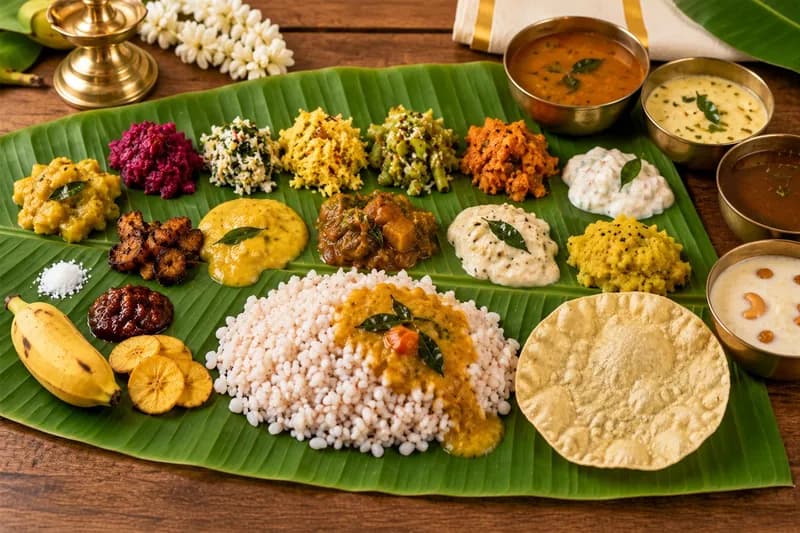
The traditional Kerala feast served on a banana leaf, comprising a variety of vegetarian dishes. It's served in temples, and local eateries often offer it as a part of the meal experience.
Guruvayur Appam
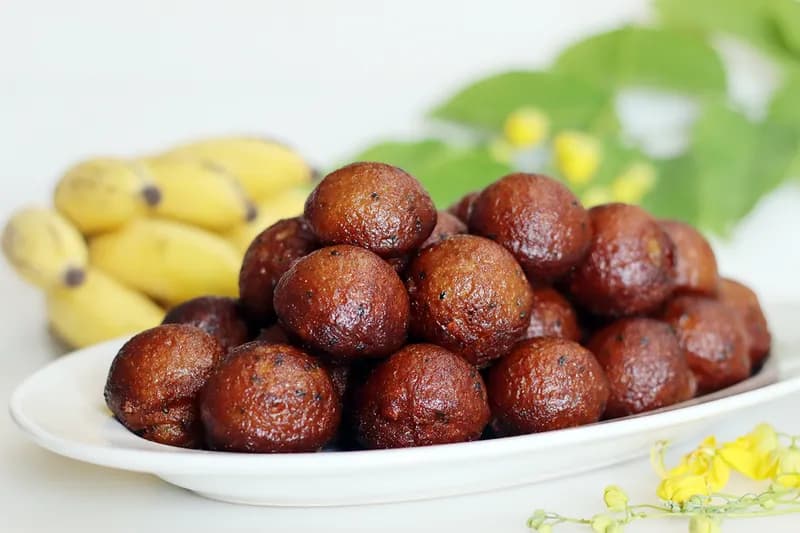
A special type of sweet appam (pancake) offered as prasadam in the temple. Made with rice flour and jaggery, it is soft, sweet, and a popular delicacy for devotees.
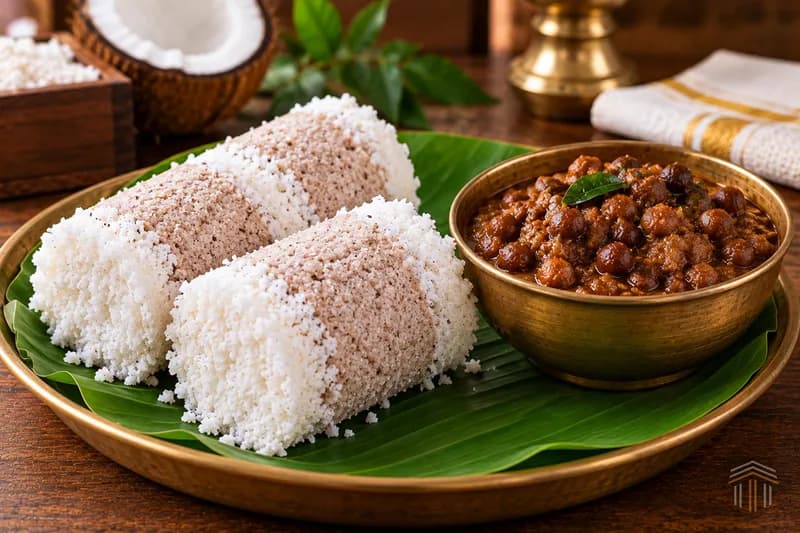
Puttu and Kadala Curry
A traditional Kerala breakfast dish, puttu (steamed rice flour) is served with kadala curry (spicy black chickpeas). It's a must-try for its unique taste and nutritional value.
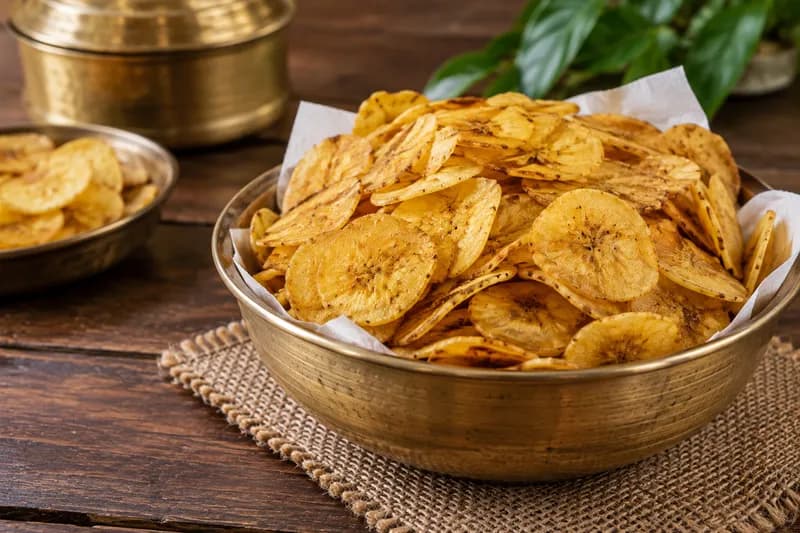
Banana Chips
A popular snack made from raw bananas, thinly sliced, and deep-fried. The chips are crispy and often served with a sprinkle of salt. Available as a snack or packaged for souvenirs.
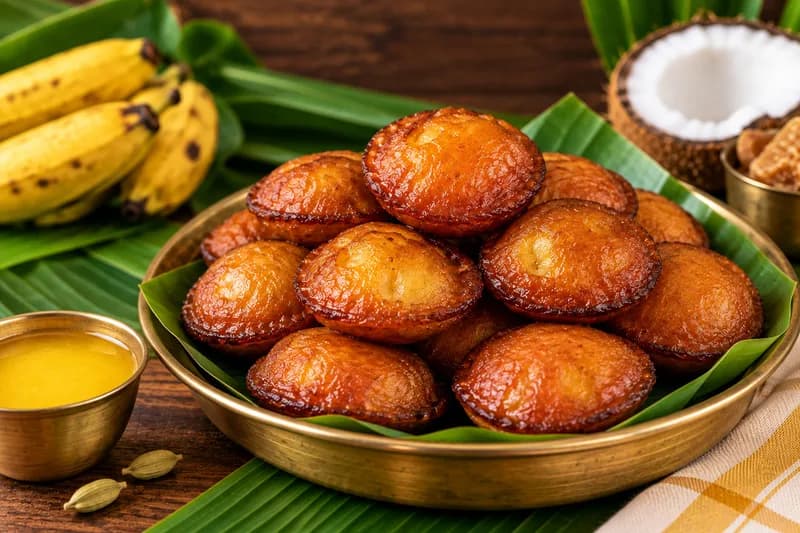
Neyyappam
A sweet fried snack made with rice flour, jaggery, and coconut, usually served as prasadam at temples. It’s soft on the inside and crispy on the outside, making it a delightful treat.
Visitor guide
Guruvayur New Bus Stand
0.6 km
- A newly constructed bus stand offering frequent local and interstate buses to and from Guruvayur. Auto-rickshaws and shared autos are easily available for a short ride to the temple.
KSRTC cross road
0.5 km
- KSRTC Cross Road is very close to Guruvayur Sree Krishna Temple, around 0.5 km away.
Guruvayur railway station lift
1 km
- Guruvayur Railway Station is very close to Guruvayur Sree Krishna Temple, approximately 1 km away.
Gallery
Videos
Third-party videos may include ads or external commentary.
Frequently Asked Questions
Guruvayur Sree Krishna Temple is located in Guruvayur, Thrissur district, Kerala, India. It is one of the most important and popular Krishna temples in South India.
Guruvayur Sree Krishna Temple is famous for its sacred idol of Lord Krishna, worshipped as Guruvayurappan. The temple is regarded as one of the most important pilgrimage destinations for devotees of Lord Krishna.
The main deity worshipped at Guruvayur Temple is Lord Krishna, known locally as Guruvayurappan. The deity is depicted in a four-armed form holding the conch, discus, mace, and lotus.
According to Hindu tradition, the sacred idol at Guruvayur was worshipped by Lord Vishnu and later brought to Kerala by Guru Brihaspati and Vayu, the wind god. The temple has a long history and is one of Kerala's most revered Hindu pilgrimage centers.
Guruvayur Temple is especially known for its deep-rooted devotional traditions, daily rituals, and unique Kerala-style temple customs. The temple attracts millions of devotees who visit to seek the blessings of Guruvayurappan.
Guruvayur Sree Krishna Temple opens early in the morning and remains open for devotees at different intervals throughout the day. Darshan timings may change during festivals and special occasions, so visitors should check the latest official schedule before visiting.
General entry for darshan at Guruvayur Sree Krishna Temple is typically free. However, special poojas, vazhipadu offerings, and certain services may involve separate charges or advance booking.
Major festivals celebrated at Guruvayur Temple include Guruvayur Ekadasi, Ashtami Rohini, Vishu, and the annual Utsavam. These celebrations attract large numbers of devotees from across India.
The best time to visit Guruvayur Sree Krishna Temple is from October to March when Kerala experiences relatively pleasant weather. Devotees may also visit during major festivals for a more vibrant spiritual experience.
Guruvayur Sree Krishna Temple is well connected by road and rail. Guruvayur Railway Station is located close to the temple, while Cochin International Airport and Calicut International Airport are among the nearest major airports.