
8°C
Reasi
Vaishno Devi Temple
 Reasi, Jammu and Kashmir, India
Vaishno Devi Temple in Reasi, Jammu and Kashmir, is a revered Himalayan shrine dedicated to Goddess Vaishno Devi, attracting millions of devotees each year seeking blessings and spiritual peace.
- ReligionHindu
- DeityGoddess Vaishno Devi (Mahakali,
Mahalakshmi,
Mahasaraswati) - TimingsOpen 24 hours (pilgrims can visit anytime, but the main shrine is busiest during the day)
About the temple
About the temple
Vaishno Devi Temple, located in the Trikuta Mountains of Reasi district, Jammu and Kashmir, is one of the most sacred Hindu pilgrimage sites dedicated to Goddess Vaishno Devi, a manifestation of the divine feminine energy. The temple attracts millions of devotees annually, who undertake a 13 km trek from Katra to the Holy Cave where the goddess's sacred rock formations (Pindis) are enshrined. The temple is renowned for its spiritual significance, scenic mountainous location, and the faith of devotees who visit throughout the year.
Vaishno Devi Temple
Vaishno Devi Temple
The Sacred Scale of Vaishno Devi Temple
Nestled in the Trikuta Hills, the Vaishno Devi Temple stands as a testament to unwavering devotion, attracting millions annually. With its high-altitude sanctum, ancient legends, and remarkable infrastructure, the temple embodies the spiritual fervor and dedication of countless devotees who make the sacred yatra year-round.
- Altitude of the Holy Cave (Above Sea Level)
- 5200 ft
- Trekking Distance from Katra to the Bhawan (Main Temple)
- 13.5 km
- Annual Pilgrim Footfall
- 10 million+
- Steps in the Traditional Trek Path
- 700+
- Holy Pindis Representing Mahakali, Mahalakshmi & Mahasaraswati
- 3
- Number of Days Temple Remains Open Each Year
- 365 days
- Daily Visitors on Peak Days
- 8000+
- Battery Operated Vehicles, Ponies, and Palkis in Operation
- 1000+
- Year the Shri Mata Vaishno Devi Shrine Board Took Over Management
- 1991
- Helicopter Helipads (Sanjichhat and Katra) for Pilgrim Transport
- 2
- Security & Service Staff Supporting Pilgrim Experience
- 3000+
- Accommodation Units Managed by Shrine Board
- 100+
- Estimated Annual Revenue of the Shrine Board
- ₹1000+ crore
Altitude of the Holy Cave (Above Sea Level)
Trekking Distance from Katra to the Bhawan (Main Temple)
Annual Pilgrim Footfall
Steps in the Traditional Trek Path
Holy Pindis Representing Mahakali, Mahalakshmi & Mahasaraswati
Number of Days Temple Remains Open Each Year
Daily Visitors on Peak Days
Battery Operated Vehicles, Ponies, and Palkis in Operation
Year the Shri Mata Vaishno Devi Shrine Board Took Over Management
Helicopter Helipads (Sanjichhat and Katra) for Pilgrim Transport
Security & Service Staff Supporting Pilgrim Experience
Accommodation Units Managed by Shrine Board
Estimated Annual Revenue of the Shrine Board
Historical Background
The Vaishno Devi Temple, located in the Trikuta Mountains near Katra in Jammu and Kashmir, is one of India’s most revered Hindu pilgrimage sites. Dedicated to Mata Vaishno Devi, the shrine is traditionally associated with the manifestation of Goddess Shakti. According to Hindu tradition, Mata Vaishno Devi meditated in the Trikuta cave, where her divine presence is worshipped in the form of three natural rock formations, representing Maha Kali, Maha Lakshmi, and Maha Saraswati. The pilgrimage has developed over centuries and continues to attract millions of devotees who undertake the sacred journey to seek blessings.
Ancient Times
Ancient Times
The legend of Goddess Vaishno Devi originates from ancient Hindu scriptures and oral traditions, though exact historical records are sparse. The temple’s sacred cave is believed to have been a place of worship for centuries.Medieval Period
Medieval Period
During this time, the site gained prominence as a revered pilgrimage destination. Saints and sages meditated in the Trikuta Hills, and the story of Vaishno Devi’s divine manifestation spread across northern India.18th Century
18th Century
Records suggest that the temple was a well-known site for pilgrims by this time, with local rulers and devotees maintaining the shrine. The journey was considered arduous due to rough mountain terrain.1930s
1930s
The Shri Mata Vaishno Devi Shrine Board was formed to oversee the management and infrastructure for pilgrims. Efforts began to improve accessibility and facilities.1986
1986
The Jammu and Kashmir government officially recognized the Shri Mata Vaishno Devi Shrine Board through legislation, formalizing its role in temple administration and pilgrim welfare.Late 20th Century
Late 20th Century
Major infrastructure developments took place - including improved roads, helipads, resting facilities, and safety measures to accommodate growing numbers of devotees.21st Century
21st Century
The temple sees over 10 million pilgrims annually, making it one of the most visited religious sites in India. Modern amenities like helicopter services, electric vehicles, and advanced crowd management systems are in place.Present Day
Present Day
Shri Mata Vaishno Devi Shrine Board continues to enhance pilgrim experience with eco-friendly initiatives, enhanced medical services, and digital facilities while preserving the sanctity of the shrine.


Synopsis
Vaishno Devi Temple in Reasi, Jammu and Kashmir, is one of India’s most revered pilgrimage destinations. Nestled in the Trikuta Mountains, it honors Goddess Vaishno Devi, drawing millions of devotees yearly who undertake a sacred trek to seek blessings at the holy cave shrine.
Vaishno Devi Temple, nestled in the Trikuta Mountains of Jammu and Kashmir, is rooted in ancient Hindu mythology. The Goddess Vaishno Devi is considered a combined manifestation of Mahakali, Mahalakshmi, and Mahasaraswati-divine energies representing power, wealth, and knowledge. According to legend, the young girl Vaishnavi, born to a noble family, undertook severe penance in the caves of the Trikuta Hills to protect the world from evil. When the demon Bhairon Nath tried to capture her, she revealed her divine form and vanquished him. The three sacred rock formations (Pindis) inside the cave symbolize the goddess’s three aspects and remain the temple’s heart of worship.
During the medieval period, Vaishno Devi Temple grew in prominence as a revered pilgrimage destination. The story of the Goddess’s divine appearance spread throughout northern India, attracting ascetics and devotees who meditated in the hills. Though infrastructure was minimal, the temple was maintained by local rulers and devotees, who safeguarded the shrine and its traditions despite difficult mountainous terrain.
In the early 20th century, increased pilgrim visits led to the formation of the Shri Mata Vaishno Devi Shrine Board to administer and maintain the temple complex. The Jammu and Kashmir government officially recognized the Board in 1986, empowering it to develop better facilities, safety measures, and infrastructure. Roads, helipads, and resting places were constructed, transforming the pilgrimage experience and making the sacred trek more accessible.
With rising numbers of devotees exceeding 10 million annually, the shrine incorporated modern amenities including helicopter services, electric vehicles, medical facilities, and crowd management systems. The Board continuously upgrades eco-friendly initiatives, digital services, and security, balancing the preservation of sanctity with the needs of contemporary pilgrims.
Today, Vaishno Devi Temple stands as one of India’s most venerated Shakti Peethas, symbolizing the triumph of good over evil and the compassionate grace of the Divine Mother. Its annual Navratri festivals and continuous pilgrim flow reinforce its place as a vital spiritual hub and cultural beacon in northern India.
Sacred significance
Divine Manifestation of Goddess Vaishno Devi
Vaishno Devi Temple is a powerful Shakti Peetha dedicated to the Goddess Vaishno Devi, who embodies the divine feminine energy through her manifestations as Mahakali, Mahalakshmi, and Mahasaraswati. The temple is believed to be the abode where the goddess’s blessings are easily accessible, offering spiritual purification, protection, and fulfillment of devotees' wishes. Pilgrims consider a visit here essential for attaining divine grace and liberation (moksha).
Pilgrimage and Rituals
The temple pilgrimage itself is a sacred spiritual journey involving a 13 km trek through mountainous terrain, symbolizing devotion and penance. Devotees perform rituals such as offering prayers to the three sacred rock Pindis, chanting hymns, and observing fasts during Navratri. These practices deepen spiritual connection and invoke the goddess’s blessings for health, prosperity, and protection from evil.
Architecture
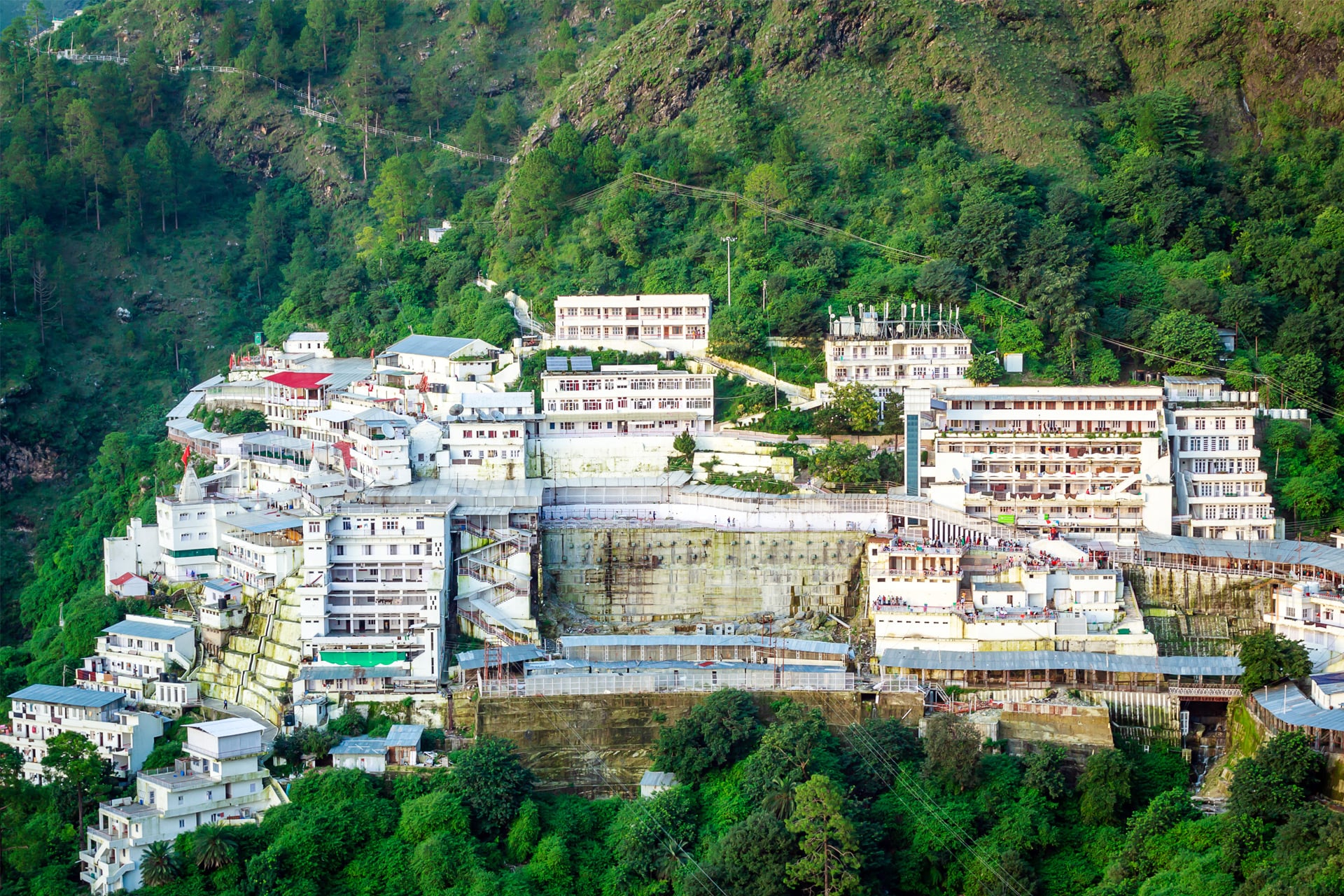
The Vaishno Devi Temple is built around the holy cave shrine in the Trikuta Mountains, rather than as a large standalone temple structure. The sacred cave houses three natural rock formations, known as the Pindis, which represent Maha Kali, Maha Lakshmi, and Maha Saraswati. The shrine complex features stone and concrete structures adapted to the mountainous terrain, with covered pathways, railings, and facilities guiding pilgrims toward the cave. The surrounding complex includes prayer areas, entrances, resting spaces, and other visitor facilities designed to accommodate large numbers of devotees while preserving the sanctity of the natural cave.
Sanctum
The Holy Cave Shrine (Garbhagriha)
The core of Vaishno Devi Temple is the natural cave located inside the Trikuta Mountains, known as the Garbhagriha, where the three sacred rock formations (Pindis) representing the Goddess’s manifestations-Mahakali, Mahalakshmi, and Mahasaraswati-are enshrined. The cave’s austere granite walls and natural formations create a divine ambiance that emphasizes simplicity and spiritual intensity.
Entrance
Bhavan and Main Entrance
The temple’s main entrance, known as the Bhavan, is a large complex housing the sanctum and providing facilities for devotees. It features traditional North Indian temple architectural elements like arches, domes, and carved pillars. The Bhavan blends stone and marble work, designed to accommodate the large influx of pilgrims while preserving the sacred atmosphere.
Corridor
The Darshan Corridor
Leading to the cave shrine is a long, enclosed corridor designed to guide pilgrims through the narrow mountain path safely. This corridor is well-lit and ventilated, with stone flooring and walls adorned with devotional murals and inscriptions. It reflects a fusion of natural mountain architecture and human craftsmanship to enhance the pilgrim experience.
Dome
The Ceiling Dome Inside the Cave
The cave’s inner chamber has a low, naturally arched dome made of rock, symbolizing the womb of the Goddess and the universe’s cosmic protection. This natural dome amplifies chants and prayers, adding to the spiritual acoustics that enrich the worship experience.
Pilgrim Facilities
Rest Houses and Langar Halls
Surrounding the temple complex are several rest houses and langar (community kitchen) halls designed in a blend of traditional Himalayan and modern architectural styles. These buildings provide shelter, food, and medical aid to pilgrims, featuring stone walls, wooden beams, and spacious halls to accommodate large groups.
Surroundings
Mountain Trails and Pilgrim Pathways
The architectural design extends beyond the temple into the mountain trails leading to the shrine. Well-paved pathways, resting points with traditional stone benches, and small shrines along the trek reflect an integration of nature and spirituality, guiding pilgrims through a sacred journey marked by devotion and physical endurance.
Security and Modern Amenities
Modern Infrastructure and Safety Installations
The temple complex incorporates modern architectural elements such as reinforced concrete for safety, CCTV surveillance, emergency medical centers, and environmentally friendly drainage systems. These facilities ensure the preservation of the sacred site while enhancing the comfort and security of devotees.
Interesting facts

Inside the cave shrine, three natural rock formations known as the Pindis represent the goddess’s three manifestations-Mahakali, Mahalakshmi, and Mahasaraswati. These uncarved stones are believed to embody the divine energy of the Mother Goddess herself, making the shrine uniquely powerful and spiritually charged.
Deities & Shrines
Bhairon Nath (Bhairava)
A vital part of the Vaishno Devi pilgrimage is the shrine of Bhairon Nath, located near the main cave. As per legend, Goddess Vaishno Devi forgave Bhairon Nath after vanquishing him and granted him liberation. Visiting his shrine is considered essential to complete the pilgrimage. He is worshipped as a guardian and protector, symbolizing the victory of good over evil.
Lord Hanuman
Lord Hanuman is revered as the eternal devotee of the Goddess and is believed to have played a role in protecting her during her meditation in the Trikuta hills. A shrine dedicated to Hanuman exists along the pilgrimage route, where devotees seek strength, courage, and devotion.
Lord Ganesha
A shrine to Lord Ganesha, the remover of obstacles, is found near the entrance of the Vaishno Devi Bhavan. Pilgrims often pay homage to him before proceeding for darshan, invoking his blessings for a smooth and obstacle-free spiritual journey.
Goddess Lakshmi
As Mahalakshmi is one of the three forms of Vaishno Devi, she is symbolically honored within the sanctum. Devotees seek her blessings for wealth, abundance, and material prosperity, reinforcing the temple’s strong association with divine grace and fulfillment of desires.
Goddess Saraswati
Representing wisdom and knowledge, Mahasaraswati is also enshrined as part of the three divine manifestations in the main cave. Her presence emphasizes the spiritual and educational blessings bestowed by the Goddess upon her devotees.
Goddess Mahakali
As the embodiment of power and destruction of evil, Mahakali is worshipped within the Vaishno Devi cave. Her fierce yet protective nature signifies the Shakti (divine energy) that the temple is known for. Devotees revere her to gain courage and overcome inner darkness.
Darshan & Service Offerings
| Service | Timing | Price | Notes |
|---|---|---|---|
| Free General Darshan | Open 24/7 (Except During Aarti and Maintenance) | - | Devotees can avail general darshan of the three sacred Pindis without any charge. Pilgrims trek or take alternate transport to reach the Bhawan, where they wait in queue for entry into the sanctum. No prior booking is needed. |
| VIP Darshan Pass | Available throughout the day | ₹200 per person (subject to updates by SMVDSB) | For devotees seeking a quicker darshan experience, the VIP Darshan Pass allows access through a dedicated line. These are usually available online via the official shrine board portal or at counters based on eligibility and availability. |
| Hawan and Pooja at Bhawan | 8:00 AM-1:00 PM & 4:00 PM-8:00 PM | Starts from ₹1,100 (as per Pooja type) | Devotees can book individual or group havans at the Yagyashala near Bhawan. Poojas such as Durga Saptashati Path, Chandi Path, and others are performed for peace, prosperity, and removal of obstacles. These services can be pre-booked online or through the temple's facilitation centers. |
| Bhog/Prasad Offerings | Throughout the day | Varies by offering | Devotees can offer prasad to the goddess which includes dry fruits, sweets, or traditional bhog items. The offered bhog is then returned partially as prasadam, symbolizing divine grace and blessings. |
| Vastra & Chunri Donation | Available all day | Based on devotee's wish | Offering new clothes (vastra) and a red chunri (veil) to the goddess is a common practice. It signifies surrender and devotion. These are available for purchase near the Bhawan or can be brought by the devotee. |
| Online Pooja & Prasad Booking | Scheduled upon booking | Varies (₹500 onwards) | Devotees unable to physically visit can book poojas online. The rituals are performed on their behalf at the Bhawan and the prasad is sent by post. Services include Arti participation, Hawan Sankalp, and special poojas. |
Visitor information
Location
Vaishno Devi Temple is located near the town of Katra, in the Trikuta Mountains of Jammu and Kashmir, India. Katra is the base camp for the pilgrimage and is well-connected by road and rail. The nearest airport is Jammu Airport (approximately 50 km from Katra), offering regular flights from major cities like Delhi, Mumbai, and Srinagar.
Reaching the Shrine
The main shrine is situated at an altitude of about 5,200 feet and requires a trek of around 12 km from Katra. Pilgrims can reach the Bhawan (temple complex) on foot, by pony, palki (palanquin), battery-operated vehicles, or via helicopter services from Katra to Sanjichhat, followed by a 2.5 km walk.
Ideal Visiting Seasons
Vaishno Devi Temple is open year-round. However, the best time to visit is between March and October, when the weather is pleasant for the trek. Winter months (November to February) see snowfall and colder temperatures, ideal for pilgrims seeking a serene, less crowded experience.
Stay Options for Pilgrims
A wide range of accommodations is available in Katra, including hotels, guesthouses, and dharamshalas managed by the Shrine Board. On-site dormitories and rooms are also available at Bhawan, Ardhkuwari, and Sanjichhat, which can be pre-booked online through the Shri Mata Vaishno Devi Shrine Board (SMVDSB) website.
Safety Measures and Medical Aid
Strict security checks are in place along the route and at the Bhawan for the safety of devotees. Free medical aid centers, oxygen booths, and first-aid stations are available en route to assist pilgrims during emergencies, especially those with breathing or cardiac issues due to the high altitude trek.
Facilities for Devotees
The Shrine Board offers cloakrooms, drinking water stations, rest shelters, washrooms, food outlets, and shops selling prasad, religious items, and trekking gear along the route. Special arrangements are made for elderly and differently-abled pilgrims to ensure a comfortable darshan experience.
Location
Reasi, Jammu and Kashmir, India
Best Time to Visit
Best Time to Visit Vaishno Devi Temple
The most favorable time to visit Vaishno Devi Temple is between March and June, and September to November, when the weather is moderate and comfortable for trekking the pilgrimage route.
Visit During Navratri Festival
Navratri (September-October) is the most auspicious and crowded festival at Vaishno Devi, featuring special prayers, cultural programs, and vibrant devotional activities, offering a spiritually immersive experience.
Off-Peak Time for a Peaceful Pilgrimage
For a less crowded and more peaceful visit, plan your pilgrimage during the winter months of December to February, when the weather is colder and the footfall is lower, allowing for a serene darshan.
Avoiding Monsoon Season
It is advisable to avoid visiting during the heavy monsoon months (July-August) due to slippery paths and increased risk of landslides on the trek route, which can affect safety and accessibility.
Nearby places
Bhairavakona Temple
10 km
- This ancient temple dedicated to Lord Shiva is nestled in a scenic forested area, known for its unique rock-cut architecture and serene surroundings, making it a peaceful spiritual spot close to Vaishno Devi.
Mata Vaishno Devi Bhawan
0 km (Within temple complex)
- The main shrine where the holy cave houses the idol of Goddess Vaishno Devi. It is the focal point of pilgrimage and attracts millions of devotees annually.
Baba Dhansar Shrine
14 km
- Located near Katra, this shrine is dedicated to Baba Dhansar, a revered saint. The temple is popular for its natural spring and is often visited by pilgrims en route to Vaishno Devi.
Shiv Khori Temple
50 km
- A famous cave shrine dedicated to Lord Shiva, featuring a naturally formed Shiva lingam. It is an important pilgrimage site in the Jammu region and complements the Vaishno Devi spiritual circuit.
Festivals & culture
The Vaishno Devi Temple comes alive during several important Hindu festivals, with Navratri being the most significant celebration. The nine-day festival of Chaitra Navratri and Sharad Navratri attracts large numbers of devotees who undertake the pilgrimage to seek Mata Vaishno Devi’s blessings. The shrine is beautifully decorated, and special prayers, devotional singing, and religious ceremonies are held. Other occasions such as Diwali, Dussehra, and Ram Navami are also observed with religious rituals and celebrations, creating a spiritually vibrant atmosphere throughout the pilgrimage route and shrine complex.
Navratri
September-October
A nine-night festival celebrating the divine feminine, where Goddess Vaishno Devi is worshipped with special prayers, music, and rituals. The temple is beautifully decorated, and thousands of devotees participate in the festivities.
Vijayadashami (Dussehra)
September-October
Marks the culmination of Navratri and symbolizes the victory of good over evil. Special ceremonies and processions are held in the temple, drawing large crowds of pilgrims.
Diwali
October-November
The festival of lights is celebrated with great fervor at the Vaishno Devi Temple, with special aartis and illumination of the shrine, symbolizing the triumph of light over darkness.
Additional information
Temple Opening Hours
The temple is open daily from 4:30 AM to 12:30 PM and then from 4:30 PM to 9:00 PM. Darshan timings may vary slightly during festivals.
Appropriate Attire
Devotees are requested to wear modest and traditional clothing while inside the temple premises. Shorts, sleeveless tops, and footwear inside the sanctum are prohibited.
Lost and Found Services
The temple maintains a lost and found counter near the main entrance where devotees can inquire about misplaced items.
Security and Police Presence
A dedicated police outpost operates near the temple entrance to ensure the safety and security of visitors at all times.
On-Site Medical Facility
The temple premises include a first aid center staffed with medical professionals to attend to any health emergencies.
Authorized Temple Guides
Trained guides are available for hire near the temple entrance, offering informative tours and explanations of the temple’s history and rituals.
Temple Administration
The temple is managed by a trust responsible for overseeing all religious activities, maintenance, and visitor services.
Multilingual Support
Information desks provide assistance in multiple languages including Hindi, English, and regional languages to help tourists and pilgrims.
Footwear Restrictions
All visitors must remove footwear before entering the temple complex. Secure cloak rooms are available near the entrance for storing shoes and bags.
Cloak Room Facilities
Cloak rooms are provided for safe storage of personal belongings and are supervised by temple staff.
Photography Guidelines
Photography inside the sanctum sanctorum is strictly prohibited. However, photography is allowed in designated areas outside the main shrine.
Facilities for Differently-Abled
The temple has ramps and designated pathways to facilitate access for differently-abled visitors.
Water Facilities
Clean drinking water points are available throughout the temple premises for devotees.
Temple facilities
Rest Areas
Seating areas and rest zones are provided for devotees to relax during their visit, especially during peak pilgrimage hours.
Water Stations
Clean and filtered drinking water is available at multiple points throughout the temple premises for the convenience of visitors.
Cloak Room Facilities
Secure cloak rooms are provided near the temple entrance for devotees to safely store their belongings during darshan and rituals.
First Aid and Medical Assistance
On-site medical aid centers staffed with qualified personnel are available to provide immediate help in case of health emergencies.
Facilities for Differently-Abled
Ramps, reserved seating, and assistance services are available to help differently-abled devotees access all parts of the temple comfortably.
Clean Restroom Facilities
Well-maintained and hygienic toilet facilities are available at convenient locations within the temple complex.
Help and Information Counters
Information counters staffed by temple volunteers provide guidance about darshan timings, rituals, and general temple inquiries.
WiFi Connectivity
Free WiFi is offered within the temple premises to assist devotees with online bookings and access to digital resources.
Authorized Guide Assistance
Trained guides are available to provide detailed tours explaining the temple’s history, architecture, and rituals.
Vehicle Parking
Dedicated parking spaces for two-wheelers and four-wheelers are available close to the temple entrance for visitor convenience.
Emergency services
Shri Mata Vaishno Devi Narayana Super Speciality Hospital
3 km (Katra)
Contact
+91 191 254 7024
- A multi-speciality hospital near the shrine, providing advanced medical care including emergency services, inpatient and outpatient treatment, and specialized facilities for pilgrims.
District Hospital Katra
2 km
Contact
+91 191 254 2221
- Government-run hospital offering general medical and emergency services to locals and pilgrims, equipped with basic diagnostic and treatment facilities.
SMVD Medical College and Hospital, Kakryal
8 km
Contact
+91 191 247 3933
- A teaching hospital with comprehensive medical services, including emergency care, surgery, and specialized departments, serving the region surrounding Vaishno Devi.
Apollo Clinic Jammu
50 km
Contact
+91 191 247 7777
- Part of the Apollo Hospitals chain, offering specialized outpatient services, diagnostics, and consultation with experienced doctors. Suitable for planned medical visits or follow-ups.
Top picks
Vaishno Devi Laddu
This prasadam is a favorite among devotees and is distributed at the temple after darshan. The laddus are known for their rich taste and long shelf life, often taken home as blessings.
Rajma Chawal (Kidney Beans with Rice)
A popular wholesome meal for pilgrims, available at nearby dhabas and restaurants offering traditional vegetarian cuisine.
Aloo Tamatar Sabzi with Roti
A simple yet flavorful dish commonly consumed by visitors and locals alike, reflecting the hearty Punjabi influence in the region.
Visitor guide
Katra Bus Stand
0.5 km
- The main bus stand serving the town of Katra, the base point for Vaishno Devi pilgrims. It offers frequent bus services connecting nearby cities and towns, as well as shuttle buses to the Bhawan (Vaishno Devi shrine).
Jammu Bus Stand
45 km
- A major bus terminal in Jammu city with extensive services connecting Jammu to other parts of Jammu & Kashmir, Punjab, Himachal Pradesh, and Delhi. From here, buses and taxis to Katra are readily available.
Udhampur Bus Stand
65 km
- Provides bus connectivity from Udhampur to Katra and other parts of the region. Regular bus services are available for pilgrims traveling to Vaishno Devi.
Videos
Third-party videos may include ads or external commentary.
Frequently Asked Questions
Vaishno Devi Temple is located in the Trikuta Mountains near Katra in Jammu and Kashmir, India.
The shrine is dedicated to Mata Vaishno Devi, who is traditionally worshipped as a manifestation of Goddess Shakti.
The temple is famous for its sacred cave shrine, where devotees worship three natural rock formations called Pindis, associated with Maha Kali, Maha Lakshmi, and Maha Saraswati.
Pilgrims generally begin their journey from Katra and travel along the designated pilgrimage route to the shrine. Helicopter, battery-car, pony, and other services may also be available on designated routes.
The pilgrimage from Katra to the Vaishno Devi Bhawan is approximately 13 kilometers by the traditional walking route.
The shrine can be visited throughout the year. Navratri is particularly significant but also attracts large numbers of pilgrims.
Chaitra Navratri and Sharad Navratri are among the most important festivals, along with other Hindu occasions such as Ram Navami, Dussehra, and Diwali.
Yes. Free meal services and food facilities are available at designated locations for pilgrims, including areas around Katra and Bhawan.
The three naturally formed Pindis are traditionally associated with Maha Kali, Maha Lakshmi, and Maha Saraswati and are the principal objects of worship inside the holy cave.
Pilgrims should carry comfortable clothing, suitable footwear, identification documents, water, essential medicines, and any required yatra registration documents.