
28°C
Gaya
Mahabodhi Temple
 Gaya, Bihar, India
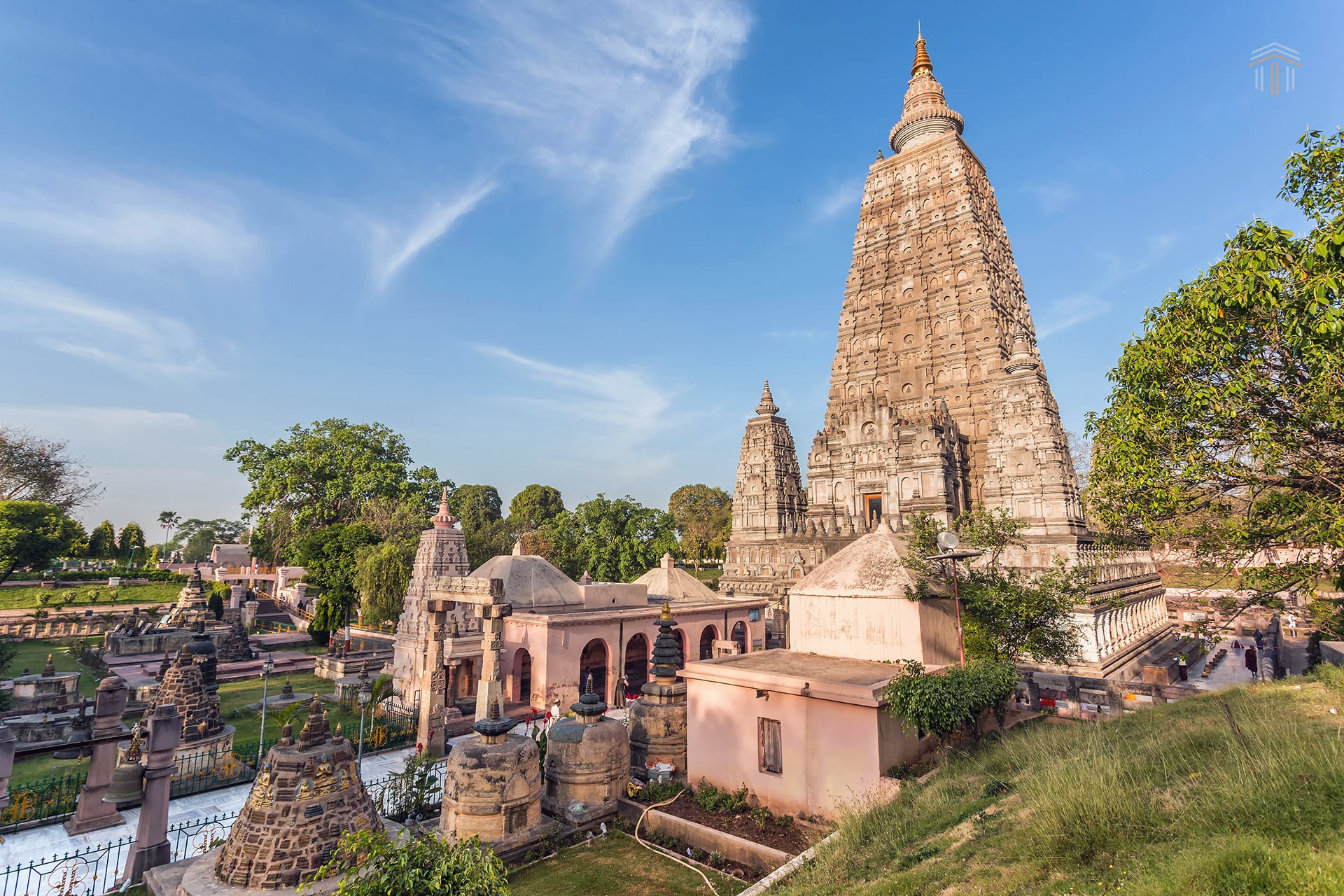
The Mahabodhi Temple at Bodh Gaya, Bihar, marks the place where Prince Siddhartha Gautama attained Enlightenment beneath the Bodhi Tree and became the Buddha, and is the holiest site in the Buddhist world and a UNESCO World Heritage Site.
- ReligionBuddhist
- DeityLord Buddha
- Timings05:00 AM - 09:00 PM
About the temple
About the temple
The Mahabodhi Temple Complex at Bodh Gaya, in Gaya district of Bihar, stands at the place where Prince Siddhartha Gautama, after years of searching, sat beneath a pipal tree, attained Enlightenment and became the Buddha. It is the most sacred of the four great places of Buddhist pilgrimage, along with Lumbini, Sarnath and Kushinagar. Emperor Ashoka built the first shrine here in the 3rd century BCE and set up the Vajrasana, the Diamond Throne, to mark the Buddha's seat. The present temple, a soaring brick structure about 50 metres high with a curving shikhara, dates mainly from the 5th-6th centuries CE and is among the earliest Buddhist temples built entirely in brick still standing in India. Beside it grows the Bodhi Tree, revered as a descendant of the original tree, and around it lie the seven sacred places where the Buddha spent the seven weeks after his Enlightenment, along with ancient stone railings and hundreds of votive stupas. Restored in the 19th century and managed since 1949 by the Bodhgaya Temple Management Committee, the complex was inscribed on the UNESCO World Heritage List in 2002. The temple is open every day from 5:00 AM to 9:00 PM, with sutta chanting morning and evening and a daily offering of kheer to the Buddha. Pilgrims from Sri Lanka, Thailand, Myanmar, Tibet, Bhutan, Japan, Korea, Vietnam and across the world come here to meditate, chant and pray. Entry is free.
Mahabodhi Temple
Mahabodhi Temple
The Sacred Legacy of the Mahabodhi Temple in Numbers
Discover the history, worship and scale of the temple at the place of the Buddha's Enlightenment.
- First Shrine and Vajrasana Built by Emperor Ashoka
- 3rd century BCE
- Age of the Present Brick Temple
- 5th-6th centuries CE
- Height of the Main Temple Spire
- About50 m
- Sacred Places Marking the Weeks After Enlightenment
- 7
- Area of the UNESCO World Heritage Property
- 4.86 hectares
- Year of UNESCO World Heritage Inscription
- 2002
- Year of the Bodh Gaya Temple Act
- 1949
- Gold Offered From Thailand to Gild the Spire (2013)
- About300 kg
- Distance From Gaya
- About16 km
First Shrine and Vajrasana Built by Emperor Ashoka
Age of the Present Brick Temple
Height of the Main Temple Spire
Sacred Places Marking the Weeks After Enlightenment
Area of the UNESCO World Heritage Property
Year of UNESCO World Heritage Inscription
Year of the Bodh Gaya Temple Act
Gold Offered From Thailand to Gild the Spire (2013)
Distance From Gaya
Historical Background
The Mahabodhi Temple has been a place of pilgrimage for more than two thousand years. Around the 3rd century BCE, Emperor Ashoka, who embraced Buddhism, visited Bodh Gaya, built the first shrine at the Bodhi Tree and installed the Vajrasana, a polished sandstone slab marking the Buddha's seat. Stone railings carved with lotus medallions and scenes from the Jataka tales were added around the 2nd century BCE. The present brick temple, about 50 metres high, was built mainly in the 5th-6th centuries CE, in the late Gupta period, and is among the earliest surviving Buddhist temples built entirely in brick in India. The Chinese pilgrims Faxian in the 5th century and Xuanzang in the 7th century described the temple and the Bodhi Tree. Under the Pala kings, from the 8th to the 12th century, Bodh Gaya flourished as a centre of art and learning, and pilgrims from Myanmar paid for repairs. After the decline of Buddhism in India from the 13th century, the temple fell into neglect, and a Shaivite monastery, the Bodh Gaya Math, came to control the site. Burmese missions made repairs in the 19th century, and between about 1880 and 1884 the temple was extensively restored under Sir Alexander Cunningham and J. D. Beglar of the Archaeological Survey of India. In 1891 the Sri Lankan Buddhist reformer Anagarika Dharmapala visited Bodh Gaya and founded the Maha Bodhi Society to restore the site to Buddhist care. The Bodh Gaya Temple Act of 1949 placed the temple under a management committee of Buddhist and Hindu members chaired by the District Magistrate of Gaya. In 2002 the complex was inscribed on the UNESCO World Heritage List. In 2013, about 300 kg of gold donated by the King of Thailand and Thai devotees was used to gild the upper part of the spire. Buddhist groups have long sought full Buddhist management of the temple, and the question has been the subject of protests and petitions in recent years. Today Mahabodhi is a living international centre of Buddhist pilgrimage, with monasteries of many nations around it.
About 5th century BCE
About 5th century BCE
Siddhartha Gautama attains Enlightenment beneath the Bodhi Tree at Uruvela and becomes the Buddha.3rd century BCE
3rd century BCE
Emperor Ashoka visits Bodh Gaya, builds the first shrine and installs the Vajrasana, the Diamond Throne.About 2nd century BCE
About 2nd century BCE
Carved sandstone railings are built around the sacred area.5th-6th centuries CE
5th-6th centuries CE
The present brick temple, about 50 metres high, is built in the late Gupta period.5th and 7th centuries CE
5th and 7th centuries CE
The Chinese pilgrims Faxian and Xuanzang visit and describe the temple and the Bodhi Tree.8th-12th centuries CE
8th-12th centuries CE
Under the Pala kings, Bodh Gaya flourishes, and Burmese pilgrims fund repairs.13th-18th centuries
13th-18th centuries
Buddhism declines in India, the temple falls into neglect, and a Shaivite math gains control of the site.About 1880-1884
About 1880-1884
The temple is extensively restored under Alexander Cunningham and J. D. Beglar, and a new Bodhi Tree is planted from the Sri Lankan line in 1881.1891
1891
Anagarika Dharmapala visits Bodh Gaya and founds the Maha Bodhi Society.1949
1949
The Bodh Gaya Temple Act creates the Bodhgaya Temple Management Committee.2002
2002
The Mahabodhi Temple Complex is inscribed on the UNESCO World Heritage List.2013
2013
The upper part of the spire is gilded with about 300 kg of gold donated from Thailand.Present
Present
The temple remains the heart of world Buddhism, drawing pilgrims of every tradition, with the winter season from November to February the busiest.


Synopsis
The Mahabodhi Temple at Bodh Gaya marks the place of the Buddha's Enlightenment and is the holiest site in Buddhism. Emperor Ashoka built the first shrine and the Vajrasana here in the 3rd century BCE, and the present brick temple, about 50 metres high, dates mainly from the 5th-6th centuries CE. The sacred Bodhi Tree, the Diamond Throne and the seven places linked to the weeks after the Enlightenment surround the temple. Restored in the 19th century, managed by the Bodhgaya Temple Management Committee under the Bodh Gaya Temple Act of 1949, and inscribed as a UNESCO World Heritage Site in 2002, it is open from 5:00 AM to 9:00 PM daily. Monks and pilgrims of every Buddhist tradition meditate, chant and offer prayers here, and entry is free.
The Mahabodhi Temple stands at Bodh Gaya, Gaya district, Bihar, about 16 km from Gaya and 115 km from Patna, at the place where Siddhartha Gautama attained Enlightenment beneath the Bodhi Tree. The ancient name of the place was Uruvela, on the banks of the Niranjana (Phalgu) river.
Emperor Ashoka built the first shrine and the Vajrasana in the 3rd century BCE. The present brick temple dates mainly from the 5th-6th centuries CE. Faxian and Xuanzang described the site, and Cunningham and Beglar restored it in the 1880s.
Emperor Ashoka, the Gupta and Pala kings, the kings and pilgrims of Myanmar and Sri Lanka, and in modern times Buddhist communities across Asia, including the Thai royal family and devotees who gilded the spire in 2013.
The holiest of the four great Buddhist pilgrimage sites, revered by Theravada, Mahayana and Vajrayana Buddhists alike, with daily sutta chanting, meditation and offerings at the Bodhi Tree and Vajrasana.
Inscribed on the UNESCO World Heritage List in 2002 under criteria (i), (ii), (iii), (iv) and (vi), covering 4.86 hectares. Managed by the Bodhgaya Temple Management Committee under the Bodh Gaya Temple Act of 1949, with conservation guided by the Archaeological Survey of India.
Sacred significance
Place of the Buddha's Enlightenment
Bodh Gaya is where Siddhartha Gautama became the Buddha, the Awakened One. For Buddhists it is the most sacred place on earth, where the path to liberation was first discovered.
The Bodhi Tree
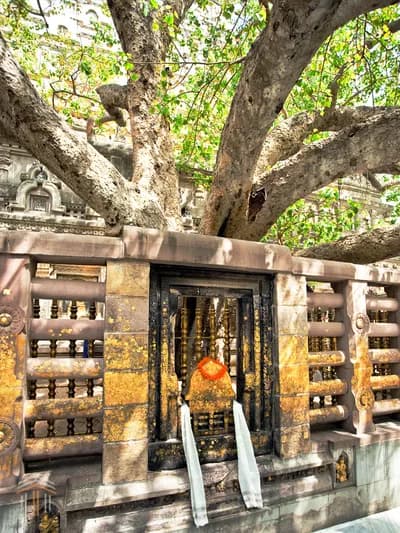
The sacred pipal tree west of the temple is revered as a descendant of the tree under which the Buddha attained Enlightenment. Pilgrims meditate in its shade and treasure its fallen leaves.
The Vajrasana
The Diamond Throne, a polished sandstone slab installed by Ashoka, marks the seat where the Buddha sat facing east on the night of his Enlightenment.
The Earth-Touching Buddha
The gilded image in the sanctum shows the Buddha touching the earth to call it as witness against Mara, the moment of victory before Enlightenment.
First of the Four Great Sites
With Lumbini, Sarnath and Kushinagar, Bodh Gaya is one of the four places the Buddha himself recommended for pilgrimage, and the most important of them.
The Seven Sacred Weeks
Seven places in the complex mark where the Buddha spent each of the seven weeks after his Enlightenment, and pilgrims visit each in turn.
Daily Sutta Chanting
Sutta chanting and meditation are held at 5:30 AM, with Mahayana chanting at 6:00 PM and Pali chanting at 6:30 PM every day.
The Daily Kheer Offering
Kheer is offered to the Buddha every morning at 10:00 AM.
Meditation Under the Tree
Monks, nuns and lay pilgrims meditate around the Bodhi Tree from dawn until night, following the Buddha's own practice.
Buddha Purnima
The full moon of Vaishakha, celebrating the Buddha's birth, Enlightenment and passing away, is the greatest festival at the temple.
Prostrations and Circumambulation
Pilgrims walk clockwise around the temple and offer prostrations, especially Tibetan Buddhists who may complete many thousands.
Architecture
The Mahabodhi Temple is a towering brick temple about 50 metres high, built mainly in the 5th-6th centuries CE and restored in the 19th century. It stands on a low, moulded plinth decorated with honeysuckle and geese motifs, in a courtyard set about 5 metres below the level of the surrounding land. Its walls, about 11 metres high, rise to a tall pyramidal shikhara of receding storeys with niches holding Buddha images, chaitya-arch motifs and small windows, crowned by an amalaka and a stupa-shaped finial; the upper part of the spire was gilded in 2013. Four smaller towers, replicas of the main spire, stand at the corners of the upper terrace. The east-facing entrance leads into the sanctum, where a large gilded image of the seated Buddha in the earth-touching gesture looks out over the Vajrasana and the Bodhi Tree behind the temple. Above the sanctum is a second shrine hall used for meditation. Around the temple are the Bodhi Tree and the Vajrasana on the west, the sandstone railings of about the 1st century BCE with carvings of lotuses, animals and scenes from the Jataka tales, the jewel walk of the third week, the shrines of the other sacred weeks, hundreds of votive stupas of many periods, the Lotus Pond, a lamp-offering house and a meditation park. The complex covers about 4.86 hectares and is reached through a gateway on its eastern side.
Shikhara
The 50-Metre Spire
The pyramidal tower of receding storeys rises about 50 metres, decorated with niches and chaitya arches. Its upper part shines with gold offered from Thailand.
Sanctum
The Earth-Touching Buddha Image
A large gilded seated Buddha in the bhumisparsha mudra fills the sanctum. It is dressed in robes offered by pilgrims.
Vajrasana
The Diamond Throne
A polished sandstone slab beneath the Bodhi Tree, installed by Ashoka, marks the Buddha's seat. It is decorated with Mauryan motifs.
Railings
Ancient Stone Railings
Sandstone railings of about the 1st century BCE are carved with lotus medallions, animals and Jataka scenes. Several originals are kept in the archaeological museum.
Corner Towers
Four Corner Towers
Four smaller copies of the main spire stand at the corners of the upper terrace, giving the temple its balanced form.
Votive Stupas
Hundreds of Votive Stupas
Small stupas offered by pilgrims over many centuries fill the courtyards. They record the devotion of generations.
Jewel Walk
Ratnachankramana
A raised platform north of the temple carved with lotus flowers marks where the Buddha walked in meditation during the third week.
Interesting facts

The present temple, built in the 5th-6th centuries CE, is among the earliest Buddhist temples built entirely in brick still standing in India. It has inspired temples across Asia. Its form has been copied in Myanmar, Thailand and Nepal.
Deities & Shrines
The Earth-Touching Buddha (Sanctum)
The principal image, a large gilded seated Buddha in the bhumisparsha mudra, faces east in the main sanctum. Pilgrims offer robes, flowers and lamps before it.
The Sacred Bodhi Tree
The Bodhi Tree is itself honoured as a living symbol of the Buddha's Enlightenment. Pilgrims bow to it, circle it and tie prayer flags nearby.
The Vajrasana (Diamond Throne)
The seat of Enlightenment beneath the tree, honoured with flowers and offerings.
The Upper Shrine Hall
A second shrine above the sanctum, with an image of the Buddha, used for meditation and worship.
The Buddha's Footprints
Ancient stone carvings of the Buddha's footprints, an early symbol of his presence, are honoured in the complex.
Bodhisattva and Buddha Images
Images of Buddhas and Bodhisattvas, including Avalokiteshvara, fill the niches of the temple and the shrines of the complex.
The Buddha Sheltered by Muchalinda
An image of the Buddha protected by the hood of the serpent king Muchalinda stands in the Lotus Pond, marking the sixth week.
Buddha of the Unblinking Gaze
A standing Buddha in the Animeshlochana Chaitya looks towards the Bodhi Tree, marking the second week, when the Buddha gazed at the tree in gratitude.
Darshan & Service Offerings
| Service | Timing | Price | Notes |
|---|---|---|---|
| General Entry (Free Darshan) | 05:00 AM - 09:00 PM. | Free | Entry to the temple complex, the sanctum and the Bodhi Tree is free for everyone. The complex is busiest in the winter pilgrimage season and on Buddha Purnima. |
| Sanctum Darshan | During temple hours. | Free | Pay respects to the gilded earth-touching Buddha in the main sanctum. Queues can be long in winter. |
| Bodhi Tree and Vajrasana | During temple hours. | Free | Sit and meditate near the Bodhi Tree and the Diamond Throne, the heart of the complex. Find a quiet place on the side terraces. |
| Morning Chanting and Meditation | 05:30 AM - 06:00 AM. | Free | Join the morning sutta chanting and meditation. Arrive a little before 5:30 AM. |
| Evening Chanting | 06:00 PM - 07:00 PM. | Free | Listen to Mahayana and Pali chanting as the temple is lit in the evening. |
| Seven Sacred Weeks Walk | During temple hours. | Free | Walk to the seven places linked to the weeks after the Enlightenment, from the Bodhi Tree to the Lotus Pond. |
| Mobile Phone Deposit | At the entrance during temple hours. | Free | Mobile phones and electronic gadgets are not allowed inside and can be deposited free at the counter near the entrance. |
| Still Camera Permit | At the entrance. | About Rs 100 | A ticket is needed to carry a still camera into the complex. Photography is not allowed inside the sanctum. |
| Video Camera Permit | At the entrance. | About Rs 300 | A ticket is needed for a video camera. Respect pilgrims who do not wish to be filmed. |
| Meditation Park | Sunrise to sunset. | Nominal fee | A quiet garden beside the temple for meditation, away from the crowds. |
| Lamp Offering | During temple hours. | Cost of the lamps | Offer butter or oil lamps at the lamp-offering house. |
| Robe Offering | During temple hours; arrange in advance. | Confirm at the temple office | Offer a robe to the Buddha image in the sanctum. Contact the BTMC office to arrange. |
| Flower and Incense Offering | During temple hours. | Cost of offerings | Offer flowers and incense before the Buddha and at the Bodhi Tree. |
| Licensed Guides | During temple hours. | Agree the fee in advance | Licensed guides explain the history and the sacred places. Ask to see their identification. |
| Donations | Temple office hours. | Donation-based | Donations support the temple's worship and upkeep. Ask for a receipt. Donations are voluntary. |
Visitor information
Location
Mahabodhi Temple, Bodh Gaya, Gaya district, Bihar - 824231, India, about 16 km from Gaya and 115 km from Patna.
Temple Hours
05:00 AM to 09:00 PM, every day of the week.
Entry
There is no entry fee. The temple is open to people of all faiths and nationalities.
Mobile Phones
Mobile phones and electronic gadgets are not allowed inside. Deposit them free at the counter near the entrance.
Cameras
Still and video cameras need a ticket, about Rs 100 and Rs 300. No photography in the sanctum.
Footwear
Remove footwear before entering the inner complex and deposit it at the shoe stand. Carry socks in winter, as the stone can be cold. Shoe stands are free.
Time Needed
Allow two to three hours to visit the temple and the seven sacred places, and longer to meditate.
Crowd Levels
Busiest from November to February and on Buddha Purnima. Early mornings are the quietest.
Security
Expect security screening at the entrance. Carry only essentials.
Accessibility
The courtyard lies below ground level and is reached by steps. Elderly visitors may need help. Ask the staff for help with wheelchair access.
Temple Office
Bodhgaya Temple Management Committee, Bodh Gaya. Phone: 0631-2200735. Email: bodhgayatemple@gmail.com.
Language
Hindi is spoken locally, and English is widely understood. Many monasteries welcome visitors in their own languages.
Important Visitor Notice
Follow the instructions of the security staff and temple volunteers, and keep silence near meditating pilgrims.
Location
Gaya, Bihar, India
Best Time to Visit
October to March
Cool, pleasant weather makes these months the best time to visit Bodh Gaya. December and January mornings can be cold. Carry warm clothes.
November to February
The international pilgrimage season, when monks and pilgrims from across Asia arrive and the town is full of colour and prayer. Book hotels early.
Buddha Purnima (April-May)
The full moon celebrating the Buddha's birth, Enlightenment and passing away, with prayers, processions and decorations. Expect large crowds and heat.
Winter Prayer Festivals (December-February)
Large Tibetan and international prayer gatherings, chanting ceremonies and teachings take place, filling the temple with monks.
Bodhi Day (8 December)
Many Mahayana Buddhists, especially from Japan, celebrate the Enlightenment on 8 December.
Early Morning
Arrive at 05:00 AM for the morning chanting and the calmest time at the Bodhi Tree.
Summer (April-June)
Bihar is very hot, often above 40 degrees Celsius. Visit early in the morning or in the evening, and carry water.
Monsoon (July-September)
Rain cools the area and the town is quieter, a good time for meditation, though roads can be muddy.
Nearby places
Great Buddha Statue
About 1 km
- An 80-foot statue of the seated Buddha in meditation, built with Japanese support and unveiled by the Dalai Lama in 1989. It is one of Bodh Gaya's landmarks.
Festivals & culture
The Mahabodhi Temple celebrates the Buddhist calendar of every tradition. Buddha Purnima is the greatest festival, and the winter season from November to February brings large prayer festivals, chanting ceremonies and teachings by monks of the Theravada, Mahayana and Vajrayana traditions. The temple is decorated with flowers, flags and lamps on festival days, and the BTMC publishes a puja calendar each year. Festival dates follow the lunar calendar and change every year.
Buddha Purnima (Vesak)
April-May
The full moon of Vaishakha, celebrating the Buddha's birth, Enlightenment and passing away. The temple is decorated, prayers and processions are held, and pilgrims gather in thousands.
International Tipitaka Chanting Ceremony
December
Monks and nuns from Thailand, Myanmar, Sri Lanka, Laos, Cambodia and other countries chant the Pali scriptures together beneath the Bodhi Tree over several days.
Nyingma Monlam Chenmo
Winter (December-February)
A great Tibetan prayer festival for world peace, with thousands of monks chanting around the temple.
Bodh Mahotsav
Usually January-February
A cultural festival organised by the Bihar government, with music, dance and exhibitions celebrating Bodh Gaya's heritage. Dates are announced each year by Bihar Tourism.
Additional information
Mahabodhi Temple
Also known as Mahabodhi Mahavihara and the Mahabodhi Temple Complex. Bodh Gaya was anciently called Uruvela.
Location
Bodh Gaya, Gaya district, Bihar - 824231, India.
Temple Hours
5:00 AM to 9:00 PM, every day.
Bodhgaya Temple Management Committee
Manages the temple under the Bodh Gaya Temple Act of 1949. Phone: 0631-2200735.
World Heritage Site
Inscribed in 2002 under criteria (i), (ii), (iii), (iv) and (vi), covering 4.86 hectares.
Entry Fee
Entry is free. Camera tickets cost about Rs 100 for still and Rs 300 for video cameras.
Mobile Phones
Not allowed inside. Free deposit counters are near the entrance.
Dress Code
Modest clothing is expected, covering shoulders and knees.
Footwear
Footwear must be removed before entering the inner complex.
Bodhi Leaves
Do not pluck leaves from the tree. Fallen leaves may be collected.
Crowd Advisory
Expect large crowds from November to February and on Buddha Purnima. Early mornings are calmest.
Temple facilities
Mobile and Gadget Deposit
Free counters near the entrance store phones and electronic devices, which are not allowed inside. Keep your token safely. Queues at the counter are longer in the winter season.
Shoe Stand
A stand near the entrance keeps footwear safe during the visit.
Meditation Park
A quiet garden beside the temple for meditation, open from sunrise to sunset for a nominal fee. It is a calm place for longer sittings away from the main crowds.
Lamp-Offering House
A dedicated building where pilgrims light butter and oil lamps. Lamps can be bought at the counter.
Prostration Platforms
Wooden boards around the temple allow pilgrims to perform prostrations. Bring your own cloth or mat if you plan many prostrations.
Drinking Water and Toilets
Drinking water and toilets are available near the complex. Carry your own water bottle on busy days.
Security Screening and CCTV
Security checks at the entrance and CCTV protect the sacred site.
BTMC Office and Information
The temple office helps with offerings, sevas, donations and enquiries. Contact: 0631-2200735, bodhgayatemple@gmail.com.
Emergency services
India Emergency Response
Not location-specific
Contact
112
- Call 112 for urgent police, medical or fire assistance through India's integrated emergency response system.
Top picks
Tilkut
Gaya's most famous sweet, made of sesame with sugar or jaggery. A winter speciality sold in the narrow lanes of Gaya, packed in red boxes.
Anarsa
A traditional Bihari sweet made of rice flour and sugar or jaggery, coated with sesame or poppy seeds. Sold at Gaya's tilkut shops.
Tibetan Momos and Thukpa
Stalls near the temple sell Tibetan food, including momos, thukpa and butter tea, especially in the winter season.
Maghai Paan
The classic betel leaf paan of the Magadh region, a favourite after a meal in Gaya.
Visitor guide
Gaya International Airport
About 7-10 km
- The nearest airport, with domestic flights and seasonal international flights from Buddhist countries in the winter.
Jay Prakash Narayan Airport, Patna
About 115-120 km
- Bihar's main airport, about three hours from Bodh Gaya by road.
Gallery
Videos
Third-party videos may include ads or external commentary.
Frequently Asked Questions
It marks the place where Siddhartha Gautama attained Enlightenment and became the Buddha.
At Bodh Gaya in Gaya district, Bihar, about 16 km from Gaya.
Emperor Ashoka, in the 3rd century BCE.
It dates mainly from the 5th-6th centuries CE.
About 50 metres.
Yes, since 2002.
The sacred tree revered as a descendant of the tree under which the Buddha attained Enlightenment.
The Diamond Throne, marking the Buddha's seat of Enlightenment.
5:00 AM to 9:00 PM, every day.
Morning chanting at 5:30 AM, and Mahayana and Pali chanting from 6:00 PM to 7:00 PM.
No, entry is free; camera tickets are charged.
No, phones must be deposited at the free counter near the entrance.
The Bodhgaya Temple Management Committee, under the Bodh Gaya Temple Act of 1949.
Gaya International Airport, about 7-10 km away.