
25°C
NTR District
Durga Malleswara Swamy Varla Devasthanam
 NTR District, Andhra Pradesh, India
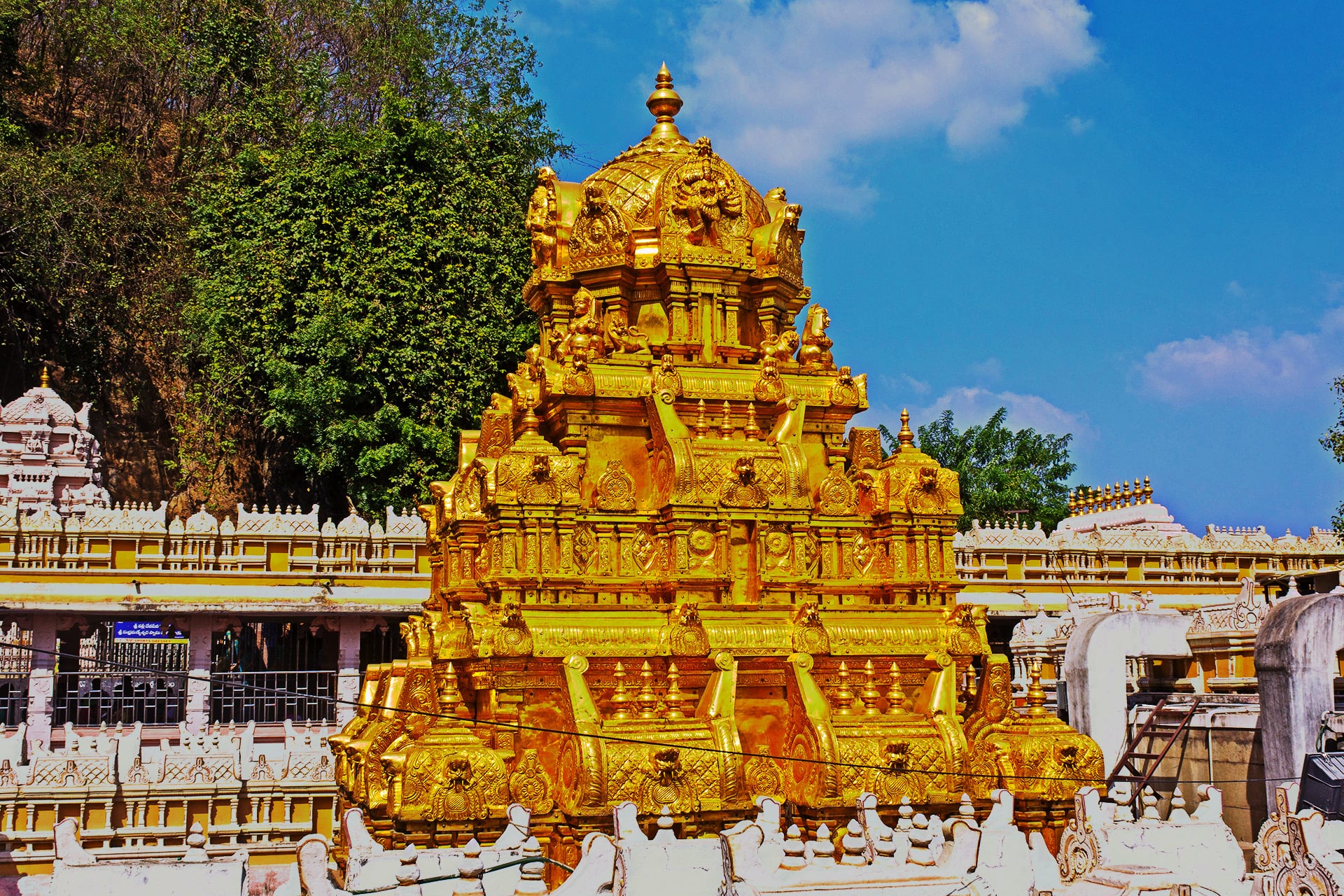
Kanaka Durga Temple, located on Indrakeeladri Hill in Vijayawada, Andhra Pradesh, is a revered shrine dedicated to Goddess Kanaka Durga. Overlooking the Krishna River, it's famed for its spiritual significance and grand Navaratri celebrations.
- ReligionHindu
- DeityGoddess Kanaka Durga
- TimingsMorning: 05:00 AM - 11:45 PM, Afternoon: 12:30 PM - 05:45 PM, Evening: 06:00 PM - 10.00 PM
About the temple
About the temple
The Kanaka Durga Temple, officially known as Sri Durga Malleswara Swamy Varla Devasthanam, is a renowned Hindu temple located on Indrakeeladri Hill in Vijayawada, NTR District, Andhra Pradesh. It is dedicated to Goddess Kanaka Durga, a powerful form of Shakti. Overlooking the Krishna River, the temple is known for its mythological significance, beautiful Dravidian architecture, and vibrant festivals especially Navaratri. The deity is believed to be self-manifested, and the temple draws thousands of devotees daily seeking blessings and spiritual peace.
Durga Malleswara Swamy Varla Devasthanam
Durga Malleswara Swamy Varla Devasthanam
The Divine Power of Kanaka Durga Temple in Numbers
Explore the spiritual magnificence of the Kanaka Durga Temple, a sacred Shakti Peetha perched on Indrakeeladri Hill. Steeped in legend and Dravidian architecture, this self-manifested shrine draws lakhs of devotees seeking the blessings of Goddess Durga.
- Documented Age of the Temple, Based on a 1229 CE Chola-Era Inscription
- 800+ yrs
- Single-Day Devotee Footfall, Recorded During Peak Festival Days (e.g., Ashada Sare)
- 65000+
- Alankarams (Forms) of the Goddess During Dasara Navaratri
- 10
- Major Annual Festivals (Dasara Navaratri, Sakambari Utsavam, Theppotsavam, Ashada Sare, Bangle Festival)
- 3+
Documented Age of the Temple, Based on a 1229 CE Chola-Era Inscription
Single-Day Devotee Footfall, Recorded During Peak Festival Days (e.g., Ashada Sare)
Alankarams (Forms) of the Goddess During Dasara Navaratri
Major Annual Festivals (Dasara Navaratri, Sakambari Utsavam, Theppotsavam, Ashada Sare, Bangle Festival)
Historical Background
Kanaka Durga Temple, located on Indrakeeladri Hill in Vijayawada, Andhra Pradesh, is dedicated to Goddess Kanaka Durga. Overlooking the Krishna River, it is a major spiritual center known for its legend, where the goddess is believed to have slain the demon Mahishasura. The temple is especially vibrant during Navaratri, attracting thousands of devotees.
Mythological Era
Mythological Era
Keela (Yaksha/sage) performs penance to Goddess Durga on the hill; she manifests as Kanaka Durga after slaying Mahishasura, giving the hill its name Indrakeeladri. Arjuna is associated with worship on the hill during the Mahabharata period.9th-13th Century CE
9th-13th Century CE
A Telugu inscription dated 1229 CE (Chola era), found in Veligandla village, Prakasam District, records a donation to Bejawada Malleswaradeva at Indrakiladri (Dakshina Varanasi).20th Century CE
20th Century CE
Ghat road to the temple constructed in 1969.21st Century CE
21st Century CE
Temple administered by Sri Durga Malleswara Swamy Varla Devasthanam under the Andhra Pradesh Endowments Department; Navaratri draws lakhs of devotees; modern security and digital systems in place.


Synopsis
Kanaka Durga Temple, located on Indrakeeladri Hill in Vijayawada, Andhra Pradesh, is dedicated to Goddess Kanaka Durga. Overlooking the Krishna River, it is a major spiritual center known for its legend, where the goddess is believed to have slain the demon Mahishasura. The temple is especially vibrant during Navaratri, attracting thousands of devotees.
The Kanaka Durga Temple traces its origin to ancient Hindu mythology. Legend holds that on Indrakeeladri Hill, Keela (described variously as a Yaksha or sage) performed intense penance seeking the goddess's presence to protect the land from evil. Pleased by this devotion, Goddess Durga manifested on the hill as Kanaka Durga, a fierce and radiant form of Shakti, after slaying the demon Mahishasura - and the hill was named Indrakeeladri after him. It is also believed that Arjuna, one of the Pandavas from the Mahabharata, performed penance here to obtain the Pasupatastra from Lord Shiva (the Kirātārjunīya episode), after which he worshipped Durga at the site. These mythological references mark the temple as the goddess's self-manifested (Swayambhu) abode.
The temple's exact date of construction is not clearly documented, but organized religious activity on Indrakeeladri predates the medieval period. The earliest firm historical evidence is a Telugu inscription dated 1229 CE (Chola era), found in Veligandla village, Prakasam District, recording a donation to "Bejawada Malleswaradeva" at Indrakiladri, referred to as Dakshina Varanasi. Beyond this inscription, no verified records document specific dynasty-led renovations (Chola or Vijayanagara) of the temple structure itself. In more recent history, a ghat road to the temple was constructed in 1969, and the temple has continued to receive administrative attention and modernization to accommodate growing pilgrim numbers.
Specific, verifiable records of pre-modern patrons are limited. What is documented: the temple carries inscriptions of different dynasties on-site (unspecified in detail), and it is traditionally believed that Adi Shankara visited in antiquity and installed the Sri Chakra. In modern times, the temple is administered by Sri Durga Malleswara Swamy Varla Devasthanam under the Andhra Pradesh Endowments Department, which - along with devotee donations - maintains the temple, funds pilgrim facilities, and preserves it as one of South India's major Shakti pilgrimage sites.
Sacred significance
Manifestation of Shakti on Indrakeeladri Hill
The temple is believed to be the site where Goddess Durga manifested herself in response to Indrakeela's (Keela's) penance. Her presence here symbolizes divine intervention and victory of good over evil.
Swayambhu Deity of Kanaka Durga
The idol of Kanaka Durga is considered self-manifested (Swayambhu), enhancing the temple's sacredness. Devotees believe the goddess chose the site herself rather than being ritually installed.
Spiritual Hub for Shakti Worship
The temple is one of the most important Shakti temples in South India, attracting devotees who seek divine feminine energy for courage, health, and prosperity.
Arjuna's Penance and Divine Blessing
According to the Mahabharata, Arjuna performed penance here and was blessed by Lord Shiva with the Pasupatastra (the Kiratarjuniya episode). He then worshipped Goddess Durga, adding a warrior aspect to her divinity.
Architecture
The Kanaka Durga Temple features classic Dravidian architecture with a towering gopuram, intricately carved mandapams, and a sanctum housing the swayambhu idol, all set atop Indrakeeladri Hill overlooking the Krishna River.
Architecture
Hilltop Temple on Indrakeeladri
The Kanaka Durga Temple is situated atop the Indrakeeladri Hill, providing a spiritually charged setting that overlooks the Krishna River. Its elevated location symbolizes divine supremacy and makes the temple a striking visual and devotional landmark.
Architecture
Dravidian Temple Design
The temple showcases classic Dravidian architectural features such as tiered gopurams, ornate mandapams, and intricate stone carvings. This traditional style reflects the temple's historical roots and spiritual symbolism.
Gopuram
Raja Gopuram - Ornamental Tower
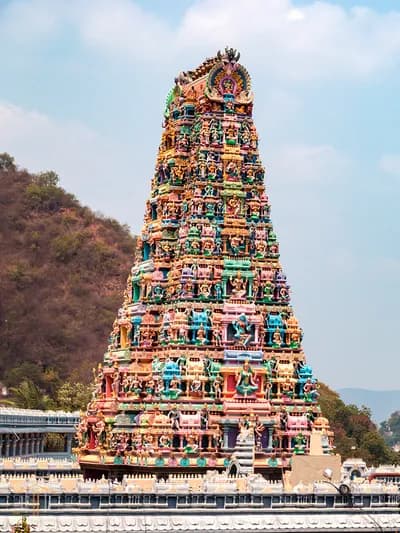
The majestic Raja Gopuram serves as the grand entrance to the temple, embellished with colorful deities and mythological figures. It reflects the temple's rich artistic heritage and marks the threshold to the sacred complex.
Sanctum
Sanctum Sanctorum with Swayambhu Idol
The inner sanctum houses the self-manifested idol of Goddess Kanaka Durga. Designed according to sacred geometry, this space preserves spiritual energy and serves as the core of all temple rituals.
Mandapams
Sacred Mandapams and Ritual Halls
The temple includes multiple mandapams supported by carved stone pillars. These halls are used for devotional activities and festivals, displaying fine craftsmanship and devotional artistry.
Interesting facts

According to the Mahabharata, Arjuna performed severe penance on Indrakeeladri Hill and was blessed by Lord Shiva with the powerful Pasupatastra. Before receiving the boon, he is said to have worshipped Goddess Durga at this very site.
Deities & Shrines
Malleswara Swamy Shrine
Lord Shiva, worshipped here as Malleswara Swamy, is Goddess Durga's divine consort and co-presiding deity - the temple's official name, Sri Durga Malleswara Swamy Varla Devasthanam, reflects his equal standing. His shrine is located at the northeast corner of the temple complex.
Ganapati Shrine
A Ganapati deity is enshrined beside the Sri Chakram, to the left of the main Durga sanctum. Devotees seeking removal of obstacles and blessings for new beginnings worship here.
Nataraja Shrine
A shrine to Nataraja (Lord Shiva in his cosmic-dance form) is located at the northeast corner of the temple, alongside the Malleswara Swamy shrine.
Kartikeya, Valli & Devasena Shrine
Lord Subrahmanya (Kartikeya), along with his consorts Valli and Devasena, is enshrined on the north side of the main temple.
Hanuman (Kshetrapalaka) Shrine
Hanuman serves as the temple's guardian deity (kshetrapalaka), with his shrine located at the back of the main temple, facing the Goddess. Aparajitha Devi is enshrined behind him.
Abhaya Anjaneya & Kamadhenu Devi Shrines
While ascending the hill, devotees pass shrines dedicated to Abhaya Anjaneya (a form of Hanuman) and Kamadhenu Devi, the divine wish-fulfilling cow.
Darshan & Service Offerings
| Service | Timing | Price | Notes |
|---|---|---|---|
| Antaralaya Darshanam | Regular temple hours (suspended during extreme peak crowd periods, e.g., major festivals) | ₹500 per person | The closest-proximity darshan, offering an intimate view of the deity. Devotees receive free laddu prasadam at the ticket point. This is a paid ticket open to any devotee who books it - confirmed as distinct from VIP/protocol darshan categories, which are suspended separately during peak rush. |
| Dharma Darshanam | Regular temple hours (4:00 AM onward) | Free | The general, no-cost darshan queue. Wait times can extend significantly during peak periods and festivals; all paid categories are sometimes converted to free queues during extreme rush to reduce congestion. |
Visitor information
Location
The Kanaka Durga Temple is located on Indrakeeladri Hill, overlooking the Krishna River in Vijayawada, Andhra Pradesh, India. Vijayawada is a major transport hub with well-established road and rail connectivity, making the temple an accessible pilgrimage destination.
Timing
The temple opens daily at 4:00 AM and typically closes by 9:00 PM, extended to 10:00 PM on Fridays and Saturdays. The morning session includes special poojas, while evening darshan is especially vibrant during festivals. Timings may vary during Navaratri and other special occasions.
Camera Policy
Photography and videography of the presiding deity inside the sanctum sanctorum (mantaralayam) is strictly prohibited under temple rules - even temple priests have faced suspension for violating this. Devotees should check with temple staff for photography guidelines elsewhere on the premises.
Dress Code
Since January 2019, the temple has enforced a dress code banning Bermudas, shorts, mini-skirts, low-waist jeans, short-length T-shirts, midis, and sleeveless tops. Women are expected to wear a saree or chudidhar-pajama; men should wear a dhoti or lungi with uttareeyam, or kurta-pajama. A simple shirt and trousers are also permitted for men.
Prasadam Distribution
Laddu prasadam is a signature offering at the temple, distributed at dedicated counters (including the newly built Laddu Pottu Bhavan). Free Annaprasadam (meals) is also served to thousands of devotees daily, rising further during festivals.
Entry Fee
General darshan (Dharma Darshanam) is free. Paid darshan categories exist for faster or closer access (e.g., Antaralaya Darshanam at ₹500), along with prasadam counters and donation options at the temple.
Location
NTR District, Andhra Pradesh, India
Best Time to Visit
Ideal Time for Visit
Visit the Kanaka Durga Temple during the winter months (October to March) for a peaceful and serene experience. The pleasant weather and fewer crowds make it ideal for comfortable darshan and participation in temple rituals. This period offers a relaxed and spiritual atmosphere.
Festival Experience
For an immersive and vibrant experience, visit the temple during the Dasara Festival (September/October) or Navaratri (September/October). The temple comes alive with grand celebrations, processions, cultural performances, and special prayers. These festivals attract large crowds and offer an elevated divine atmosphere.
Nearby places
Mangalagiri Panakala Narasimha Swamy Temple
11-12 km
- Situated on Mangalagiri Hill near Vijayawada, this ancient temple is dedicated to Lord Narasimha. A unique offering here is panakam (jaggery water), which is partially consumed by the deity. It is a highly revered Vaishnavite temple and an important spiritual destination near Kanaka Durga Temple.
Undavalli Caves
6-10 km
- These 4th-5th century rock-cut caves house a shrine with a massive monolithic Anantasayana (reclining) Vishnu statue, carved from a single block of granite. Though not a temple in the conventional sense, the site holds religious and historical importance and is often visited by devotees exploring spiritual heritage around Vijayawada.
Festivals & culture
Kanaka Durga Temple hosts vibrant festivals like Dasara, Vasantha Navaratri, Shakambari Utsavam, and Maha Shivaratri. These celebrations involve special poojas, colorful processions, cultural events, and draw thousands of devotees every year.
Dasara (Navaratri)
September - October
Dasara is the most prominent festival celebrated at Kanaka Durga Temple. The goddess is adorned in different alankarams (forms) each day of the 10-day festival, drawing lakhs of devotees. Grand processions, cultural programs, and spiritual rituals (including the Theppotsavam boat festival) make it a vibrant and spiritually uplifting event.
Vasantha Navaratri (Chaitra Navaratri)
March - April
Celebrated in the spring, Vasantha Navaratri honors Goddess Kanaka Durga with nine days of rituals, prayers, and special decorations. Devotees seek blessings for prosperity, health, and spiritual growth during this auspicious period.
Shakambari Utsavam
July - August
Dedicated to the goddess in her Shakambari form (the goddess of vegetation), this festival is celebrated with the traditional Shakambhari Alankaram - the shrine and deity decorated with vegetables, fruits, and greens. It reflects the agricultural and nurturing aspects of the divine mother and regularly draws over two lakh devotees during the multi-day celebration.
Maha Shivaratri
February - March
Maha Shivaratri is observed at Kanaka Durga Temple in honor of Malleswara Swamy (Lord Shiva), the co-presiding deity with his own dedicated shrine at the temple. Lakhs of devotees throng Indrakeeladri for this festival, alongside Dasara and the month of Karthika, as part of the temple's major annual worship calendar.
Additional information
Kanaka Durga Temple Office
Phone: +91-866-2423600 | Email: info@kanakadurgamma.org - For inquiries about darshan timings, sevas, festivals, and temple facilities.
Authorized Tour Guides
Licensed temple guides are available at the entrance for a nominal fee. They provide detailed insights into the temple's history, architecture, and rituals in Telugu, Hindi, and English.
Andhra Pradesh Tourism Helpline
Phone: 1800-425-45454 - A 24x7 helpline for tourists offering information on travel, accommodation, and safety in Vijayawada and surrounding areas.
Free Wi-Fi Zone
Free Wi-Fi is available in select areas of the temple complex and nearby ghat roads for devotees and tourists. Access may require mobile OTP registration.
Multilingual Support
Announcements and temple information are available in Telugu, Hindi, and English. Staff and volunteers can assist devotees in these languages for basic services and guidance.
Temple facilities
Annadanam Hall
The temple provides free meals to devotees daily through its Annadanam program. The food is hygienically prepared and served in designated dining halls to thousands of visitors, especially during festivals.
Free Battery Cars
For elderly and differently-abled devotees, battery-operated vehicles are available from the base of Indrakeeladri Hill to the temple entrance, ensuring comfortable access to the main sanctum.
RO Water Stations
Purified RO drinking water stations are set up across the temple complex and queues, offering safe and free drinking water to all devotees.
Luggage and Shoe Deposit
Separate cloakroom and shoe deposit counters are provided near the entrance, allowing devotees to safely store belongings before entering the temple.
Kumkum Pooja for Divine Blessings
Devotees offer kumkum (vermilion) to Goddess Kanaka Durga as a symbol of prosperity and marital bliss. It is a popular and simple ritual especially performed by women.
Bilwa Leaf Archana to the Goddess
A special pooja where 100,000 Bilwa leaves are offered to the deity. It is conducted during auspicious days and believed to bestow health, peace, and spiritual merit.
Morning Wake-Up Ritual
This early morning ritual includes chanting and hymns to wake the goddess. It's a spiritually uplifting experience that marks the beginning of daily worship at the temple.
Chanting of 1000 Names
The thousand names of Goddess Durga are chanted with offerings of flowers and devotion. It is believed to bring divine grace, spiritual strength, and fulfillment of desires.
Emergency services
Kamineni Hospitals
6 km
Contact
+91 8662463333
- A multi-specialty hospital providing advanced medical services, including emergency care, diagnostics, and treatment for various health conditions.
Government General Hospital (GGH Vijayawada)
5 km
Contact
N/A
- A well-established hospital offering emergency care and general medical services. It provides specialized treatments and is easily accessible from Kanaka Durga Temple.
Top picks
Kondapalli Wooden Toys
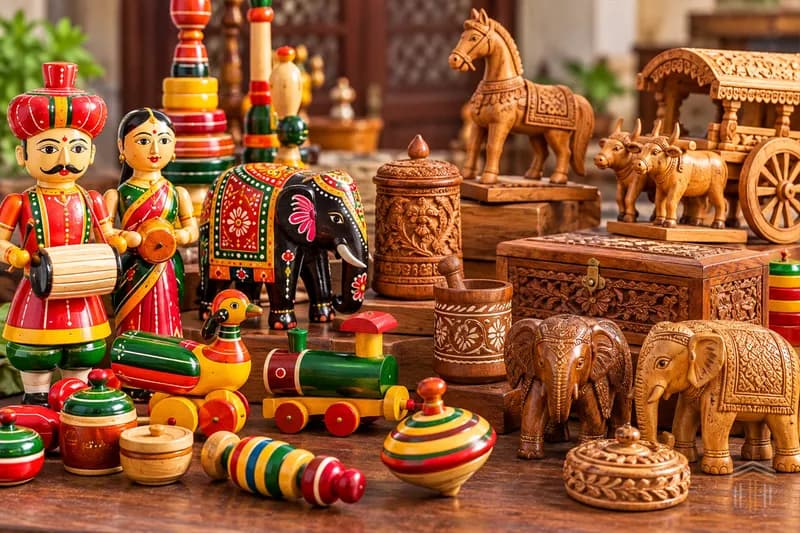
Handcrafted in Kondapalli village (16 km from Vijayawada) from indigenous tella poniki wood by artisans traditionally known as 'aryakshatriyas,' these brightly colored wooden toys and dolls are themed around rural life and mythology. A dedicated Kondapalli Market/village sells them directly from artisans.
Visitor guide
APSRTC PNBS Bus Stand , Vijayawada
2 km
- The primary bus terminal in Vijayawada, offering frequent services to various parts of the city and nearby regions. Local buses, autos, and share autos are easily available for reaching the Kanaka Durga Temple complex.
Gallery
Videos
Third-party videos may include ads or external commentary.
Frequently Asked Questions
Kanaka Durga Temple is located on Indrakeeladri Hill in Vijayawada, Andhra Pradesh, India, overlooking the Krishna River. It is one of the most prominent temples dedicated to Goddess Durga in South India.
Kanaka Durga Temple is famous for its sacred shrine of Goddess Kanaka Durga, its location on Indrakeeladri Hill, and its rich religious traditions. The temple attracts thousands of devotees throughout the year, especially during Navaratri.
The principal deity is Goddess Kanaka Durga, a powerful manifestation of Goddess Durga. The Goddess is traditionally worshipped along with Lord Malleswara Swamy, a form of Lord Shiva.
Kanaka Durga Temple has ancient origins and is associated with several Hindu legends. According to tradition, Goddess Durga is believed to have defeated the demon Mahishasura at this sacred site, after which the hill came to be associated with her divine presence.
The temple is especially known for its hilltop location, sacred association with Goddess Durga, and panoramic views of the Krishna River and Vijayawada. The temple also features traditional South Indian architectural elements and elaborate rituals.
Kanaka Durga Temple generally opens early in the morning and remains accessible to devotees during designated morning and evening hours, with breaks for daily rituals and poojas. Timings may change during festivals and special occasions, so visitors should check the latest schedule before visiting.
The best time to visit Kanaka Durga Temple is generally from October to March, when the weather is more comfortable. Dasara Navaratri is the most significant festival period and attracts large numbers of devotees.
Dasara Navaratri is the most important festival celebrated at Kanaka Durga Temple. During the nine-day festival, Goddess Kanaka Durga is adorned in different forms each day, attracting devotees from across Andhra Pradesh and other parts of India.
General darshan at Kanaka Durga Temple is generally free for devotees. Special darshan, sevas, poojas, and other temple services may have separate charges or booking requirements.
Kanaka Durga Temple is located in central Vijayawada and is easily accessible by road and rail. Vijayawada Railway Station is the nearest major railway station, while Vijayawada International Airport provides convenient air connectivity to the city.